Hookito

Libya · Books

Books from Libya

5 books from and about Libya: what each is about, the plot, and a note from Professor Kogi.

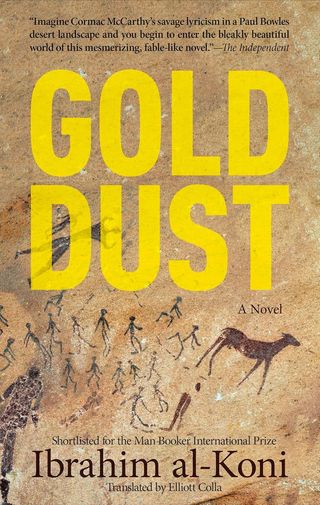
Cover of Gold Dust

Gold Dust

Ibrahim al-Koni

Original language: Arabic · Paperback · ISBN 978-9774169694

Ukhayyad is a man cast out. After killing a member of his own community, he becomes a fugitive among the Tuareg people of the Libyan Sahara, pursued by those seeking vengeance. His only remaining bond is with his purebred camel, a companion whose endurance matches his own. Together they cross a landscape pressed between two disasters: Italian military campaigns in the north and famine spreading from the south.

Their destination is Jebel Hasawna, a remote range of rock caves deep in the desert. There, Ukhayyad must part with the animal that has carried him through thirst, sickness, and isolation. Left alone among ancient painted walls showing scenes of hunts from a forgotten era, he waits for the pursuers he knows will come. The cave paintings and the sounds of the desert at night, including what local tradition attributes to jinn, frame his solitude with a longer human history of survival and loss.

Ibrahim al-Koni, a Tuareg writer from Libya, sets the novel in a world where the relationship between a person and a camel can determine whether either one lives or dies. The story explores exile, loyalty, and the cost of violence within a small community whose existence depends on the desert itself.

Plot

Rejected by his tribe and hunted by the kin of the man he killed, Ukhayyad and his thoroughbred camel flee across the desolate Tuareg deserts of the Libyan Sahara. Between bloody wars against the Italians in the north and famine raging in the south, Ukhayyad rides for the remote rock caves of Jebel Hasawna. There, he says farewell to the mount who has been his companion through thirst, disease, lust, and loneliness. Alone in the desert, haunted by the prophetic cave paintings of ancient hunting scenes and the cries of jinn in the night, Ukhayyad awaits the arrival of his pursuers and their insatiable hunger for blood and gold.
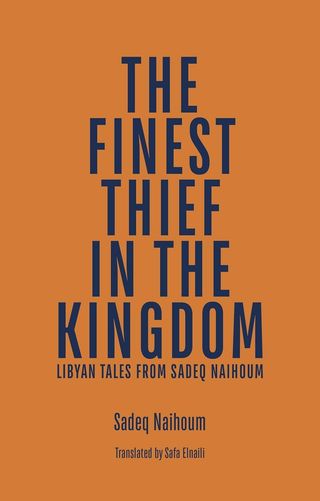
Cover of The Finest Thief in the Kingdom: Libyan Tales

The Finest Thief in the Kingdom: Libyan Tales

Sadeq Naihoum

Original language: Arabic · Paperback · ISBN 978-1850773429

The Finest Thief in the Kingdom collects short stories by the Libyan writer Sadeq Naihoum. The original Arabic title, Min Qisas Alatfal, translates as Children's Tales, but the label is misleading. These are pointed, satirical stories that examine power, religion, social injustice, and racism in Libya. Naihoum populates his fiction with sultans, faqihs (Islamic scholars and jurists), dervishes, thieves, and beggars, using their interactions to expose how authority operates and who it leaves behind.

The collection was published in 2002 by Tala Publishers as part of the Maktabit Naihoum project, a broader effort to gather and present Naihoum's writings. Each story is short, but the range of characters and situations gives the book a cumulative breadth. Naihoum moves between folk-story patterns and sharp social criticism, letting familiar narrative shapes carry uncomfortable observations about hierarchies and exclusion.

By framing political commentary inside the structure of traditional tales, Naihoum keeps the tone indirect yet specific. The stories stay rooted in Libyan settings and social arrangements, drawing their force from local detail rather than abstraction.

Plot

These are socio-political tales told from a satirical and critical perspective. Naihoum writes about his native Libya, bringing to life a wonderful tableau of characters from Sultans and Faqihs to dervishes, thieves, and beggars. His writing sheds light on the dark corners of power and religion, social injustice and racism. This short story collection was published in 2002 by Tala Publishers as part of Maktabit Naihoum (Naihoum Library) project.

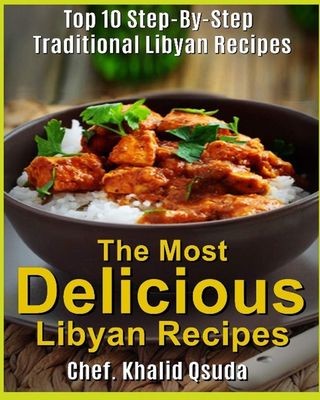
Cover of The Most Delicious Libyan Recipes

The Most Delicious Libyan Recipes

Chef Khalid Essaid Qsuad

Original language: English · Paperback · ISBN 978-1512330281

The Most Delicious Libyan Recipes is a cookbook by Chef Khalid Essaid Qsuad that presents ten traditional dishes from Libya, each laid out in step-by-step instructions. The book is aimed at home cooks and positions itself as accessible, with recipes described as straightforward to prepare. Libya sits along the southern Mediterranean coast, and its cooking reflects centuries of contact with North African, Arab, and Mediterranean food traditions. Ingredients such as couscous, lamb, chickpeas, olive oil, and a range of spice blends appear regularly in Libyan kitchens.

Chef Khalid frames the collection as a personal selection of dishes he considers especially enjoyable. The recipes are traditional rather than modern reinterpretations, which suggests an emphasis on everyday Libyan home cooking and established flavors. With only ten recipes, the book is compact, functioning more as an introduction to a specific set of dishes than as a comprehensive survey of the country's cuisine.

Libya's culinary landscape varies between its coastal cities like Tripoli and Benghazi, where seafood and pasta dishes show Italian colonial influence, and the interior regions, where grain-based dishes and preserved foods have long been staples. A short recipe collection like this one offers a starting point for cooks unfamiliar with Libyan food.

Plot

NEW RECIPES! From the professional Chef Khalid comes a great new collection of recipes. This time he offers us his insanely delicious and enjoyable traditional Libyan recipes. All the recipes inside are fun and not hard to make, and I am sure you will absolutely love them.

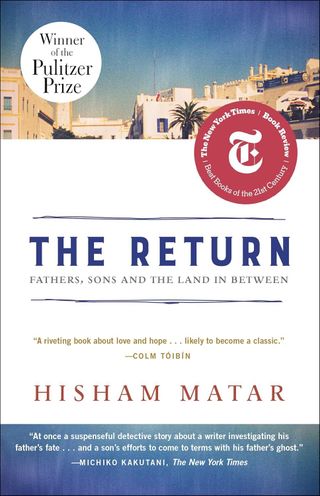
Cover of The Return: Fathers, Sons and the Land in Between

The Return: Fathers, Sons and the Land in Between

Hisham Matar

Original language: English · Paperback · ISBN 978-0812985085

Hisham Matar grew up in Libya before his family left the country in political exile when he was twelve. His father, Jaballah Matar, had been a diplomat and military officer who became a political dissident opposed to the Qaddafi regime. Eight years after the family's departure, Jaballah was abducted from the streets of Cairo by Libyan agents and is believed to have been held in one of the regime's prisons. For more than two decades, his son had no confirmed knowledge of his fate.

In 2012, following the fall of Qaddafi, Hisham Matar traveled back to Libya for the first time in thirty years. The Return follows that visit and the search for information about his father. The prisons had been opened, yet answers remained scarce. Matar writes about the country he finds upon returning, its people navigating a period of upheaval, and the personal weight of revisiting places tied to family memory and loss.

The book is a work of memoir that moves between past and present, between London, Cairo, and Libya. It received the Pulitzer Prize for Biography or Autobiography, with the citation describing it as a first-person elegy for home and father.

Plot

When Hisham Matar was a nineteen-year-old university student in England, his father went missing under mysterious circumstances. Hisham would never see him again, but he never gave up hope that his father might still be alive. Twenty-two years later, he returned to his native Libya in search of the truth behind his father’s disappearance. The Return is the story of what he found there.

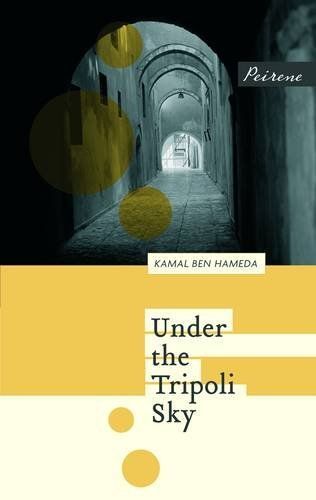
Cover of Under the Tripoli Sky

Under the Tripoli Sky

Kamal Ben Hameda

Original language: Arabic · Paperback · ISBN 978-1908670168

Under the Tripoli Sky is set in 1960s Libya, before Muammar Gaddafi came to power in 1969. The story follows a young boy named Hadachinou growing up in a divided, heat-soaked city. His world is shaped by the routines of his parents: his mother confiding in her close friend Jamila, his father attending prayers at the mosque. Between these two poles, Hadachinou drifts through the streets of Tripoli largely unnoticed.

Moving quietly through the city, the boy overhears the private conversations of women around him. Their unguarded talk reveals frustrations and longings kept hidden from the wider community. As he absorbs these stories, Hadachinou begins to recognize stirrings of his own desires, still unnamed and half-understood. The book captures a moment in Libyan society where personal life and social constraint press tightly against each other.

Kamal Ben Hameda sets the novel in a specific historical window. The Libya of the 1960s was still a monarchy under King Idris, and the social order described in the book would soon be upended. The confined domestic world Hadachinou observes carries the particular tension of a society about to change in ways none of its inhabitants can yet predict.

Plot

Tripoli in the 1960. A sweltering, segregated society. Hadachinou is a lonely boy. His mother shares secrets with her best friend Jamila while his father prays at the mosque. Sneaking through the sun drenched streets of Tripoli, he listens to the whispered stories of the women. He turns into an invisible witness to their repressed desires while becoming aware of his own.

More from Libya

See the country page for Libya for its map, facts and largest cities, or browse books from other countries.

Links go to Amazon; Hookito doesn’t sell books. Know a book that belongs here, or spotted a mistake? Write to submissions@hookito.com.

Where to next?

Back to the globe
Hookito landscape illustration