Hookito

North Macedonia · Books

Books from North Macedonia
6 books from and about North Macedonia: what each is about, the plot, and a note from Professor Kogi.

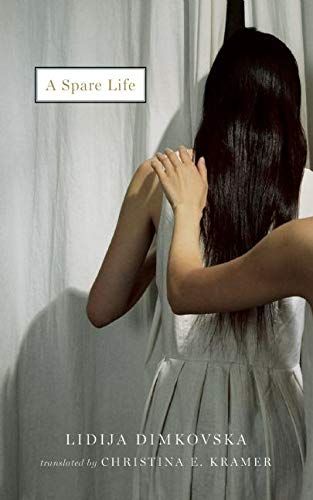
Cover of A Spare Life

A Spare Life

Lidija Dimkovska

Original language: Macedonian · Paperback · ISBN 978-1931883559

Zlata and Srebra are twins conjoined at the head, growing up in Skopje in the mid-1980s, when the city is part of Yugoslavia and not yet the capital of an independent Macedonia. Their days are shaped by physical constraint and social exclusion, and even their family treats them as a burden. Their only close friend is a girl named Roze, and a neighbour boy, Bogdan.

The novel follows them from age twelve into the political shifts that reshape their country. As they grow older, the possibility of surgical separation becomes central. After a crisis that strains their bond as sisters, they travel to London in pursuit of the operation. The narrative holds that prospect open as both hope and risk, since their identities formed in permanent closeness.

Lidija Dimkovska, who also writes poetry, sets private experience against a wider political transition in Eastern Europe. The twins belong to the first generation to reach adulthood as socialist Yugoslavia broke apart and new democracies took shape. Family duty, sisterhood, migration, and folk belief run through the account of two people who have never spent a moment apart.

Plot

Zlata and Srebra are 12-year-old twins conjoined at the head. It is 1984 and they live in Skopje, which will one day be the capital of Macedonia but is currently a part of Yugoslavia. A Spare Life tells the story of their childhood, from their only friend Roze to their neighbor Bogdan, so poor that he one day must eat his pet rabbit. Treated as freaks and outcasts—even by their own family—the twins just want to be normal girls. But after an incident that almost destroys their bond as sisters, they fly to London, determined to be surgically separated. Will this be their liberation, or only more tightly ensnare them?
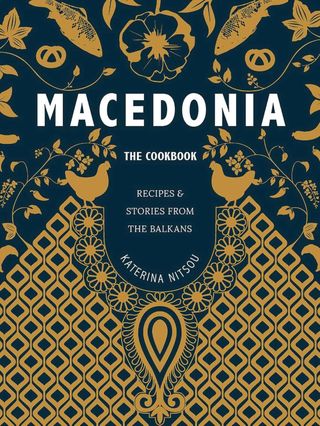
Cover of Macedonia: The Cookbook: Recipes and Stories from the Balkans

Macedonia: The Cookbook: Recipes and Stories from the Balkans

Katerina Nitsou

Original language: English · Hardcover · ISBN 978-1623718794

Macedonia: The Cookbook gathers over 100 recipes from North Macedonia, organized across categories including mezze, salads, soups, fish, poultry, meat, vegetable dishes, sweets, and preserves. Chef and food writer Katerina Nitsou draws on family knowledge to present dishes rooted in North Macedonian cooking traditions, adapted for preparation in a North American kitchen. The book pairs its recipes with photography of food, people, and landscapes from the country.

North Macedonia sits in the central Balkans, bordered by Greece, Bulgaria, Serbia, Kosovo, and Albania. Its cuisine reflects both this geographic position and the agricultural character of its valleys and lakeshores. Peppers, dairy, grilled meats, and pastry doughs appear frequently in the regional cooking, and the cookbook covers many of these staples. Nitsou treats the recipes as carriers of broader cultural knowledge, connecting specific dishes to the customs and daily life of the places they come from.

The book functions as both a practical cooking guide and a visual introduction to North Macedonia's food landscape. Photographs throughout document ingredients, finished plates, and the settings where these traditions developed, giving readers a concrete sense of the country beyond the recipes themselves.

Plot

Through over 100 mouthwatering recipes for mezze dishes, salads, soups, fish, poultry, meat, vegetables, and delicious sweets and preserves, chef and food writer Katerina Nitsou shares the authentic flavors and wisdom brought along with her family, recreated and adapted in her North American kitchen. With beautiful photography of the food, people, and landscapes of North Macedonia, this cookbook captures the country’s essence and belongs on the kitchen shelf of every food lover.

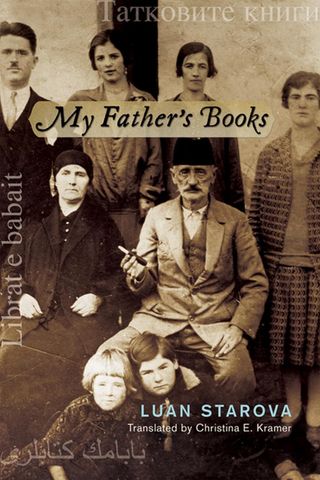
Cover of My Father’s Books

My Father’s Books

Luan Starova

Original language: Albanian · Paperback · ISBN 978-0299287948

Luan Starova's My Father's Books traces his family's story across fifty years, from 1926 to 1976, through three different political regimes. His father left Constantinople as the Ottoman Empire was breaking apart, and the family later moved from Albania to Yugoslav Macedonia when Luan was still a child. The book follows these displacements through the eyes of a boy growing up in a household shaped by languages, religions, and cultures that no longer fit easily into the borders drawn around them.

Starova's parents had been cosmopolitan travelers in their younger years, familiar with both Eastern and Western traditions. In Macedonia, they found themselves raising children inside another restrictive state. Against that political background, the book turns to the small, guarded spaces of childhood: a walled garden kept by his mother, a library assembled by his father, and a cupboard where the rarest volumes were stored. These books carried a heritage that the family's successive governments had little interest in preserving.

My Father's Books is the first volume in Starova's multivolume Balkan Saga. It moves between personal memory and broader historical shifts, using the fate of a private library as a way to measure what political upheaval costs a single family over decades.

Plot

Weaving a story from the threads of his parents' lives from 1926 to 1976, Luan Starova offers a child's-eye view of personal relationships in shifting political landscapes and an elegiac reminder of the enduring power of books to sustain a literate culture. Through lyrical waves of memory, Starova reveals his family's overlapping religious, linguistic, national, and cultural histories. His father left Constantinople as the Ottoman Empire collapsed, and the young family fled from Albania to Yugoslav Macedonia when Luan was a boy. His parents, cosmopolitan and well-traveled in their youth, and steeped in the cultures of both Orient and Occident, find themselves raising their children in yet another stagnant and repressive state. Against this backdrop, Starova remembers the protected spaces of his childhood&;his mother&;s walled garden, his father's library, the cupboard holding the rarest and most precious of his father's books. Preserving a lost heritage, these books also open up a world that seems wide, deep, and boundless.

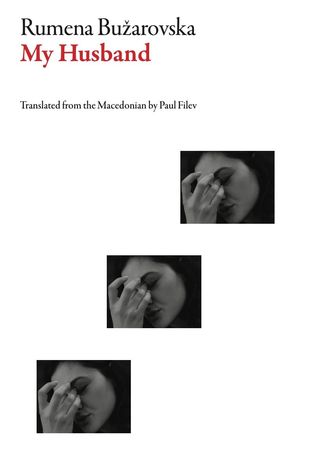
Cover of My Husband

My Husband

Rumena Bužarovska

Original language: Macedonian · Paperback · ISBN 978-1628973457

My Husband is a collection of eleven short stories by Macedonian writer Rumena Bužarovska. Each story is narrated by a woman reflecting on her marriage, and together they form a sharp, often darkly comic portrait of domestic life. The narrators describe their husbands with a mix of frustration, resignation, and occasional bewilderment, revealing the gaps between what these women expected from partnership and what they actually experience day to day.

The stories explore failed attempts at closeness. Some narrators maintain careful pretenses to keep their marriages intact. Others have moved past pretense into quiet denial or open conflict. Bužarovska writes with psychological precision, giving each narrator a distinct voice while building a cumulative picture of how power, habit, and disappointment shape long relationships. The tone shifts between dry humor and genuine unease, sometimes within the same paragraph.

Originally published in Macedonian under the title Mojot Maž, the collection won the Edo Budiša Award for Best Short Story Collection. Bužarovska is recognized as one of the leading contemporary short fiction writers from North Macedonia, and this English-language edition, translated and published by Dalkey Archive Press, brought her work to a wider international audience.

Plot

In these eleven devastatingly precise and psychologically unsettling stories, we follow the female protagonists’ thwarted attempts at intimacy, ranging from pretense, to denial, to violent and ultimately self-destructive acts. This smart, funny, provocative collection demonstrates the profound skills that have made Rumena Bužarovska one of the finest contemporary writers of short fiction in Macedonia. This story collection Mojot Maž in Croatian (My Husband in English), won the Edo Budiša Award for Best Short Story Collection.

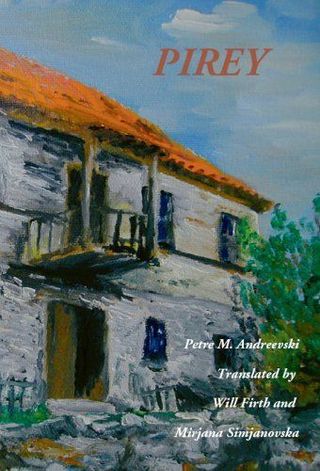
Cover of Pirey

Pirey

Petre M. Andreevski

Original language: Macedonian · Paperback · ISBN 978-0980476323

Pirey follows a married couple, Ion and Velika, living in a Macedonian village during the Balkan Wars and the First World War. The novel covers a period of severe upheaval in the region, as the Ottoman Empire recedes and competing states redraw borders across Macedonia. Ion is conscripted into military service, leaving Velika to hold together a household while war, famine, and displacement close in around her and her children. The title refers to a tenacious weed, and the word carries broader associations in Macedonian usage.

One of the novel's central tensions comes from the division of families by new national borders. In a well-known scene, Ion, serving in the Serbian army, encounters his own brother on the battlefield, conscripted on the Bulgarian side. The moment captures in specific human terms what the partition of Macedonia meant for ordinary people caught between rival states they had no part in choosing.

Petre M. Andreevski, the author, was a Macedonian poet, novelist, and playwright who received multiple literary awards during his career. Pirey became a bestseller in Macedonia and is widely regarded as a landmark of modern Macedonian fiction. The edition referenced here is the first English translation of the novel.

Plot

Set during the Balkan Wars, the First World War and the years soon after, the story follows the major political shifts in the Balkans at the end of the Ottoman Empire and their catastrophic impact on a Macedonian village and a married couple, Ion and Velika. The book is famous for its depiction of life around the time of the division of Macedonia, its characterizations, and its use of language and historical setting. While Ion is in the army, Velika struggles as she watches her children and her village ravaged by war. In one famous scene, Ion, conscripted into the Serbian army, and his brother, conscripted into the Bulgarian army, come face-to-face one night on the battlefield. The author, Petre M. Andreevski, was a Macedonian poet, novelist and playwright who won numerous awards for his works, many of which have been translated into other languages. Pirey is his most acclaimed novel and was a best seller in Macedonia. This is the first translation of Pirey into English.

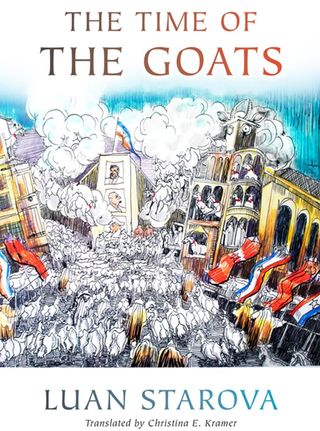
Cover of The Time of the Goats

The Time of the Goats

Luan Starova

Original language: Albanian · Paperback · ISBN 978-0299290948

Set in Skopje in the late 1940s, The Time of the Goats follows the collision between rural life and state ideology during one of Yugoslavia's most volatile political moments. As Tito's government moves toward its historic break with Stalin, peasants from mountain villages are pressured to relocate to the city and join the industrial workforce. They arrive in large numbers, bringing their goats with them. The animals become a source of food for hungry urban residents, but they also become a political problem.

The central tension takes shape when the government issues an order demanding the destruction of the country's goat population. Local officials in Skopje face a painful choice: enforce the decree and deprive citizens of a crucial food source, or quietly resist it and risk consequences from above. The story sits at the point where survival instincts meet obedience to authority, and where the lives of ordinary people are shaped by distant decisions.

This is the second novel in Luan Starova's multivolume Balkan saga. Starova, born in 1941, wrote in both Macedonian and Albanian, and much of his fiction draws on the region's layered ethnic and political history. The novel is set in what is now North Macedonia's capital.

Plot

It's the late 1940s in Skopje, Yugoslavia, in the critical year leading to Tito's break with Stalin. Pushed to leave mountain villages to become the new proletariat in urban factories, a flood of peasants crowds into Skopje and with them, all of their goats. Suffering from hunger, Skopje's citizens welcome the newcomers. But municipal leaders are faced with a dilemma when the central government issues an order calling for the slaughter of the country's goat population. With food so scarce, will they hide the outlawed animals? Or will they comply with the edict and endure the bite of hunger?

More from North Macedonia

See the country page for North Macedonia for its map, facts and largest cities, or browse books from other countries.

Links go to Amazon; Hookito doesn’t sell books. Know a book that belongs here, or spotted a mistake? Write to submissions@hookito.com.

Where to next?

Back to the globe
Hookito landscape illustration