Hookito

Myanmar · Books

Books from Myanmar

7 books from and about Myanmar: what each is about, the plot, and a note from Professor Kogi.

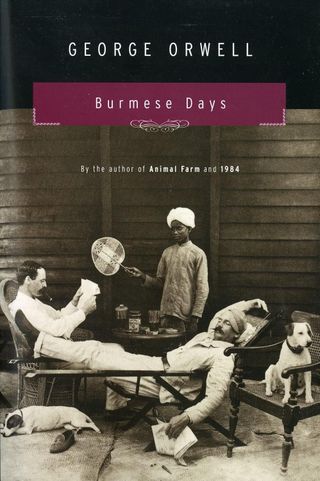
Cover of Burmese Days

Burmese Days

George Orwell

Original language: English · Paperback · ISBN 978-0156148504

George Orwell's first novel is set in the fictional district of Kyauktada in 1920s Burma, when British imperial authority still shaped daily life. The story follows John Flory, a timber merchant among a small community of English residents who gather at the Europeans-only Club to drink and pass the time. Flory is uneasy with the colonial order he takes part in, but lacks the resolve to challenge it openly.

At the center of the plot is a question of membership. Dr. Veraswami, an Indian physician and Flory's closest friend, is a candidate for admission to the Club, where entry would carry real social protection. Working against him is U Po Kyin, a corrupt Burmese magistrate who schemes to damage the doctor's reputation and take the seat himself. The arrival of Elizabeth Lackersteen, a young Englishwoman, tests how far Flory will act on what he believes.

Orwell drew on his own experience as an imperial police officer in Burma during the 1920s. The novel examines how racism, social hierarchy, and personal weakness operate together within a colonial structure, observed through characters who benefit from that structure in unequal ways.

Plot

Burmese Days focuses on a handful of Englishmen who meet at the European Club to drink whisky and to alleviate the acute and unspoken loneliness of life in 1920s Burma—where Orwell himself served as an imperial policeman—during the waning days of British imperialism. One of the men, James Flory, a timber merchant, has grown soft, clearly comprehending the futility of England’s rule. However, he lacks the fortitude to stand up for his Indian friend, Dr. Veraswami, for admittance into the whites-only club. Without membership and the accompanying prestige that would protect the doctor, the condemning and ill-founded attack by a bitter magistrate might bring an end to everything he has accomplished. Complicating matters, Flory falls unexpectedly in love with a newly arrived English girl, Elizabeth Lackersteen. Can he find the strength to do right not only by his friend, but also by his conscience?
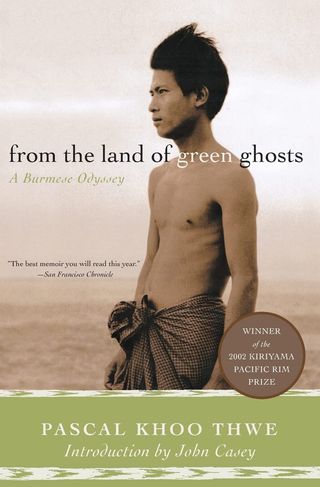
Cover of From the Land of Green Ghosts: A Burmese Odyssey

From the Land of Green Ghosts: A Burmese Odyssey

Pascal Khoo Thwe

Original language: English · Paperback · ISBN 978-0060505233

Pascal Khoo Thwe grew up among the Padaung people in the hills of Burma, now Myanmar. His memoir traces his early life in a community shaped by its own traditions and by the political instability that has long marked the country. As a young man, Thwe studied at Mandalay University and worked evenings in a Chinese restaurant, where he met John Casey, a lecturer from Cambridge. That chance encounter would eventually redirect the course of his life.

In 1988, a large-scale student uprising swept through Burma. Thwe left his studies to join the movement. When the insurrection was suppressed, he was forced to flee the country. His connection to Casey proved decisive: through Casey's support, Thwe was able to reach England and gain admission to Cambridge University. The book follows his path from a remote hill community through armed resistance and exile to an English university town, covering ground that spans geography, class, and culture.

The memoir received a Human Rights Watch award in 2002. Throughout the account, Thwe describes the Padaung way of life and the conditions faced by ethnic minorities in Burma, offering specific detail about a region and people that receive little outside attention.

Plot

It was during a tour on a trip through Burma that John Casey, a Cambridge don, first met Pascal Khoo Thwe, who was moonlighting in a Chinese restaurant to support himself as a student at Mandalay University. Thwe was born a member of the Padaung tribe in Burma where political turmoil and poverty are ever-present realities. Thwe left school to join the student rebels during the great insurrection of 1988, but remained in touch with Casey. He was forced to flee the country. It was his connection to Casey that enabled him to emigrate to England where he was admitted to Cambridge University. Despite his humble beginnings and the oppression he faced, Pascal Khoo Thwe brings us into a world forgotten by the West, but one that readers will not soon forget.

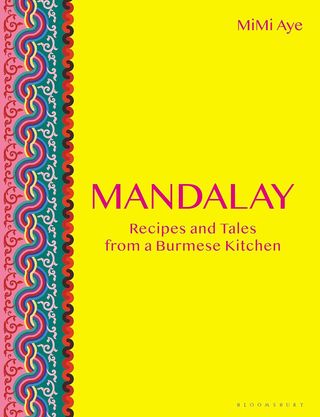
Cover of Mandalay: Recipes and Tales from a Burmese Kitchen

Mandalay: Recipes and Tales from a Burmese Kitchen

MiMi Aye

Original language: English · Hardcover · ISBN 978-1472959492

Mandalay is a cookbook by MiMi Aye that collects around 100 recipes from Burmese cooking, a cuisine that remains relatively unfamiliar outside Southeast Asia. The book opens with a guide to key ingredients and where to find substitutes, then covers the tools and methods particular to Burmese kitchens. Chapters are organized by category: fritters, rice dishes, noodles, salads, meat, fish, and sweet snacks. Each section draws on the cooking traditions of Myanmar while acknowledging the influences of neighboring Thailand, India, and China.

Aye pairs her recipes with personal stories from her own time in Myanmar and from her family's history, giving each dish a context beyond the ingredient list. The result is a book that sits between practical kitchen guide and family memoir, grounded in specific places and memories rather than broad cultural generalization.

Myanmar's cuisine often balances sour, salty, bitter, and spicy elements in combinations that differ noticeably from its neighbors. Fermented tea leaves, chickpea flour, and dried shrimp appear frequently as building blocks. Aye's approach focuses on making these flavors accessible to cooks who may be encountering them for the first time, with clear explanations of unfamiliar steps and components.

Plot

The food of Burma is little known, but MiMi seeks to change that within these pages, revealing its secrets and providing context to each recipe with stories from her time in Burma and her family's heritage. Beginning with a look at the ingredients that make Burmese food unique – as well as suitable alternatives – MiMi goes on to discuss the special techniques and equipment needed before delving into chapters such as fritters, rice and noodles, salads, meat and fish and sweet snacks. Within these pages you'll find 100 incredible recipes, enabling you to create a taste of Burma in your own kitchen.

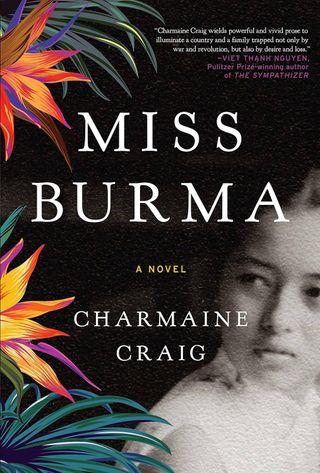
Cover of Miss Burma

Miss Burma

Charmaine Craig

Original language: English · Hardcover · ISBN 978-0802126450

Charmaine Craig based this novel on the lives of her mother and grandparents, following one family across several decades of Burmese history. Benny, schooled in Calcutta, settles in Rangoon while it is still part of the British Empire, and marries Khin, a woman from the Karen, an ethnic minority group with a long record of persecution behind it.

World War II reaches Southeast Asia, and the Japanese occupation drives the couple into hiding in the east of the country, setting in motion events that alter Burma's course. After the war, British officials come to terms with the Burman nationalists under Aung San. His assassination leaves a successor who dismisses Karen and other minority appeals for self-government, and armed conflict follows.

The later sections turn to Benny and Khin's eldest daughter, Louisa, whose childhood is unsettled and often dangerous and who becomes Burma's first beauty queen shortly before the country falls under dictatorship. Fame places her among competing pressures: her family's past, covert Western dealings inside Burma, and her own loyalty to the Karen cause. The narrative moves between colonial Rangoon and the contested eastern borderlands.

Plot

Miss Burma tells the story of modern-day Burma through the eyes of Benny and Khin, husband and wife, and their daughter Louisa. After attending school in Calcutta, Benny settles in Rangoon, then part of the British Empire, and falls in love with Khin, a woman who is part of a long-persecuted ethnic minority group, the Karen. World War II comes to Southeast Asia, and Benny and Khin must go into hiding in the eastern part of the country during the Japanese Occupation, beginning a journey that will lead them to change the country’s history. After the war, the British authorities make a deal with the Burman nationalists, led by Aung San, whose party gains control of the country. When Aung San is assassinated, his successor ignores the pleas for self-government of the Karen people and other ethnic groups, and in doing so sets off what will become the longest-running civil war in recorded history. Benny and Khin's eldest child, Louisa, has a danger-filled, tempestuous childhood and reaches prominence as Burma’s first beauty queen soon before the country falls to dictatorship. As Louisa navigates her newfound fame, she is forced to reckon with her family’s past, the West’s ongoing covert dealings in her country, and her own loyalty to the cause of the Karen people.

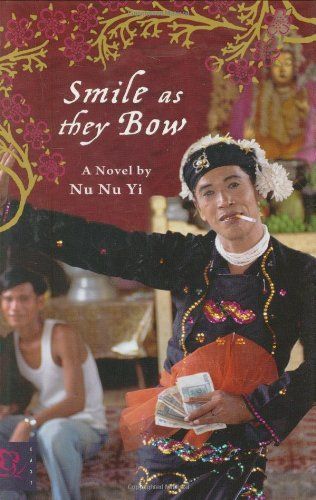
Cover of Smile as they Bow

Smile as they Bow

Nu Nu Yi

Original language: Burmese · Hardcover · ISBN 978-1401303372

A tiny village near Mandalay is the setting for the Taungbyon Festival, a weeklong event that draws visitors from every part of Burma. They come to honour nats, guardian spirits with a long-standing place in Burmese belief. Nu Nu Yi builds her novel inside that crowd, following the performers who make their living from these rituals and from the offerings of pilgrims.

Her central figure is Daisy Bond, a natkadaw in his fifties. A natkadaw is a spirit medium who dances and speaks for the nats during ceremonies. Daisy is gay, dresses as a woman, and is celebrated at the festival for vivid performances and a cutting tongue. Min Min, his young assistant and lover, absorbs the insults that come with the work.

The balance between them shifts when Pan Nyo, a girl who begs at the festival, draws Min Min's attention, and Daisy is left facing what he fears most. Burmese authorities censored the book for more than twelve years. In 2007 Nu Nu Yi became the first writer living in Burma nominated for an international literary award. This novel was her American debut.

Plot

As the weeklong Taungbyon Festival draws near, thousands of villagers from all regions of Burma descend upon a tiny hamlet near Mandalay to pay respect to the spirits, known as nats, which are central to Burmese tradition. At the heart of these festivities is Daisy Bond, a gay, transvestite spiritual medium in his fifties. With his sharp tongue and vivid performances, he has long been revered as one of the festival's most illustrious natkadaws. At his side is Min Min, his young assistant, and lover, who endures unyielding taunts and abuse from his fiery boss. But when a young beggar girl named Pan Nyo threatens to steal Min Min's heart, the outrageous Daisy finds himself face-to-face with his worst fears.

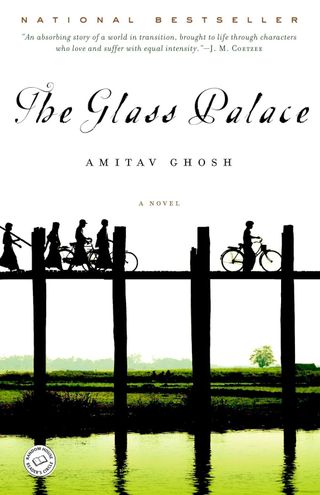
Cover of The Glass Palace

The Glass Palace

Amitav Ghosh

Original language: English · Paperback · ISBN 978-0375758775

The Glass Palace by Amitav Ghosh opens in Mandalay in 1885, as British forces arrive to depose the Burmese monarchy. Among the crowds watching the royal family leave the palace is Rajkumar, an Indian boy living rough in the city. During the upheaval he encounters Dolly, a young attendant in the court of the Burmese Queen, and the brief meeting stays with him for years. As Rajkumar grows into a successful timber merchant in the teak forests of Burma, his determination to find Dolly again drives much of the story forward.

The novel follows several generations across Burma, India, and Malaya, tracking how colonial rule reshaped economies, borders, and personal loyalties in Southeast Asia. Ghosh grounds these large historical currents in the daily choices of families caught between cultures and empires. The teak trade, the Indian National Army, and the displacement of royal households all figure in the plot, connecting private lives to political forces that stretched across decades.

Ghosh draws on the real history of the Konbaung dynasty's fall and the British annexation of Upper Burma to anchor the fictional narrative. The title refers to the royal residence in Mandalay, parts of which were built with mirrored and glass-panelled walls.

Plot

Set in Burma during the British invasion of 1885, this masterly novel tells the story of Rajkumar, a poor boy lifted on the tides of political and social chaos, who goes on to create an empire in the Burmese teak forest. When soldiers force the royal family out of the Glass Palace and into exile, Rajkumar befriends Dolly, a young woman in the court of the Burmese Queen, whose love will shape his life. He cannot forget her, and years later, as a rich man, he goes in search of her. The struggles that have made Burma, India, and Malaya the places they are today are illuminated in this wonderful novel by the writer Chitra Divakaruni calls “a master storyteller

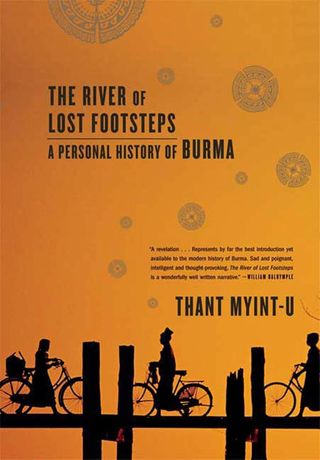
Cover of The River of Lost Footsteps: A Personal History of Burma

The River of Lost Footsteps: A Personal History of Burma

Thant Myint-U

Original language: English · Paperback · ISBN 978-0374531164

Thant Myint-U traces centuries of Burmese history through the lens of his own family in this combined memoir and historical account. The book stretches from the era of Portuguese adventurers and exiled Mughal royalty to the military dictatorship that defined Burma for decades. Along the way, it examines how a once-powerful kingdom became a British colony, gained independence, and then fell into prolonged authoritarian rule. The author, a grandson of former United Nations Secretary-General U Thant, draws on both personal archives and broader scholarship to follow these shifts.

A central thread of the book is the civil war that has persisted in Burma for over sixty years, one of the longest-running armed conflicts on Earth. Thant Myint-U looks at why Western strategies such as economic sanctions and tourism boycotts have had limited effect in pushing the country toward democratic governance. He places these modern frustrations in a longer historical context, arguing that understanding Burma's deep past is necessary to make sense of its political present.

The narrative moves between family episodes and national turning points, connecting private lives to large-scale political change. Burma's geographic position between India and China, and the competing interests that followed from it, runs through much of the account.

Plot

What do we really know about Burma and its history? And what can Burma's past tell us about its present and even its future? For nearly two decades Western governments and a growing activist community have been frustrated in their attempts to bring about a freer and more democratic Burma―through sanctions and tourist boycotts―only to see an apparent slide toward even harsher dictatorship. Now Thant Myint-U tells the story of modern Burma, and the story of his own family, in an interwoven narrative that is by turns lyrical, dramatic, and deeply affecting. Through his prominent family's stories and those of others, he portrays Burma's rise and decline in the modern world, from the time of Portuguese pirates and renegade Mughal princes through a sixty-year civil war that continues today―the longest-running war anywhere in the world.

More from Myanmar

See the country page for Myanmar for its map, facts and largest cities, or browse books from other countries.

Links go to Amazon; Hookito doesn’t sell books. Know a book that belongs here, or spotted a mistake? Write to submissions@hookito.com.

Where to next?

Back to the globe
Hookito landscape illustration