Hookito

Malta · Books

Books from Malta

8 books from and about Malta: what each is about, the plot, and a note from Professor Kogi.

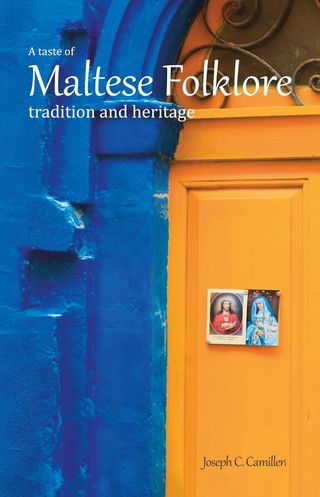
Cover of A Taste of Maltese Folklore

A Taste of Maltese Folklore

Camilleri. Joseph C

Original language: English · Paperback · ISBN 978-9995746605

A Taste of Maltese Folklore by Joseph C. Camilleri surveys the customs, beliefs, and everyday practices that have shaped life on the Maltese islands. The book covers folk architecture, traditional clothing, local foods, crafts, and superstitions, drawing from rural traditions that developed over centuries on a small but culturally layered archipelago in the central Mediterranean.

Malta sits at a crossroads between Europe and North Africa, and its folklore reflects influences from Phoenician, Arab, Norman, and British periods of rule. Camilleri organizes this material in short, illustrated sections, making topics like harvest rituals, stone building methods, and household remedies easy to follow without specialist background. The approach is descriptive rather than academic, aimed at readers encountering Maltese tradition for the first time as well as those already familiar with the islands.

Several of the customs described in the book belong to a generation now passing from living memory. Village feast preparations, seasonal food traditions, and beliefs about luck and protection are recorded here alongside visual details of tools, dress, and decoration that once defined daily routines across Gozo and Malta.

Plot

A Taste of Maltese Folklore: Tradition & Heritage offers a concise and engaging exploration of Malta’s rural customs, mythology, and everyday traditions. The book covers topics ranging from folk architecture and local costumes to traditional foods, crafts, and superstitions — presenting the island’s cultural richness in accessible, illustrated detail
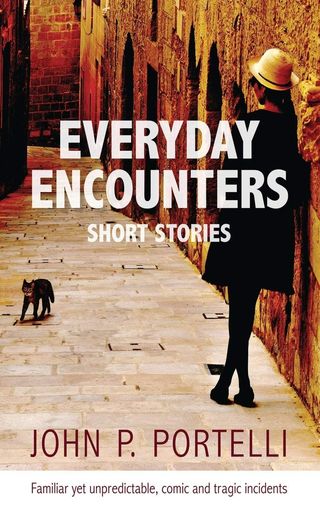
Cover of Everyday Encounters

Everyday Encounters

John P. Portelli

Original language: Maltese · Paperback · ISBN 978-1999422417

Everyday Encounters is a collection of short stories by John P. Portelli, a Maltese author. The stories focus on brief, charged moments in ordinary life: flashes of happiness, loss, embarrassment, and hope. Rather than building long arcs, Portelli works in compact scenes drawn from social interactions that most people would recognize from their own experience.

The collection moves between contrasting emotional states. One story may center on resentment, the next on kindness; one on irreverence, another on something close to grace. Portelli treats these shifts as a natural part of how people actually live, where a single encounter at a shop counter or a family table can carry more weight than months of routine. The writing stays direct and conceptually precise, favoring clarity over ornament.

The stories are rooted in everyday settings and situations, yet the characters and their small decisions carry real complexity. Portelli is interested in the gap between how ordinary a moment looks from the outside and how significant it feels to the person inside it. The collection was published in Malta, where Portelli is based.

Plot

One has to move on, with one’s imaginary hopping from one stance to another, from rancour to joy, resentment to kindness, holiness to blasphemy. Some moments of our lives are the most memorable ones, and are more significant than hours or maybe years… Moments of happiness, loss, embarrassment, moments of hope. Portelli writes about these memorable moments. Portelli’s swift, conceptually clear and sharp short stories provide us with ordinary yet complex social encounters… sublime encounters that transfer authentic realities into realistic narratives.

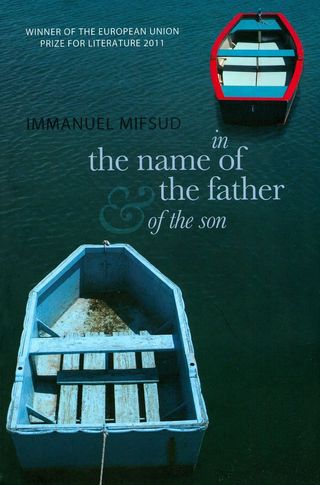
Cover of In the Name of the Father (And of the Son)

In the Name of the Father (And of the Son)

Immanuel Mifsud

Original language: Maltese · Paperback · ISBN 978-9993273837

After returning from his father's funeral, the narrator opens a diary his father kept as a soldier during the Second World War. The entries are sparse and almost impersonal, recording days with little emotion. That restraint unsettles the son and sends him back through decades of memory, searching for moments when his father's carefully maintained toughness might have cracked.

The father the narrator knew was not the young soldier of the diary but a man left disabled by a motorcycle accident. He insisted on presenting himself as strong enough to bear any hardship, and he raised his son by the same standard. The book moves between wartime fragments and domestic scenes, tracing how ideas about manhood pass from one generation to the next.

Revisiting episodes from his own childhood and upbringing, the narrator examines how he was taught to become a man, and looks for the signs of feeling his father worked to conceal. Immanuel Mifsud received the 2011 European Union Prize for Literature for this book, the first time the award went to a Maltese writer.

Plot

Back from his fathers funeral, the narrator starts reading a diary his father kept during his days as a soldier during the Second World War. The diary is very scant, almost impersonal, but it is exactly this impersonality which pushes the narrator to re-examine the personal relationship he had with his father. The father, who the son knew only as a cripple after he had been injured in a motorcycle accident, had always tried to convince those around him that he was tough enough to withstand all hardship, and had tried to bring up his son in his mould. The narrator revisits his fathers past, as well as his own, to look for cracks in this façade, to find signs of weakness and displays of emotion. This turns out to be an opportunity to also look back at his own upbringing and especially at the way he had been educated to become a man. Episodes from the past are recalled and examined for any light they can shed on the matter.

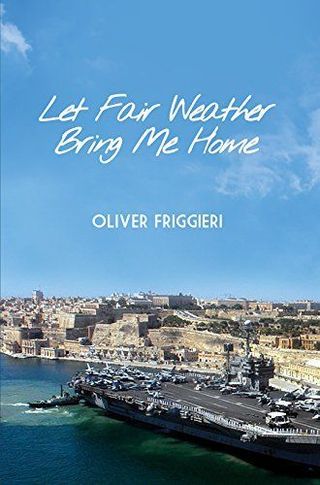
Cover of Let Fair Weather bring me Home

Let Fair Weather bring me Home

Oliver Friggieri

Original language: Maltese · Hardcover · ISBN 978-1849638753

Let Fair Weather Bring Me Home is set on Malta in the 1930s, when the island was still a British colony. The story takes place around the Grand Harbour, where British naval fleets were stationed for over a century. Against this backdrop of foreign rule and local tradition, Oliver Friggieri follows a small group of characters whose lives are shaped by the customs and rigid social expectations of their community.

At the center of the novel is a mother separated from her son, who was born outside marriage and raised in a Roman Catholic Church institution. Their reunion forms one strand of the plot. Another follows a priest who returns to Malta after years away, his reputation at last cleared of earlier accusations. Both storylines explore how deeply institutions, whether colonial, religious, or social, can mark individual lives on a small island where privacy is scarce and memory is long.

Friggieri uses Malta's size and its particular mix of Mediterranean Catholic culture and British colonial presence to examine prejudice, shame, and the slow erosion of beliefs once considered permanent. The Grand Harbour setting anchors the story in a real and specific place where military ships and parish churches occupied the same narrow coastline.

Plot

Let Fair Weather Bring Me Home tells the anguished story of a mother who is reunited with her son, born out of wedlock and raised in a Roman Catholic Church institution, and a much maligned priest who returns to the island his reputation finally vindicated. It all takes place around Malta's fabled Grand Harbour where for more than a century Britain kept her fleets. Oliver Friggieri is an acclaimed novelist with numerous international publications to his name. His stronger novels are set around the Mediterranean, particularly on the island of Malta and its people, both of which provide him with an ideal environment to discuss customs, prejudices and crumbling once firmly embraced beliefs.

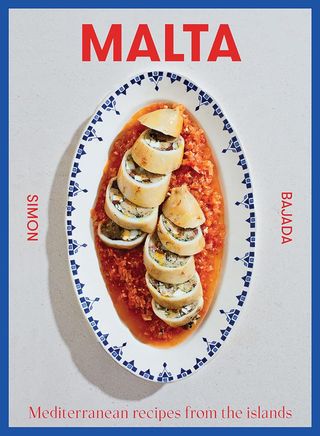
Cover of Malta: Flavours of the Mediterranean: Mediterranean Recipes From The Islands

Malta: Flavours of the Mediterranean: Mediterranean Recipes From The Islands

Simon Bajada

Original language: English · Hardcover · ISBN 978-1743798812

Malta sits in the central Mediterranean between Sicily and the North African coast, and its cooking reflects centuries of contact with Arab, French, Italian, and English traditions. Simon Bajada, whose earlier work includes cookbooks on Nordic cuisine, turns his attention to this small archipelago and its distinctive food culture. The book contains around 70 recipes designed for home cooks, drawing on everyday Maltese ingredients and methods rather than restaurant-style presentation.

Among the dishes covered are Ftira, a flattened sourdough bread topped with tomato, tuna, capers, and olives; Aljotta, a fish stew built on local seafood; and Bigilla, a paste made from broad beans and served as a dip. These recipes reflect a kitchen shaped by both sea and land, combining coastal produce with the agrarian staples of a rocky island landscape. The book is heavily illustrated with photography that documents the islands alongside the food.

Bajada's approach focuses on accessible technique and local balance rather than elaborate preparation. The recipes sit within a broader portrait of Maltese daily life, connecting dishes to the places and routines they belong to on the islands.

Plot

Many empires have influenced the Maltese kitchen over the centuries, leaving a seductive blend of Arab, French, Italian and English flavours. The result is a balance of raw agrarian produce, fruits of the sea, and well-honed technique against a backdrop of breathtaking rocky outcrops and spectacular blue water. In this beautiful ode to Maltese cooking, author Simon Bajada (Baltic, The New Nordic) captures the everyday food of Malta for the home cook, including dishes such as Ftira, a flattened sourdough bread loaf drenched in tomato with tuna capers and olives; Aljotta, a hearty fish stew; and Bigilla, a broad bean paste used as a delicious dip.

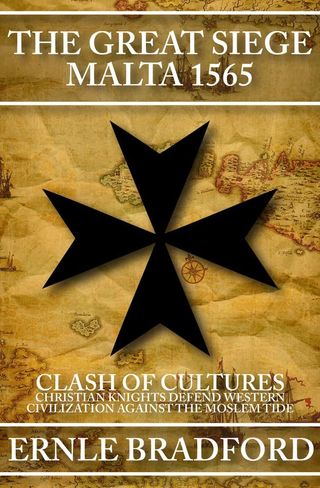
Cover of The Great Siege, Malta 1565

The Great Siege, Malta 1565

Ernle Bradford

Original language: English · Paperback · ISBN 978-1497637863

By the middle of the sixteenth century, the Ottoman Empire under Sultan Suleiman the Magnificent reached from western Asia through southeastern Europe and into North Africa. Linking those territories, and opening a path toward western Europe, meant controlling the central Mediterranean. The small island of Malta, lying between Sicily and the North African coast, sat directly across that route.

Malta was held by the Knights of St. John, a military religious order that had received the island from the Holy Roman Emperor Charles V in 1530. In 1565 a large Ottoman fleet and army arrived. Ernle Bradford reconstructs the months that followed in close detail, tracing bombardment, assault, and defence across the island's harbours and a chain of small stone forts.

The fighting ran from May to September, with tens of thousands of Ottoman troops facing outnumbered knights and Maltese defenders. Bradford works through the strategies of both sides, the supply problems, the terrain, and the human cost, and sets the siege inside the longer sixteenth-century contest between Ottoman and Christian powers for command of Mediterranean sea routes and the trade and troop movements they carried.

Plot

In the first half of the sixteenth century, the Ottoman Empire was thought to be invincible. Suleiman the Magnificent, the Ottoman sultan, had expanded his empire from western Asia to southeastern Europe and North Africa. To secure control of the Mediterranean between these territories and launch an offensive into western Europe, Suleiman needed the small but strategically crucial island of Malta. But Suleiman’s attempt to take the island from the Holy Roman Empire’s Knights of St. John would emerge as one of the most famous and brutal military defeats in history.

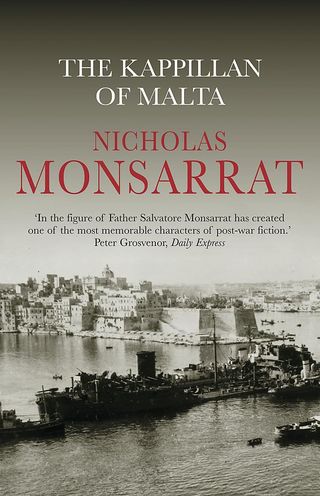
Cover of The Kappillan of Malta

The Kappillan of Malta

Nicholas Monsarrat

Original language: English · Paperback · ISBN 978-0304358441

Nicholas Monsarrat's novel is set on the island of Malta during the Second World War, when the archipelago endured one of the longest and most concentrated aerial bombardments of the conflict. At its center is Father Salvatore, a parish priest, or kappillan, who serves the poor in his community. As the bombing intensifies and buildings collapse across the island, he finds himself sheltering displaced civilians in underground catacombs exposed by the explosions.

The narrative is structured around six specific days during the siege, each revealing a different stage of the ordeal faced by the Maltese population. Father Salvatore tends to people who have lost their homes, gone without food, and been driven underground by the relentless air raids. In the catacombs he offers what comfort he can, speaking to the frightened crowds and trying to hold a fragile sense of order together. The novel traces both his personal experience and the broader fate of the island as a whole.

Monsarrat, best known for his sea novels, spent time in Malta and drew on the island's wartime history for this book. The story treats the daily realities of siege life with close physical detail, from the damage above ground to the crowded conditions below.

Plot

As bombs pound Malta to dust, Father Salvatore--a simple priest, or kappillan, serving the poor--finds himself caught in the drama of World War Two. In the fragile safety of catacombs revealed by the explosions, he tends to the flood of homeless, starving, and frightened people seeking shelter, giving messages of inspiration and hope. His story, and that of the island, unfold in superbly graphic images of six days during the siege. "...one of the most memorable characters of postwar fiction"

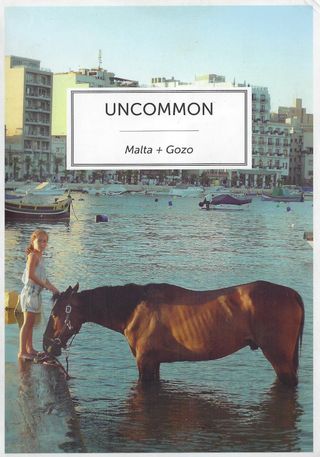
Cover of Uncommon Malta and Gozo

Uncommon Malta and Gozo

Emma Mattei

Original language: English · Hardcover · ISBN 978-9990985504

Uncommon Malta and Gozo is a travel guide and travelogue compiled by Emma Mattei. It covers both the main island of Malta and its smaller northern neighbor Gozo, moving between urban streets and coastal paths. The book combines practical tools like maps, routes, and itineraries with anecdotes, local lore, myths, and field notes, positioning itself somewhere between a standard guidebook and a personal journal of place.

The project draws on multiple contributors, including both long-term residents and visitors, established writers and newer voices. This mix gives the book a layered perspective on the islands rather than a single narrator's point of view. Mattei frames the approach around what the book calls a habit of flux, encouraging wandering and unplanned detours over fixed sightseeing schedules. Illustrations accompany the text alongside the route information.

Malta and Gozo together cover roughly 316 square kilometers, a small area that nonetheless holds thousands of years of layered settlement, from Neolithic temple builders to Knights of St. John to British colonial administration. The book's structure treats this density as an advantage, suggesting that getting slightly lost in such a compact landscape is one reliable way to encounter something unexpected.

Plot

Uncommon Malta & Gozo is an intimate companion and travelogue that steers you through the urban streets and along the rugged coast with anecdote, lore, myth, field notes, maps, routes, illustrations and itineraries as your guide. Contributors new and established, resident and visitor, commingle to create a remarkably varied field manual for today's discerning traveller.

More from Malta

See the country page for Malta for its map, facts and largest cities, or browse books from other countries.

Links go to Amazon; Hookito doesn’t sell books. Know a book that belongs here, or spotted a mistake? Write to submissions@hookito.com.

Where to next?

Back to the globe
Hookito landscape illustration