Hookito

Mauritius · Books

Books from Mauritius
6 books from and about Mauritius: what each is about, the plot, and a note from Professor Kogi.

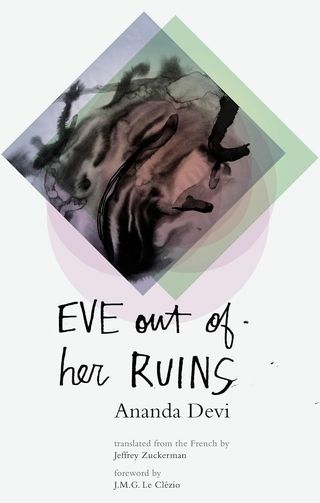
Cover of Eve Out of Her Ruins

Eve Out of Her Ruins

Ananda Devi

Original language: French · Paperback · ISBN 978-1941920404

Eve Out of Her Ruins follows four young people in Mauritius, in the neighbourhoods that visitors to the beaches and resorts rarely see. Eve treats her body as her only source of power. Savita, her closest friend, loves her without self-interest and plans to leave, though not alone. Saadiq writes poems and reads Rimbaud, and loves Eve. Clelio waits for a brother in France to call for him.

Ananda Devi tells the story through alternating voices, so the same streets appear from four angles. Fear and violence recur, and each character measures what leaving or staying would cost. Devi, who was born in Mauritius, is concerned with how a person builds a self at the edges of a society that offers little to build with, and with how loyalty and desire hold the four together.

Devi writes in French, and the book reached English-language readers in translation, with this edition marking its first British publication. In 2006 it received the Prix des cinq continents de la Francophonie, a prize for novels written in French anywhere in the world. Mauritius itself lies in the Indian Ocean, with communities of Indian, African, Chinese and European descent.

Plot

With brutal honesty and poetic urgency, Ananda Devi relates the tale of four young Mauritians trapped in their country's endless cycle of fear and violence: Eve, whose body is her only weapon and source of power; Savita, Eve's best friend, the only one who loves Eve without self-interest, who has plans to leave but will not go alone; Saadiq, gifted would-be poet, inspired by Rimbaud, in love with Eve; Clélio, belligerent rebel, waiting without hope for his brother to send for him from France.
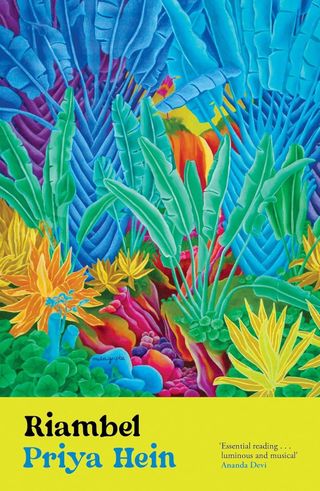
Cover of Riambel

Riambel

Priya Hein

Original language: English · Paperback · ISBN 978-1911648499

Fifteen-year-old Noemi is forced to leave school and take a domestic job in the household of the wealthy De Grandbourg family. Their home sits just across the road from the slum where she grew up, but the distance between the two worlds is vast. As Noemi navigates life inside the house, she begins to sense echoes of earlier generations of girls who occupied similar positions, and her own story starts to fold into theirs.

The novel is set in Mauritius, and its title refers to the coastal village of Riambel in the south of the island. Priya Hein uses Noemi's situation to trace patterns of class and ethnicity that have shaped Mauritian life across generations. The book carries a second, broader thread running alongside Noemi's account: a history of women on the island who resisted, teachers who pushed their poorest students to question established stories, and a society often marketed as paradise but marked by deep structural divides.

Hein frames these tensions through the perspective of a teenager whose options have been narrowed by circumstances she did not create. The narrative connects domestic service, ancestry, and the slow reshaping of social order on a small island nation.

Plot

Fifteen-year-old Noemi has no choice but to leave school and work in the house of the wealthy De Grandbourg family. Just across the road from the slums where she grew up, she encounters a world that is starkly different from her own ­– yet one which would have been all too familiar to her ancestors. Bewitched by a pair of green eyes and haunted by echoes, her life begins to mirror those of girls who have gone before her. Within Noemi’s lament is also the herstory of Mauritius; the story of women who have resisted arrest, of teachers who care for their poorest pupils and encourage them to challenge traditional narratives, of a flawed Paradise undergoing slow but unstoppable change.

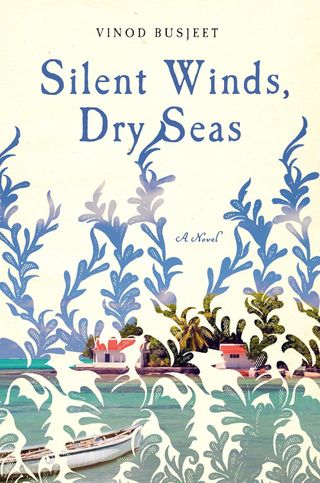
Cover of Silent Winds, Dry Seas

Silent Winds, Dry Seas

Vinod Busjeet

Original language: English · Hardcover · ISBN 978-0385547024

In the 1950s on the island of Mauritius, a boy named Vishnu Bhushan grows up in a family shaped by the legacy of Indian indentured labor. His mother describes the family as an alliance of two bankrupt households, and as Vishnu gets older he begins to piece together the fractured histories behind that description. The novel follows roughly the first two decades of his life, tracing his attempts to understand both his origins and the wider world beyond his immediate surroundings.

Mauritius during this period was still a British colony, moving toward the independence it would gain in 1968. The story sits inside that transition, where cultural expectations, political shifts, and family obligations press against Vishnu's desire for something larger. Vinod Busjeet writes with close attention to the tensions between loyalty and ambition, between staying rooted in a community built by indentured laborers and reaching for opportunities elsewhere.

The novel draws on the particular history of Mauritius as a place where Indian workers were brought to sugar plantations after the abolition of slavery. That history gives the story its specific texture, connecting personal struggles over education, identity, and family duty to a broader pattern of displacement and adaptation across generations.

Plot

In the 1950s, Vishnu Bhushan is a young boy yet to learn the truth beyond the rumors of his family's fractured histories--an alliance, as his mother says, of two bankrupt families. In evocative chapters, the first two decades of Vishnu's life in Mauritius unfolds with heart wrenching closeness as he battles to experience the world beyond, and the cultural, political, and familial turmoil that hold on to him.

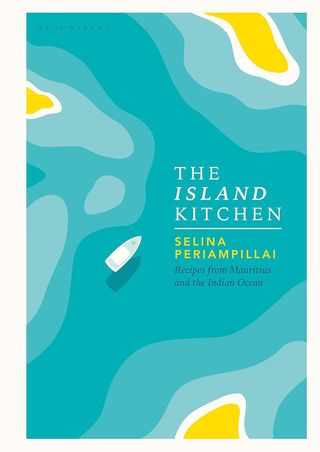
Cover of The Island Kitchen: Recipes from Mauritius and the Indian Ocean

The Island Kitchen: Recipes from Mauritius and the Indian Ocean

Selina Periampillai

Original language: English · Hardcover · ISBN 978-1526601384

Selina Periampillai grew up in London with family roots in Mauritius, and this cookbook draws on home cooking from several Indian Ocean island groups. Recipes come from Mauritius, the Seychelles, the Maldives, Mayotte, and Madagascar, each contributing its own ingredients and methods. Around 80 dishes range from quick weeknight meals to larger gatherings, reflecting kitchens where African, South Asian, East Asian, and European influences overlap.

The focus is accessible home cooking rather than restaurant technique. Dishes include sticky chicken with garlic and ginger, mustard- and turmeric-marinated tuna, a Seychellois aubergine and chickpea cari, and pineapple upside-down cake with cardamom cream. The range moves between fish from island coasts, spice-led vegetable preparations, and desserts shaped by tropical fruit and warm spices. Rum appears too, in recipes meant for social cooking.

Photography and illustrations accompany the recipes, which move through market stalls, spice gardens, fishing coasts, lagoons, and forest interiors. Mauritius sits roughly 2,000 kilometres off the southeast coast of Africa, while Mayotte and Madagascar lie farther west, so the recipes cover a wide arc of ocean and several distinct island kitchens.

Plot

This ravishing cookbook will take you on a journey around the Indian Ocean islands, to taste the flavours of the colourful markets of Mauritius, the aromatic spice gardens of the Seychelles, the fishing coasts of the Maldives, the lagoons of Mayotte and the forests of Madagascar. Selina Periampillai, born in London but of Mauritian descent, celebrates the vibrant home-cooking of the islands, with dishes such as Sticky chicken with garlic & ginger, Mustard- & turmeric-marinated tuna, Seychellois aubergine & chickpea cari, and Pineapple upside-down cake with cardamom cream.

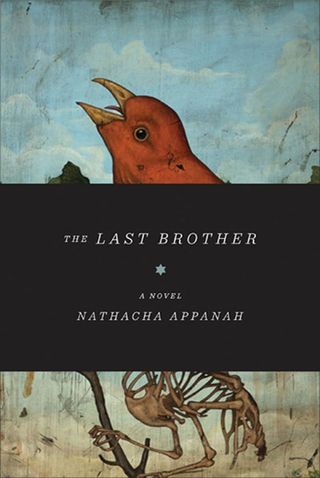
Cover of The Last Brother

The Last Brother

Nathacha Appanah

Original language: French · Paperback · ISBN 978-1555975753

In 1944, nine-year-old Raj lives on Mauritius, a small island in the Indian Ocean, far from the fighting of the Second World War. His family struggles to survive, and his father works as a guard at a prison camp. After a severe beating puts Raj in the camp hospital, he meets David, a boy his own age, one of a group of Jewish refugees.

David and his companions fled Nazi-occupied Europe for Palestine, were refused entry, and were sent on to indefinite detention on Mauritius. The friendship forms across a sharp divide: Raj knows little beyond his island, while David has already crossed continents under threat. When a powerful storm damages the camp, David escapes with Raj's help, and the boys hide from Raj's violent father before heading into the forest.

What begins as something close to adventure for Raj shifts as hunger, danger, and malaria close in. Nathacha Appanah sets the story against a documented episode: from 1940 to 1945, Jewish detainees were held at a camp in Beau Bassin, Mauritius, after being turned away from Palestine. The narration keeps to a child's limited, immediate understanding.

Plot

In The Last Brother by Nathacha Appanah, 1944 is coming to a close and nine-year-old Raj is unaware of the war devastating the rest of the world. He lives in Mauritius, a remote island in the Indian Ocean, where survival is a daily struggle for his family. When a brutal beating lands Raj in the hospital of the prison camp where his father is a guard, he meets a mysterious boy his own age. David is a refugee, one of a group of Jewish exiles whose harrowing journey took them from Nazi occupied Europe to Palestine, where they were refused entry and sent on to indefinite detainment in Mauritius. A massive storm on the island leads to a breach of security at the camp, and David escapes, with Raj's help. After a few days spent hiding from Raj's cruel father, the two young boys flee into the forest. Danger, hunger, and malaria turn what at first seems like an adventure to Raj into an increasingly desperate mission.

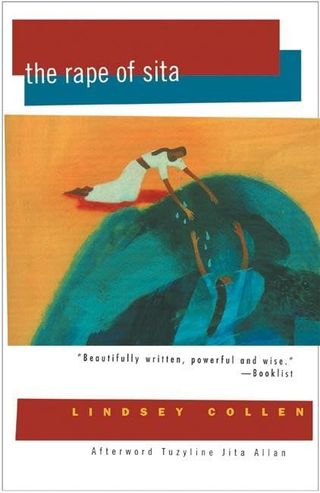
Cover of The Rape of Sita

The Rape of Sita

Lindsey Collen

Original language: English · Paperback · ISBN 978-1558613942

Lindsey Collen's novel is set in Mauritius, an island nation shaped by overlapping Indian, African, and European cultural layers. At its center is Sita, an activist figure and a well-known presence in Mauritian society, who carries a buried secret about her own past. The story is narrated by a character called Iqbal the Umpire, whose voice draws on ancient myths, folk tales, and religious prophecy to frame events set in the 1980s.

Sita's attempt to recover suppressed memory forms the core of the book. Her fragmented recollections surface in painful stages as she tries to confront what happened to her. Collen connects Sita's personal experience to wider patterns of violation and colonial power, linking one woman's hidden history to the broader circumstances of a small postcolonial country still working through its own past.

The novel was banned in Mauritius when it was first published, partly because of its title's reference to a figure from Hindu epic tradition. According to the supplied record, it went on to win the Commonwealth Writers' Prize for Best Book in Africa. Collen's approach is structurally unconventional, filtering a contemporary story through layers of older narrative forms.

Plot

Through the intersecting frames of Indian, African, and European cultures that make up the tiny African island nation of Mauritius emerges Sita—a living legend in her country and activist in the national struggle for independence. She is also a strong woman who has buried a secret that threatens to overwhelm her. As Sita makes terrifying plunges into the black hole of her fragmented memory, her painful and angry search to come to terms with her past extends beyond her own violation. Echoing ancient folk tales and religious prophecies, Sita's modern-day struggle to remember her own history and rape comes to symbolize all rapes, all violations, and all colonizations.

More from Mauritius

See the country page for Mauritius for its map, facts and largest cities, or browse books from other countries.

Links go to Amazon; Hookito doesn’t sell books. Know a book that belongs here, or spotted a mistake? Write to submissions@hookito.com.

Where to next?

Back to the globe
Hookito landscape illustration