Hookito

Malawi · Books

Books from Malawi

4 books from and about Malawi: what each is about, the plot, and a note from Professor Kogi.

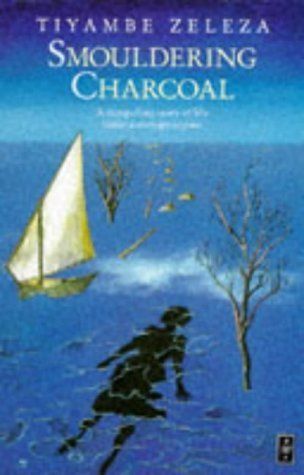
Cover of Smouldering Charcoal

Smouldering Charcoal

Tiyambe Zeleza

Original language: English · Paperback · ISBN 978-0435905835

Smouldering Charcoal is Tiyambe Zeleza's first novel, set in a post-colonial African country living under an authoritarian regime. The story follows two families whose lives run along very different tracks. One family is poor, working-class, and lacking formal education. The other pair, a politically conscious college student and her journalist fiance, belong to the middle class and hold firm ideas about justice and civic freedom. Their paths converge as the novel measures how repression touches people at every level of society.

The young couple's growing opposition to the regime places them in direct conflict with the state. Zeleza uses their activism to explore a central tension: whether education and political awareness offer any real protection against a government willing to use violence against its own citizens. The answer the novel pursues is bleak. The same brutality directed at the poor and powerless reaches the middle-class pair as well, collapsing the distance between the two households.

Zeleza, a Malawian-born writer and scholar, grounds the novel in the everyday textures of life under dictatorship, from economic hardship to the slow erosion of trust between neighbours. The book was published as part of the Heinemann African Writers Series.

Plot

This powerful first novel chronicles the lives of two families: the first, poor, working-class and ill-educated, is compared to a young politically aware college student and her journalist fiance. The middle-class pair--idealistic and increasingly active in opposing the repressive post-colonial regime under which they all live--become victims of the same brutal violence delivered to the poor and powerless of their country.
Cover of Soft magic

Soft magic

Upile Chisala

Original language: English · Paperback · ISBN 978-1516967889

Soft Magic is the debut collection of prose and poetry by Malawian writer Upile Chisala. The book moves through subjects close to identity and belonging, touching on selfhood, joy, blackness, gender, love, spirituality, and the experience of living in diaspora. Chisala writes from the position of someone shaped by Malawi and by distance from it, and the collection reflects both of those perspectives.

The pieces in the book are organized around the idea of survival and healing as shared experiences rather than private ones. Chisala addresses her themes in short, direct forms, a style that has found a wide readership among writers working in a similar mode of personal, compressed poetry. The title phrase suggests a kind of quiet, internal strength, one rooted in gentleness rather than force.

Chisala is part of a generation of African women poets who have built audiences largely through social media and self-publishing before reaching wider distribution. Her work is grounded in Malawi but speaks to questions of identity and displacement that cross borders. The collection treats difficult subjects with care, keeping its language close to the body and to everyday emotional life.

Plot

This book explores the self, joy, blackness, gender, matters of the heart, the experience of Diaspora, spirituality and most of all, how we survive. 'soft magic.' is a shared healing journey.

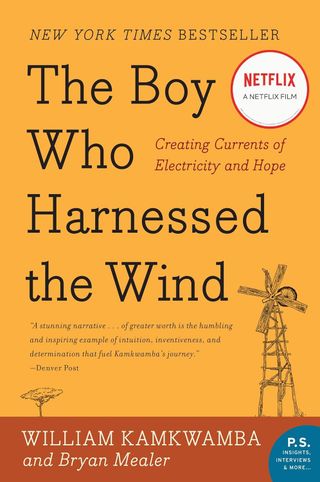
Cover of The Boy Who Harnessed the Wind

The Boy Who Harnessed the Wind

William Kamkwamba, Bryan Mealer

Original language: English · Paperback · ISBN 978-0061730337

William Kamkwamba grew up in a farming family in Wimbe, a small village in central Malawi. When he was fourteen, a severe famine struck the region, and his family could no longer afford his school fees. Cut off from formal education, he began visiting a local library, where he found textbooks on physics and energy. One book included diagrams of windmills and electrical generators. From those pages, he started to form an idea: he could build a machine that would generate electricity from wind.

Kamkwamba gathered scrap materials, including a broken bicycle, a tractor fan blade, PVC pipe, and the motor from a small cassette player. His early experiments showed that spinning a motor could produce enough current to power a radio. Neighbors doubted him, but he continued assembling a full-sized windmill near his family's home. In time, his device produced enough electricity for lights and, later, for pumping water to irrigate crops outside the single rainy season.

The book, co-written with journalist Bryan Mealer, is told in first person. It covers not only the engineering work but also the famine itself, the local effects of government mismanagement, and daily life in a country where at the time only about two percent of the population had access to electricity.

Plot

William Kamkwamba was born in Malawi, a country where magic ruled and modern science was mystery. It was also a land withered by drought and hunger. But William had read about windmills, and he dreamed of building one that would bring to his small village a set of luxuries that only 2 percent of Malawians could enjoy: electricity and running water. His neighbors called him misala—crazy—but William refused to let go of his dreams. With a small pile of once-forgotten science textbooks; some scrap metal, tractor parts, and bicycle halves; and an armory of curiosity and determination, he embarked on a daring plan to forge an unlikely contraption and small miracle that would change the lives around him.

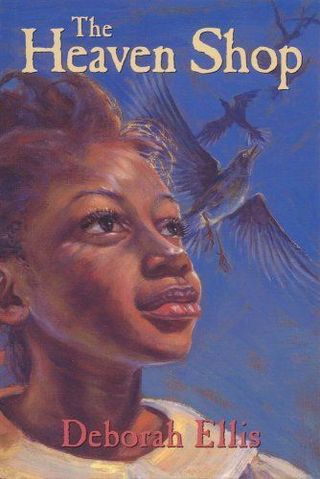
Cover of The Heaven Shop

The Heaven Shop

Deborah Ellis

Original language: English · Hardcover · ISBN 978-1550419085

Binti Phiri is a young girl in Malawi who once performed on a popular radio program, a role that made her feel visible and valued. When her father dies of AIDS, following her mother's earlier death from the same disease, Binti's life changes completely. At the funeral, her grandmother speaks the words that carry a particular stigma in Malawi, confirming the cause of death. Binti, her brother, and her sister are separated and placed with relatives who resent their presence.

Each sibling faces a different version of the same problem. Stripped of status and treated as unwelcome dependents, they endure conditions closer to servitude than family care. Binti struggles with fury at her sudden fall from a child known across the airwaves to someone defined entirely by the circumstances of her parents' deaths. Her brother is sent far away, and her sister retreats into grief. The distance between the three of them becomes one of the story's central tensions.

Deborah Ellis, also known for The Breadwinner trilogy, sets this novel against the backdrop of an AIDS crisis that had orphaned more than eleven million children across Africa at the time of writing. All royalties from the book were designated for donation to UNICEF.

Plot

At her father's funeral, Binti's grandmother utters the words that no one in Malawi wants to hear. Binti's father and her mother before him, dies of AIDS. Binti, her sister, and brother are separated and sent to the home of relatives who can barely tolerate their presence. Ostracized by their extended family, the orphans are treated like the lowest servants. With her brother far away and her sister wallowing in her own sorrow, Binti can hardly contain her rage. She, Binti Phirim, was once a child star of a popular radio program. Now she is scraping to survive. Binti always believed she was special, now she is nothing but a common AIDS orphan. Binti Phiri is not about to give up. Even as she clings to hope that her former life will be restored, she must face a greater challenge. If she and her brother and sister are to reunited, Binti Phiri will have to look outside herself and find a new way to be special.

More from Malawi

See the country page for Malawi for its map, facts and largest cities, or browse books from other countries.

Links go to Amazon; Hookito doesn’t sell books. Know a book that belongs here, or spotted a mistake? Write to submissions@hookito.com.

Where to next?

Back to the globe
Hookito landscape illustration