Hookito

Mexico · Books

Books from Mexico

11 books from and about Mexico: what each is about, the plot, and a note from Professor Kogi.

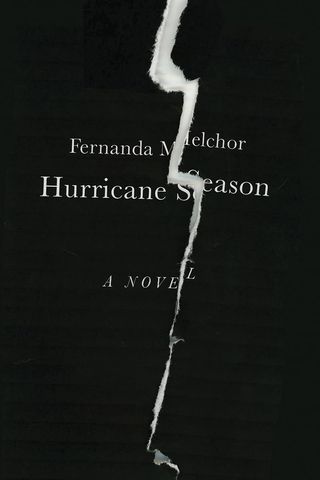
Cover of Hurricane Season

Hurricane Season

Fernanda Melchor

Original language: Spanish · Paperback · ISBN 978-0811230735

In a small rural settlement called La Matosa, children find a body floating in the murky water of an irrigation canal. The dead woman is known locally as the Witch, a role she inherited from her mother, and one that made her both feared and respected. Suspicion soon falls on young men from the village, seen days earlier leaving her house, apparently carrying a lifeless body.

The novel unfolds through several narrators, none of them reliable, each adding details to the events around the death. Melchor writes in long unbroken streams of language that carry the reader through overlapping accounts of poverty, desire, and power. The village she describes is shaped by neglect and isolation, where violence and dark sexuality sit close to ordinary daily life.

Rather than keeping her characters at a distance, Melchor stays close enough to find traces of recognizable feeling in people many would dismiss. Hurricane Season was written in Spanish and later published in English, the first of Melchor's books to appear in that language. She had previously published the novel Falsa liebre.

Plot

The Witch is dead. And the discovery of her corpse has the whole village investigating the murder. As the novel unfolds in a dazzling linguistic torrent, with each unreliable narrator lingering on new details, new acts of depravity or brutality, Melchor extracts some tiny shred of humanity from these characters―inners whom most people would write off as irredeemable―forming a lasting portrait of a damned Mexican village.
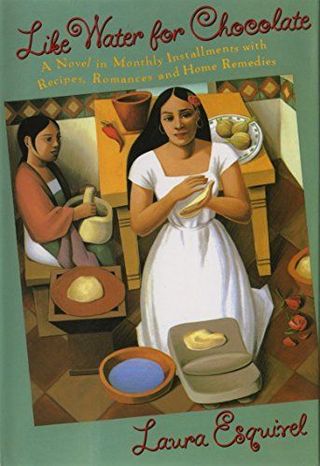
Cover of Like Water for Chocolate

Like Water for Chocolate

Laura Esquivel

Original language: Spanish · Kindle Edition

Like Water for Chocolate is set on the De la Garza ranch in Mexico during the early twentieth century, a period marked by revolution and social upheaval. The story follows Tita, the youngest daughter, who is born in the kitchen amid onions, spices, and the preparations for noodle soup. According to family tradition, the youngest daughter must never marry but instead care for her mother until the older woman dies. When Tita falls in love with Pedro, her tyrannical mother Mama Elena forbids the match and offers him Tita's older sister instead.

Pedro accepts, hoping to stay close to Tita, and the household becomes a site of silent conflict between desire, duty, and control. Tita channels her emotions into cooking, and the meals she prepares carry her feelings directly into those who eat them. Each chapter is structured around a recipe, linking the domestic routines of the kitchen to the larger tensions of the story.

Laura Esquivel published the novel in 1989. It blends elements of magical realism with the format of a cookbook, grounding its fantastical moments in the textures and smells of traditional Mexican food. The ranch setting places the personal struggles of the De la Garza family against the backdrop of a country in transformation.

Plot

This classic love story takes place on the De la Garza ranch, as the tyrannical owner, Mama Elena, chops onions at the kitchen table in her final days of pregnancy. While still in her mother's womb, her daughter to be weeps so violently she causes an early labor, and little Tita slips out amid the spices and fixings for noodle soup. This early encounter with food soon becomes a way of life, and Tita grows up to be a master chef, using cooking to express herself and sharing recipes with readers along the way.

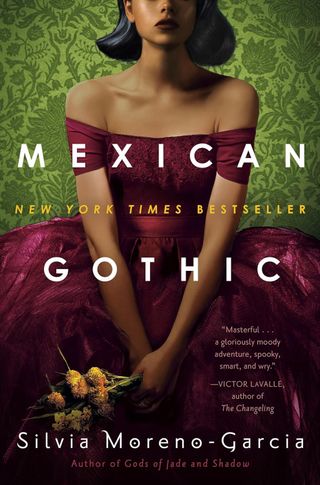
Cover of Mexican Gothic

Mexican Gothic

Silvia Moreno-Garcia

Original language: English · Paperback · ISBN 978-0525620785

Set in 1950s Mexico, Mexican Gothic follows Noemí Taboada, a young socialite from Mexico City who travels to a remote countryside mansion called High Place after receiving a desperate letter from her recently married cousin. The cousin, now living with her English husband and his family, pleads for rescue from something she struggles to explain. Noemí arrives expecting a short visit but finds a household governed by strange rules and an aging patriarch whose interest in her feels uncomfortably pointed.

Noemí is fashionable and socially confident, more familiar with cocktail parties than rural isolation. She is also sharp and stubborn, qualities that serve her as the house and its residents grow more unsettling. Her sleep is disturbed by vivid, disturbing dreams, and the mansion itself seems to press against her resolve. Her one potential ally inside the family is its youngest son, who appears sympathetic but whose own loyalties remain unclear.

The novel draws on gothic literary traditions and relocates them to a Mexican setting shaped by a former mining fortune and its colonial English owners. Silvia Moreno-Garcia builds the story around the tension between Noemí's determination to understand what is happening and a household that resists outside scrutiny at every turn.

Plot

After receiving a frantic letter from her newly-wed cousin begging for someone to save her from a mysterious doom, Noemí Taboada heads to High Place, a distant house in the Mexican countryside. She’s not sure what she will find—her cousin’s husband, a handsome Englishman, is a stranger, and Noemí knows little about the region.

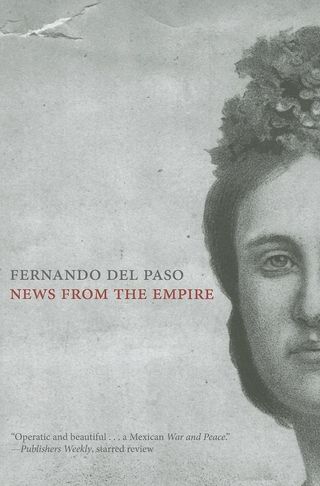
Cover of News from the Empire

News from the Empire

Fernando del Paso

Original language: Spanish · Paperback · ISBN 978-1564785336

Fernando del Paso's News from the Empire centers on Maximilian and Carlota, the Austrian-born couple who briefly ruled Mexico as Emperor and Empress during the 1860s. Maximilian was the younger brother of Austria's Emperor Franz Josef, installed on a Mexican throne largely at the urging of Napoleon III of France. The novel moves between Carlota's feverish, isolated recollections and a wider chorus of voices offering competing versions of the same events. Del Paso uses this structure to examine how history gets told, disputed, and forgotten.

The scope of the book is broad, reaching from European palace corridors to Mexican villages, yet it stays grounded in specific people and their contradictions. Del Paso portrays Maximilian and Carlota as two sheltered figures placed in circumstances far beyond their grasp, governing a country they barely understood. Maximilian's inability to rule is presented as especially striking given his proximity to imperial power back in Austria.

Beyond biography, the novel asks what Mexico was becoming as a young nation caught between foreign intervention and its own internal conflicts. Del Paso weaves fiction through documented history, filling gaps left by the official record with invented lives and scenes that give shape to an era often simplified in textbooks.

Plot

One of the acknowledged masterpieces of Mexican literature, Fernando del Paso's News from the Empire is a powerful and encyclopedic novel of the tragic lives of Maximilian and his wife, Carlota, the short-lived Emperor and Empress of Mexico. Simultaneously intimate and panoramic, the narrative flows from Carlota's fevered memories of her husband's ill-fated empire to the multiple and conflicting accounts of a broad cast of characters who bore witness to the events that first placed the hapless couple on their puppet thrones, and then as swiftly removed them.

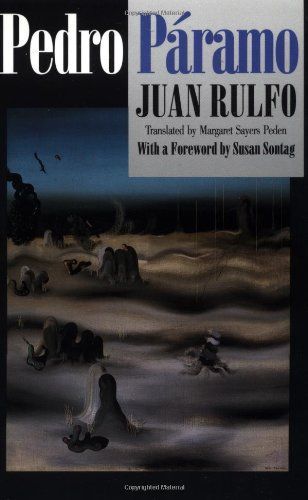
Cover of Pedro Páramo

Pedro Páramo

Juan Rulfo

Original language: Spanish · Paperback · ISBN 978-0802133908

Juan Preciado travels to the town of Comala at the request of his dying mother, who asks him to find his father, Pedro Páramo. The two had left Comala years earlier, and Juan arrives knowing almost nothing about the man or the place. What he finds is a town that seems emptied of the living, where voices fill the air and the boundary between the present and the past has dissolved. The people he encounters may be memories, ghosts, or something harder to classify.

Through fragmented scenes and shifting voices, the novel pieces together the story of Pedro Páramo himself, a landowner whose control over Comala was absolute. His obsessions, cruelties, and one enduring attachment shaped the fate of the entire settlement. Rulfo moves between timeframes without announcement, so that the reader assembles the history of the town gradually, often from the testimony of the dead.

First published in Mexico in 1955, the novel broke sharply from the realist tradition that had dominated Latin American fiction. Its combination of concrete sensory detail with unexplained, spectral events helped establish what later came to be called magical realism. Rulfo published very little in his lifetime, yet this short novel became one of the most widely read works of Mexican literature.

Plot

Beseeched by his dying mother to locate his father, Pedro Páramo, whom they fled from years ago, Juan Preciado sets out for Comala. Comala is a town alive with whispers and shadows—a place seemingly populated only by memory and hallucinations. Built on the tyranny of the Páramo family, its barren and broken-down streets echo the voices of tormented spirits sharing the secrets of the past.

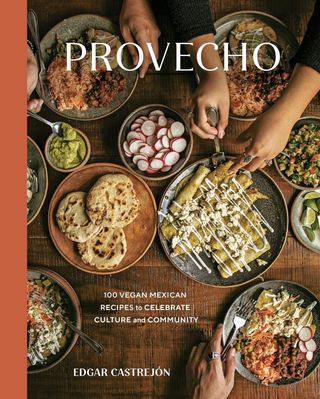
Cover of Provecho: 100 Vegan Mexican Recipes to Celebrate Culture and Community

Provecho: 100 Vegan Mexican Recipes to Celebrate Culture and Community

Edgar Castrejón

Original language: English · Hardcover · ISBN 978-1984859112

Provecho by Edgar Castrejón is a collection of one hundred plant-based recipes rooted in Mexican cooking traditions. The book takes dishes that are typically built around meat and reworks them using vegan ingredients, drawing on techniques and flavors from Mexican, Salvadoran, and Colombian kitchens. Many of the recipes can be prepared in thirty minutes or less and call for ingredients that are widely available rather than specialty items.

The recipes are organized around the way meals function in Castrejón's own family, reflecting the social rhythms of home cooking rather than following a conventional cookbook structure by course or ingredient type. This framing places the food within a broader context of household life, where cooking is tied to gathering, sharing, and cultural continuity across generations.

The title itself signals something about the book's perspective. In Spanish, provecho is part of the common phrase buen provecho, spoken before or during a meal as a wish for others to enjoy their food. It is an everyday expression heard across Latin America and carries a sense of generosity and togetherness at the table, which fits the communal spirit Castrejón brings to his approach to plant-based cooking.

Plot

Provecho features one hundred of Edgar’s ingenious vegan recipes that honor the traditional, often meat-heavy classics of Mexican and Latin American culture while cooking with compassion. Many take thirty minutes or less, rely on readily accessible ingredients, and feature Salvadoran and Colombian influences. And they’re all organized by how meals are approached in Edgar’s family:

Cover of The Collected Poems of Octavio Paz

The Collected Poems of Octavio Paz

Octavio Paz

Original language: Spanish · Paperback · ISBN 978-0811211734

This bilingual edition gathers all of Octavio Paz's poetry published in book form from 1952 onward. Paz, born in Mexico City in 1914, received the Nobel Prize in Literature in 1990, and this collection presents his Spanish originals alongside English translations. The volume opens a wide view of a writing life that stretched across decades and continents, with Paz spending significant periods in France, India, and the United States while remaining rooted in Mexican literary culture.

A central work in the collection is Sunstone, known in Spanish as Piedra de Sol, Paz's first major long poem. The English version here is a new translation by Eliot Weinberger, who served as the volume's principal translator and had a long working relationship with Paz. Sunstone draws on Aztec calendrical imagery and cycles of time, folding personal memory and myth into a single extended sequence.

Beyond Sunstone, the book traces Paz's evolving concerns across shorter poems and later sequences. His writing often moves between observation of the physical world and meditation on language itself, exploring how words both reveal and obscure what they describe. The bilingual format allows readers to follow these shifts in both languages on facing pages.

Plot

The Collected Poems of Octavio Paz is a landmark bilingual gathering of all the poetry he has published in book form since 1952, the year of his premier long poem, Sunstone (Piedra de Sol)―here translated anew by Eliot Weinberger―made its appearance.

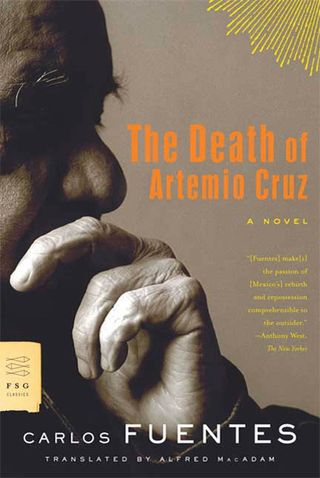
Cover of The Death of Artemio Cruz

The Death of Artemio Cruz

Carlos Fuentes

Original language: Spanish · paperback

The Death of Artemio Cruz opens with its central character lying on his deathbed. Artemio Cruz is a newspaper owner and landowner whose power stretches across modern Mexico. As his body fails, his mind drifts through fragments of his past, assembling and reassembling the events that shaped him. Carlos Fuentes structures the novel around these shifting recollections, moving between different periods of Cruz's life without following a single chronological line.

Cruz's memories reach back to the Mexican Revolution, where he fought as a young man, and trace his eventual rise from poverty into wealth and influence. The novel examines how revolutionary ideals can erode over time, replaced by personal ambition and corruption. Fuentes tells this story using three distinct narrative voices, each tied to a different pronoun and tense: first person in the present, second person in the future, and third person in the past. This technique fractures Cruz's identity across time, letting different versions of himself comment on or contradict one another.

The book is set against decades of Mexican political and social change, from the armed conflicts of the 1910s through the mid-twentieth century. Fuentes uses Cruz's individual story to explore how power concentrates and what it costs.

Plot

As the novel opens, Artemio Cruz, the all-powerful newspaper magnate, and land baron, lies confined to his bed and, in dreamlike flashes, recalls the pivotal episodes of his life. Carlos Fuentes manipulates the ensuing kaleidoscope of images with dazzling inventiveness, layering memory upon memory, from Cruz's heroic campaigns during the Mexican Revolution, through his relentless climb from poverty to wealth, to his uneasy death.

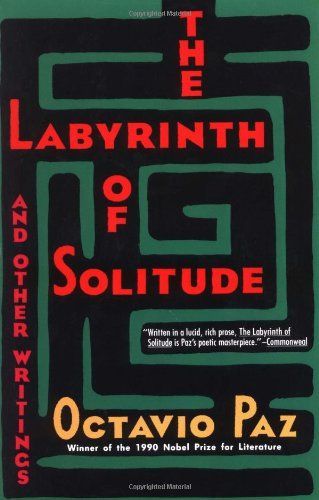
Cover of The Labyrinth of Solitude

The Labyrinth of Solitude

Octavio Paz

Original language: Spanish · paperback

The Labyrinth of Solitude is a collection of essays by Mexican writer and critic Octavio Paz, centered on his best-known work of the same title. In the title essay, Paz examines Mexico's search for national identity, looking at the ways Mexicans present themselves to the world and the cultural masks that shape daily life and public behavior. He traces patterns in Mexican history, language, fiestas, and attitudes toward death, arguing that a deep sense of solitude runs through the country's character and social structures.

The collection also includes several companion pieces. The Other Mexico revisits and updates the themes of the title essay, while Return to the Labyrinth of Solitude responds to questions raised by the original work years after its publication. Mexico and the United States considers the relationship between the two neighboring countries, and The Philanthropic Ogre extends Paz's analysis to the role of the state across Latin America. Together, these essays build a sustained argument about how geography, colonial history, and revolution have shaped identity in the region.

The title essay has been compared to Ortega y Gasset's The Revolt of the Masses for its analytical scope. Paz, who is widely regarded as one of Mexico's foremost writers, uses a style that blends cultural criticism with personal observation and historical interpretation.

Plot

Compared to Ortega y Gasset's The Revolt of the Masses for its trenchant analysis, this collection contains his most famous work, "The Labyrinth of Solitude," a beautifully written and deeply felt discourse on Mexico's quest for identity that gives us an unequaled look at the country hidden behind "the mask." Also included are "The Other Mexico," "Return to the Labyrinth of Solitude," "Mexico and the United States," and "The Philanthropic Ogre," all of which develop the themes of the title essay and extend his penetrating commentary to the United States and Latin America.

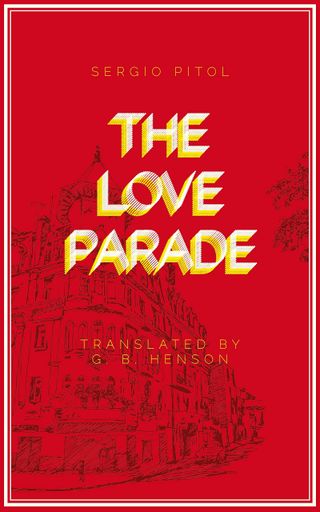
Cover of The Love Parade

The Love Parade

Sergio Pitol

Original language: Spanish · paperback

A historian comes across old documents that pull him back to a murder committed in his childhood home in Mexico City in the autumn of 1942. Mexico had just declared war on Germany, and the capital was filling with displaced Europeans: German communists, Spanish republicans, followers of Trotsky, Balkan royalty, agents of several secret services, and wealthy Jewish financiers.

Sergio Pitol frames the book as a detective story, using the historian's inquiry to move through the social layers of wartime Mexico City. The investigation introduces a wide cast of eccentric figures from politics, the press, and the newly settled intellectual circles, each with private motives and ties to the upheaval abroad. Personal memory and documented history sit side by side in the telling.

The central tension lies between the boy who lived in that house in 1942 and the adult now working with documents and interviews. Political allegiances brought from Europe, wartime alliances, and the interests of Mexican officials and reporters all shape what can be learned. The house, ordinary to the narrator as a child, becomes the fixed point of the search.

Plot

Following the chance discovery of certain documents, a historian sets out to unravel the mystery of a murder committed in his childhood Mexico City home in the autumn of 1942. Mexico had just declared war on Germany, and its capital had recently become a colorful cauldron of the most unusual and colorful of the European ilk: German communists, Spanish republicans, Trotsky and his disciples, Balkan royalty, agents of the most varied secret services, opulent Jewish financiers, and more. As the historian-turned-detective begins his investigation, he introduces us to a rich and eccentric gallery of characters, the media of politics, the newly installed intelligentsia, and beyond.

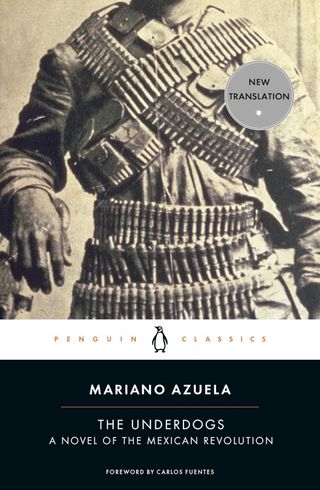
Cover of The Underdogs

The Underdogs

Mariano Azuela

Original language: Spanish · Paperback · ISBN 978-0143105275

Mariano Azuela's The Underdogs follows Demetrio Macias, a poor farmer in rural Mexico who is forced to take up arms during the Mexican Revolution. After soldiers threaten his family, Demetrio joins the rebel fighters and, through a combination of bravery and natural leadership, rises to the rank of general under Pancho Villa. The novel traces his arc from reluctant participant to military commander, set against the shifting alliances and internal divisions that fractured the revolutionary movement after 1910.

Azuela, himself a physician who served with Villa's forces, wrote the novel during the conflict and first published it in serialized form in 1915. The story is told in short, direct episodes that move between battle scenes, encampments, and the small settlements of Mexico's mountainous interior. Peasant life, loyalty, opportunism, and the gap between revolutionary ideals and the chaos of factional warfare all run through the narrative.

As Demetrio's campaign continues, the cause he once believed in grows harder to define. Political goals give way to routine violence and rivalry among competing leaders. The novel stays close to the ground, presenting the revolution through the experiences of ordinary people caught inside it rather than through grand historical summary.

Plot

The Underdogs is the first great novel about the first great revolution of the twentieth century. Demetrio Macias, a poor, illiterate Indian, must join the rebels to save his family. Courageous and charismatic, he earns a generalship in Pancho Villa’s army, only to become discouraged with the cause after it becomes hopelessly factionalized. At once a spare, moving depiction of the limits of political idealism, an authentic representation of Mexico’s peasant life, and a timeless portrait of revolution, The Underdogs is an iconic novel of the Latin American experience and a powerful novel about the disillusionment of war.

More from Mexico

See the country page for Mexico for its map, facts and largest cities, or browse books from other countries.

Free editions are on Project Gutenberg, matched by title and author. Links go to Amazon; Hookito doesn’t sell books. Know a book that belongs here, or spotted a mistake? Write to submissions@hookito.com.

Where to next?

Back to the globe
Hookito landscape illustration