Hookito

Malaysia · Books

Books from Malaysia

9 books from and about Malaysia: what each is about, the plot, and a note from Professor Kogi.

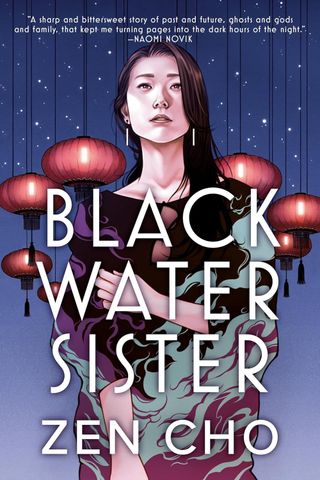
Cover of Black Water Sister

Black Water Sister

Zen Cho

Original language: English · Paperback · ISBN 978-0425283431

Jessamyn Teoh is broke, closeted, and unemployed when she moves back to Malaysia with her parents. She has not been in the country since she was a toddler, and the return is already stressful before a voice begins speaking inside her head. The voice belongs to her estranged grandmother, Ah Ma, who was a spirit medium during her lifetime and served a deity known as the Black Water Sister. Now dead, Ah Ma has unfinished business with a powerful local businessman she believes has insulted the god, and she expects Jess to carry out her plans.

The story is set in contemporary Malaysia and draws on Chinese Malaysian folk religion, where spirit mediums act as channels between people and local deities. Jess finds herself caught between her grandmother's demands and her own need to keep parts of her life private. Ah Ma is not a gentle guide. She monitors Jess's personal relationships, holds the threat of exposing her secrets over her, and at times takes control of her body without permission.

Zen Cho, a Malaysian author based in the United Kingdom, builds the novel around overlapping pressures: family obligation, cultural inheritance, and the question of how much autonomy a person can hold when spirits and relatives both claim authority over her choices.

Plot

When Jessamyn Teoh starts hearing a voice in her head, she chalks it up to stress. Closeted, broke and jobless, she’s moving back to Malaysia with her parents – a country she last saw when she was a toddler. She soon learns the new voice isn’t even hers, it’s the ghost of her estranged grandmother. In life, Ah Ma was a spirit medium, avatar of a mysterious deity called the Black Water Sister. Now she’s determined to settle a score against a business magnate who has offended the god—and she's decided Jess is going to help her do it, whether Jess wants to or not. Drawn into a world of gods, ghosts, and family secrets, Jess finds that making deals with capricious spirits is a dangerous business, but dealing with her grandmother is just as complicated. Especially when Ah Ma tries to spy on her personal life, threatens to spill her secrets to her family and uses her body to commit felonies. As Jess fights for retribution for Ah Ma, she’ll also need to regain control of her body and destiny – or the Black Water Sister may finish her off for good.
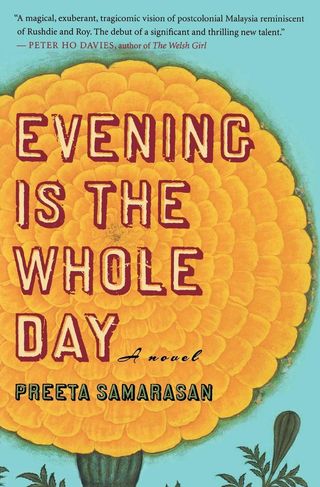
Cover of Evening Is The Whole Day

Evening Is The Whole Day

Preeta Samarasan

Original language: English · Paperback · ISBN 978-0547237893

Evening Is the Whole Day is Preeta Samarasan's debut novel, set in Malaysia and centered on the Rajasekharan family, a prosperous household whose stability conceals fractures. It opens with the dismissal of Chellam, a servant raised on a rubber plantation, sent away for offenses the family never names. For six-year-old Aasha, this follows other losses: her grandmother Paati's death under unclear circumstances, and her sister Uma's departure for Columbia University.

Aasha is left in a household defined by absences and silences. Her father is rarely present, her mother bitter, and her older brother hard to reach. The novel works through the family's guarded secrets, showing what sits beneath a composed surface. Samarasan draws on Malaysia's multiethnic landscape, touching on class divisions, the legacy of plantation labour, and tensions within a family shaped by expectations it cannot openly discuss.

The narrative structure shifts across time and perspective, assembling the family's history in layered pieces rather than strict chronological order. Samarasan's approach allows each character's version of events to stand alongside the others, building a picture of domestic life where what remains unspoken carries real consequence.

Plot

Set in Malaysia, this spellbinding and already internationally acclaimed debut introduces us to the prosperous Rajasekharan family as its closely guarded secrets are slowly peeled away. When Chellam, the family’s rubber-plantation-bred servant girl, is dismissed for unnamed crimes, her banishment is the latest in a series of recent, precipitous losses that have shaken six-year-old Aasha’s life. A few short weeks before, Aasha’s grandmother Paati passed away under mysterious circumstances and her older sister, Uma, departed for Columbia University—leaving Aasha alone to cope with her mostly absent father, her bitter mother, and her imperturbable older brother.

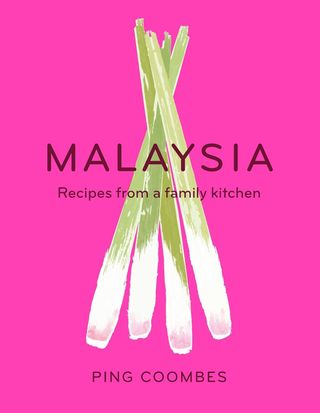
Cover of Malaysia: Recipes from a Family Kitchen

Malaysia: Recipes from a Family Kitchen

Ping Coombes

Original language: English · Hardcover · ISBN 978-1474601498

Ping Coombes grew up in Ipoh, a city in the state of Perak known for its food culture and late-night street stalls. This cookbook, her first, collects over 100 recipes rooted in the cooking she learned from her mother and from the hawker markets of her hometown. The dishes reflect the three major culinary traditions that shape Malaysian food: Chinese, Malay, and Indian, each contributing distinct ingredients, techniques, and flavors to a shared table.

The recipes cover a wide range of Malaysian staples. Laksas, which are spicy noodle soups built on coconut or tamarind broth, sit alongside rendang, a slow-cooked dry curry, and various sambals, the chilli-based condiments that appear at nearly every Malaysian meal. Satay, chilli crab, and caramel pork are also included. Coombes writes the book as an introduction to these dishes, aiming to make them accessible to cooks unfamiliar with the cuisine.

Ipoh itself is sometimes called a food capital of Malaysia, partly because of the concentration of hawker stalls that serve regional specialties at low cost. The book draws on that local food environment as much as on family cooking, connecting home kitchens and street vendors as two sides of the same tradition.

Plot

Malaysian food has long been the hidden jewel of South-east Asian cookery - it's a fusion of the Chinese, Malay and Indian cultures that make up Malaysia itself. In her debut book Malaysia Ping Coombes shares all the secrets and delights of this extraordinary cuisine. Drawing inspiration from her mother and from the late-night stalls and street markets in her hometown of Ipoh, Ping has put together over 100 delicious recipes that serve as a perfect introduction to the tastes and textures of Malaysian cooking. Chilli crab and caramel pork, spicy laksas and rendangs, satays and tangy sambals: these classic dishes are intensely satisfying to make, share and devour!

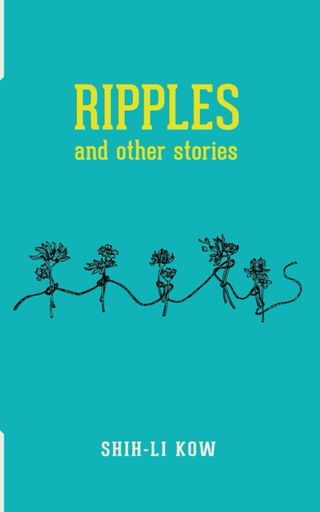
Cover of RIPPLES and Other Stories

RIPPLES and Other Stories

Shih-Li Kow

Original language: English · Paperback · ISBN 978-9670042893

RIPPLES and Other Stories collects twenty-five short stories by the Malaysian writer Shih-Li Kow. The pieces move across different corners of Malaysian life, shifting between busy city streets, clinics, islands, and small domestic rooms. Characters vary widely in age, gender, and social class, and the book takes its energy from that range of voices rather than from one continuous plot or a single narrator.

Hawkers selling yow char kwai, the fried dough sticks eaten at Malaysian breakfast stalls, compete for customers on a crowded street. A married couple's dynamic becomes visible at an abortion clinic. In another piece, a woman's letter to her brother concerns their cat, now dead. On an island, a man's infatuation with a veiled woman turns toward the supernatural.

Chance meetings and fateful events connect people across the book, and the frictions of a society made from many communities, along with its absurdities, colour much of what happens. The collection was shortlisted for the 2009 Frank O'Connor International Short Story Prize, an award given in Cork, Ireland, for single-author story collections written in English.

Plot

This polyphonic collection of twenty-five stories presents a multitude of Malaysian perspectives spanning age, gender, and class. Yow char kwai hawkers compete for customers on a busy city street. Marital dynamics unfurl at an abortion clinic. On an island, a man's infatuation with a veiled woman takes a supernatural turn. A woman writes to her brother about their dead cat. Characters in these stories connect through chance encounters and fateful events. Their narratives are inevitably coloured by the social tension and occasional absurdities of a multicultural society.

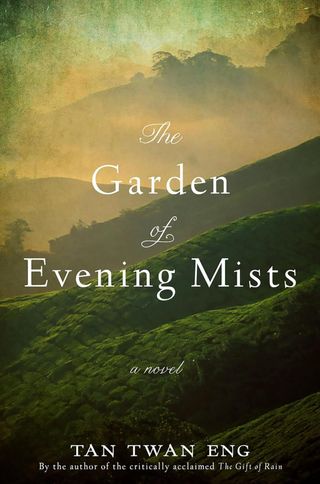
Cover of The Garden of Evening Mists

The Garden of Evening Mists

Tan Twan Eng

Original language: English · Paperback · ISBN 978-1602861800

In 1951, Teoh Yun Ling travels into the Cameron Highlands of Malaya. She is the sole survivor of a Japanese wartime camp where her sister died, and she has spent the years since helping prosecute Japanese war criminals. She asks Nakamura Aritomo, an exiled former gardener of the Emperor of Japan, to build a memorial garden for her sister. He refuses, but agrees to take her as an apprentice until the monsoon.

Yun Ling stays at Majuba Tea Estate, owned by Magnus Pretorius, a veteran of the Boer War. Aritomo's garden, Yugiri, is the only Japanese garden in Malaya, set among jungle-fringed tea plantations. As the months pass and she is drawn to his art, the Malayan Emergency intensifies. Communist guerrillas attack planters, miners and their families, while nationalists press for independence from British colonial rule.

Tan Twan Eng sets questions of memory, survival and uneasy trust inside this landscape. Aritomo's reasons for leaving Japan stay unclear, and Yun Ling's account of her own survival holds material she has not disclosed. The novel moves between the patient discipline of garden design and the disorder of a country caught between occupation, insurgency and the end of colonial rule.

Plot

Malaya, 1951. Yun Ling Teoh, the scarred lone survivor of a brutal Japanese wartime camp, seeks solace among the jungle-fringed tea plantations of Cameron Highlands. There she discovers Yugiri, the only Japanese garden in Malaya, and its owner and creator, the enigmatic Aritomo, exiled former gardener of the emperor of Japan. Despite her hatred of the Japanese, Yun Ling seeks to engage Aritomo to create a garden in memory of her sister, who died in the camp. Aritomo refuses but agrees to accept Yun Ling as his apprentice "until the monsoon comes." Then she can design a garden for herself. As the months pass, Yun Ling finds herself intimately drawn to the gardener and his art, while all around them a communist guerilla war rages. But the Garden of Evening Mists remains a place of mystery. Who is Aritomo and how did he come to leave Japan? And is the real story of how Yun Ling managed to survive the war perhaps the darkest secret of all?

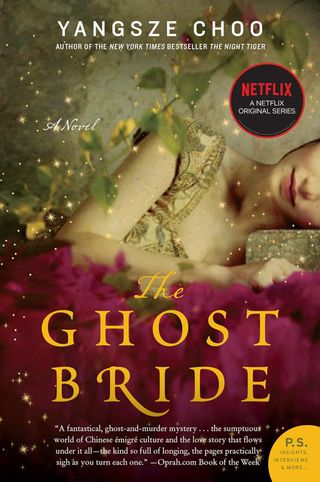
Cover of The Ghost Bride

The Ghost Bride

Yangsze Choo

Original language: English · Paperback · ISBN 978-0062227331

Set in 1893 colonial Malaysia, The Ghost Bride follows Li Lan, a young woman from a once-respectable Chinese family now facing financial ruin. With few marriage prospects, she receives a strange proposal from the powerful Lim family: they want her to become the bride of their recently deceased son. Ghost marriages, in which a living person is wed to the dead, were a rare custom intended to calm a troubled spirit. The arrangement would provide Li Lan with material security, but the cost is far from simple.

Li Lan's visits to the Lim household pull her into unsettling encounters with the supernatural. She begins crossing into the Chinese afterlife, a layered realm of ghost cities, paper offerings burned for the dead, bureaucratic hierarchies, and wandering spirits. Among the figures she meets is Er Lang, a guardian spirit whose intentions remain uncertain. At the same time, she finds herself drawn to Tian Bai, the living heir of the Lim family. As Li Lan moves between the world of the living and the dead, she is pressed to uncover what really happened to the Lim son and what her own family may be concealing.

Plot

Li Lan, the daughter of a respectable Chinese family in colonial Malaysia, hopes for a favorable marriage, but her father has lost his fortune, and she has few suitors. Instead, the wealthy Lim family urges her to become a “ghost bride” for their son, who has recently died under mysterious circumstances. Rarely practiced, a traditional ghost marriage is used to placate a restless spirit. Such a union would guarantee Li Lan a home for the rest of her days, but at what price? Night after night, Li Lan is drawn into the shadowy parallel world of the Chinese afterlife, where she must uncover the Lim family’s darkest secrets—and the truth about her own family.

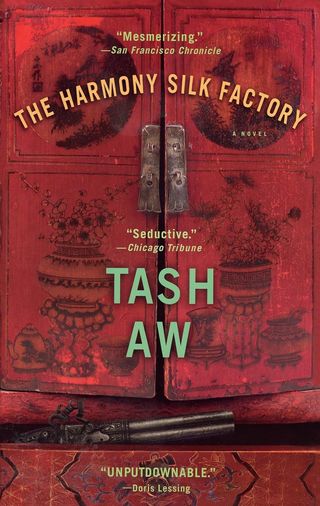
Cover of The Harmony Silk Factory

The Harmony Silk Factory

Tash Aw

Original language: English · Paperback · ISBN 978-1594481741

The Harmony Silk Factory follows Johnny Lim, a textile merchant of Chinese peasant background living in British Malaya during the first half of the twentieth century. His factory is the most impressive building in the Kinta Valley, and many locals regard him as a hero: a Communist who fought the Japanese invasion and was willing to give his life for his community.

Johnny's son Jasper sees a criminal and a collaborator, and the factory as a front for his father's illegal businesses. The book divides into three accounts, each narrated by a different character long after Johnny's death. He appears in turn as a resistance leader, an informer for the Japanese, a black-market dealer, a loyal friend, and a husband uneasy before his aristocratic wife. The versions never settle into one agreed life.

The setting is 1940s Malaysia under colonial administration and wartime occupation, when political loyalties shifted quickly and evidence about a person's conduct could be read in opposite ways. Tash Aw's first novel keeps its subject at a distance, letting contradiction, rumour, and personal grievance shape what each teller chooses to remember and report.

Plot

The Harmony Silk Factory traces the story of textile merchant Johnny Lim, a Chinese peasant living in British Malaya in the first half of the twentieth century. Johnny's factory is the most impressive structure in the region, and to the inhabitants of the Kinta Valley Johnny is a hero—a Communist who fought the Japanese when they invaded, ready to sacrifice his life for the welfare of his people. But to his son, Jasper, Johnny is a crook and a collaborator who betrayed the very people he pretended to serve, and the Harmony Silk Factory is merely a front for his father's illegal businesses.

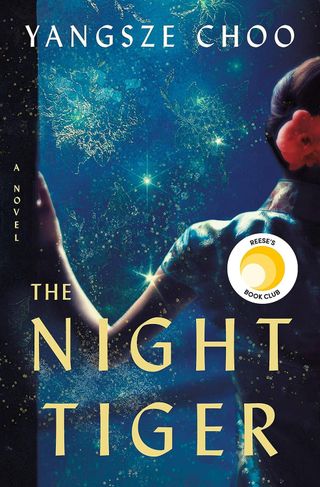
Cover of The Night Tiger

The Night Tiger

Yangsze Choo

Original language: English · Hardcover · ISBN 978-1250175458

Set in 1930s colonial Malaysia, The Night Tiger follows two characters whose separate quests become entangled around a single severed finger. Ji Lin is a young apprentice dressmaker who works nights at a dance hall to cover her mother's Mahjong debts. When a dance partner leaves behind a disturbing object, she is pulled into a chain of events involving local superstitions and hidden dangers. Eleven-year-old Ren, a houseboy, is trying to carry out the dying wish of his former master: to recover the man's lost finger and reunite it with his body within 49 days, or the master's soul will be left to wander.

The novel moves between rubber plantations, colonial hospitals, and dreamlike spaces as the two storylines draw closer together. A series of unexplained deaths unsettles the district, and rumors spread of men who can become tigers. Yangsze Choo uses these local beliefs not as decoration but as structural elements that shape the characters' choices and fears.

The story is grounded in the social layers of colonial Malaya, where servants, doctors, and plantation workers occupy distinct and unequal positions. Ji Lin's ambitions and Ren's loyalty each press against the limits set by class, age, and colonial authority.

Plot

Quick-witted, ambitious Ji Lin is stuck as an apprentice dressmaker, moonlighting as a dancehall girl to help pay off her mother's Mahjong debts. But when one of her dance partners accidentally leaves behind a gruesome souvenir, Ji Lin plunges into a dark adventure: a mirror world of secrets and superstitions. Eleven-year-old houseboy Ren is also on a mission, racing to fulfill his former master's dying wish: that Ren find the man's finger, lost years ago in an accident, and bury it with his body. Ren has 49 days to do so, or his master's soul will wander the earth forever. As the days tick relentlessly by, a series of unexplained deaths racks the district, along with whispers of men who turn into tigers. Ji Lin and Ren's increasingly dangerous paths crisscross through lush plantations, hospital storage rooms, and ghostly dreamscapes.

Cover of The Weight of Our Sky

The Weight of Our Sky

Hanna Alkaf

Original language: English · Hardcover · ISBN 978-1534426085

Melati Ahmad is a sixteen-year-old in Kuala Lumpur who loves the Beatles and going to the movies. She also lives with what she understands as a djinn inside her, a presence that floods her mind with terrible images of her mother dying unless she follows strict rituals of counting and tapping. In clinical terms, Mel experiences obsessive-compulsive disorder, but she frames her condition through the cultural lens of a spirit that must be appeased.

On the evening of May 13, 1969, racial violence erupts across Kuala Lumpur. Tensions between the Chinese and Malay communities spill into the streets, and the city is placed under curfew. Mel and her mother are separated during the chaos. With phone lines down and movement restricted, Mel sets out to find her mother with the help of Vincent, a Chinese boy. The two cross a city fractured along ethnic lines, each dependent on someone the other side of the conflict might consider an enemy.

Hanna Alkaf sets the story against a real historical event that remains sensitive in Malaysian public memory. The novel follows Mel as she contends simultaneously with external danger and the intensifying demands of the djinn in her mind, which grows louder under stress.

Plot

Melati Ahmad looks like your typical movie-going, Beatles-obsessed sixteen-year-old. Unlike most other sixteen-year-olds though, Mel also believes that she harbors a djinn inside her, one who threatens her with horrific images of her mother's death unless she adheres to an elaborate ritual of counting and tapping to keep him satisfied. But there are things that Melati can't protect her mother from. On the evening of May 13th, 1969, racial tensions in her home city of Kuala Lumpur boil over. The Chinese and Malays are at war, and Mel and her mother become separated by a city in flames. With a 24-hour curfew in place and all lines of communication down, it will take the help of a Chinese boy named Vincent and all of the courage and grit in Melati's arsenal to overcome the violence on the streets, her own prejudices, and her djinn's surging power to make it back to the one person she can't risk losing.

More from Malaysia

See the country page for Malaysia for its map, facts and largest cities, or browse books from other countries.

Links go to Amazon; Hookito doesn’t sell books. Know a book that belongs here, or spotted a mistake? Write to submissions@hookito.com.

Where to next?

Back to the globe
Hookito landscape illustration