Hookito

Namibia · Books

Books from Namibia

5 books from and about Namibia: what each is about, the plot, and a note from Professor Kogi.

Cover of Binti (Binti, 1)

Binti (Binti, 1)

Nnedi Okorafo

Original language: English · Paperback · ISBN 978-0765385253

Binti is a young woman of the Himba people who receives an offer to study at Oomza University, described as the finest institution of higher learning in the galaxy. She is the first of her people ever accepted there. Taking the place means leaving her family and traveling far from home, into communities that do not understand or respect Himba customs. The tension between opportunity and belonging sits at the center of the story from the start.

Her journey through space brings her into contact with the Meduse, an alien group locked in a long conflict with Oomza University. The Meduse are feared widely, and the university bears responsibility for wrongs committed against them. Binti finds herself caught between the two sides, carrying cultural knowledge and practical skills from her upbringing that may matter as much as anything the university could teach. The novella explores what it costs to move between worlds, literal and social, and how identity can shift under pressure without disappearing.

Nnedi Okofor's Binti won both the Hugo Award and the Nebula Award for Best Novella. It is the first entry in a series that continues Binti's story beyond this initial departure from home.

Plot

Her name is Binti, and she is the first of the Himba people ever to be offered a place at Oomza University, the finest institution of higher learning in the galaxy. But to accept the offer will mean giving up her place in her family to travel between the stars among strangers who do not share her ways or respect her customs. Knowledge comes at a cost, one that Binti is willing to pay, but her journey will not be easy. The world she seeks to enter has long warred with the Meduse, an alien race that has become the stuff of nightmares. Oomza University has wronged the Meduse, and Binti's stellar travel will bring her within their deadly reach. If Binti hopes to survive the legacy of a war not of her making, she will need both the gifts of her people and the wisdom enshrined within the University, itself ― but first she has to make it there, alive.

Cover of Eat Like A Namibian: Worldwide

Eat Like A Namibian: Worldwide

Barry de Klerk

Original language: English · Paperback · ISBN 979-8327162648

Eat Like A Namibian: Worldwide is a cookbook by Barry de Klerk that collects traditional and fusion recipes from Namibian cooking, adapted so that the ingredients can be found in ordinary grocery stores outside the country. The book covers dishes rooted in Namibian food culture, including roosterbrood (a bread cooked over coals), koeksisters (a twisted fried dough soaked in syrup), and lamb chops prepared on the braai, the Southern African term for a wood or charcoal grill. These recipes reflect everyday and celebratory eating in Namibia, where grilling meat outdoors and baking sweet pastries are widespread traditions.

Alongside the traditional dishes, the book includes fusion recipes that mix Namibian ingredients or techniques with broader influences. Examples mentioned are a boerie burger, built around boerewors sausage meat, and a rum and raisin tart. The collection spans savory and sweet categories, giving a practical cross-section of the country's cooking rather than focusing on a single meal type.

Namibia's food traditions draw on several cultural streams, including indigenous practices, German colonial-era baking, and South African braai culture. A cookbook that gathers these influences under one cover and reformulates the recipes for international kitchens offers a concrete starting point for cooks unfamiliar with the region.

Plot

Ever dreamed of exploring the deserts of Namibia or hiking its majestic mountains? Now, you can savor the flavors of our stunning country right in your kitchen with "Eat Like A Namibian: Worldwide." This cookbook offers a delightful array of traditional and fusion dishes, bringing the essence of Namibian cuisine to your home. Discover classic recipes like roosterbrood, koeksisters, and lamb chops on the braai. For a twist, try our Namibian fusion dishes, including the boerie burger and the uniquely delicious rum and raisin tart. Whether you crave something sweet, something salty, or a bit of both, this cookbook has it all.

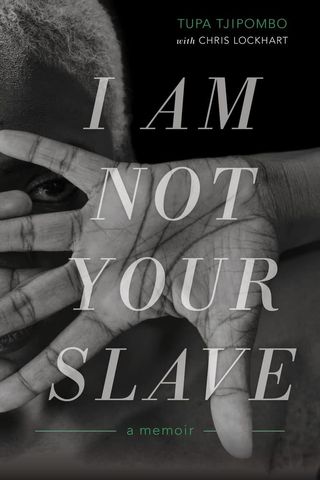
Cover of I Am Not Your Slave: A Memoir

I Am Not Your Slave: A Memoir

Tupa Tjipombo

Original language: English · Hardcover · ISBN 978-1094061245

I Am Not Your Slave is a memoir by Tupa Tjipombo, recounting her abduction from a remote farm near the Namibian-Angolan border and her forced passage through a human trafficking network that stretched across the African continent. Over a period of three years, she was moved through multiple countries before reaching Dubai in the United Arab Emirates. The book describes the network of people involved at each stage, including gang members, middlemen, corrupt officials, and smugglers.

Along the way, Tjipombo encountered other trafficking victims, young women and girls from various parts of the world caught in similar circumstances. Her account traces not only the physical route she was forced to travel but also the systems and failures that allowed the network to operate across national borders with little interference. The memoir includes her escape and her return to her home region in southwestern Africa.

The book maps a trafficking route that remains largely hidden from public view, connecting rural southern Africa to the Gulf states through a chain of intermediaries. It draws attention to the scale of modern forced labor and exploitation by grounding it in the specific geography, people, and border crossings of one person's experience.

Plot

Tupa was abducted from southwestern Africa and funneled through an extensive yet almost completely unknown human trafficking network spanning the entire African continent. As she is transported from the point of her abduction on a remote farm near the Namibian-Angolan border and channeled to her ultimate destination in Dubai in the United Arab Emirates, her three-year odyssey exposes the brutal horrors of a modern day middle passage. During her ordeal, Tupa encounters members of Africa’s notorious gangs, terrifying witchdoctors, mysterious middlemen from China, corrupt police and border officials, Arab smugglers and high-ranking United Nations officials. And of course, Tupa meets her fellow trafficking victims, young women and girls from around the world. Tupa’s harrowing experience, including her daring escape and eventual return home, sheds light on the most shocking aspects of modern day slavery, as well as the essential determination to be free.

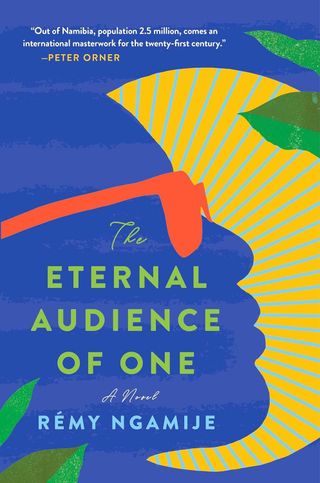
Cover of The Eternal Audience of One

The Eternal Audience of One

Rémy Ngamije

Original language: English · Hardcover · ISBN 978-1982164423

Séraphin is Rwandan, raised in Windhoek, Namibia, and restless. He is a self-styled curator of cool, part nerd, part jock, assembling playlists and personas while living inside his family's expectations. When he leaves Windhoek for Cape Town, South Africa, to finish his final year of law school, the move promises freedom, new friendships, and a degree that fits neatly into the immigrant blueprint for a stable future.

In Cape Town, Séraphin finds a circle of loyal friends, crowded parties, romantic entanglements, and the friction that comes with being a young foreigner in a city shaped by its own racial tensions. Rémy Ngamije moves between Windhoek and Cape Town, and between past and present, to show how migration scatters a family across borders while binding them tighter through memory and obligation.

The story follows Séraphin as he tries to live in the present while his past keeps asserting itself. Questions of belonging, identity, and what counts as home run through the narrative, grounded in specific places and the ordinary details of student life, family phone calls, and the quiet pressure of being expected to succeed.

Plot

Nobody ever makes it to the start of a story, not even the people in it. The most one can do is make some sort of start and then work toward some kind of ending. One might as well start with Séraphin: playlist-maker, nerd-jock hybrid, self-appointed merchant of cool, Rwandan, stifled and living in Windhoek, Namibia. Soon he will leave the confines of his family life for the cosmopolitan city of Cape Town, in South Africa, where loyal friends, hormone-saturated parties, adventurous conquests, and race controversies await. More than that, his long-awaited final year in law school promises to deliver a crucial puzzle piece of the Great Plan immigrant: a degree from a prestigious university. But a year is more than the sum of its parts, and en route to the future, the present must be lived through and even the past must be survived.

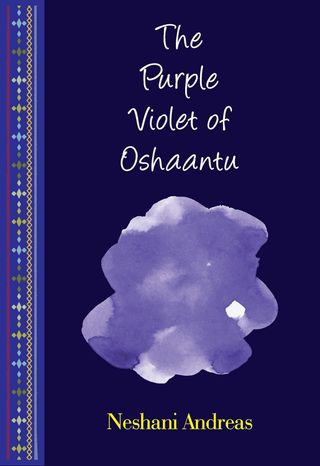
Cover of The Purple Violet of Oshaantu

The Purple Violet of Oshaantu

Neshani Andreas

Original language: English · Paperback · ISBN 978-0435912086

The Purple Violet of Oshaantu is set in a small rural village in Namibia and told through the eyes of Mee Ali, who watches her best friend Kauna endure a violent and loveless marriage. Kauna does not hide her unhappiness, which sets her apart in a community where women are expected to bear domestic suffering in silence. When her abusive husband is found dead, suspicion falls on Kauna almost immediately, and the village begins to fracture along lines of loyalty, gossip, and long-held grievance.

Through Mee Ali's narration, the novel moves between the present crisis and earlier episodes that reveal how the two women's lives have run in parallel and apart. Several other women in Oshaantu carry their own difficult stories, and the book threads these together to show how marriage, motherhood, and social expectation shape daily life in ways that are specific to the setting yet easy to recognize. Friendship between women becomes a practical lifeline rather than an abstract ideal.

Neshani Andreas, a Namibian writer, grounds the story in the textures of Owambo village life, including its customs around death, inheritance, and the authority of elders. The novel was first published in 2001 as part of Heinemann's African Writers Series.

Plot

For Kauna, marriage is nothing more than loveless entrapment, and she defies convention by making no secret of her suffering. When her abusive husband is found dead, the villagers are quick to suspect her. Related from the point of view of her best friend, Kauna's story reveals the value of friendship between women of all kinds.

More from Namibia

See the country page for Namibia for its map, facts and largest cities, or browse books from other countries.

Links go to Amazon; Hookito doesn’t sell books. Know a book that belongs here, or spotted a mistake? Write to submissions@hookito.com.

Where to next?

Back to the globe
Hookito landscape illustration