Hookito

Nicaragua · Books

Books from Nicaragua
5 books from and about Nicaragua: what each is about, the plot, and a note from Professor Kogi.

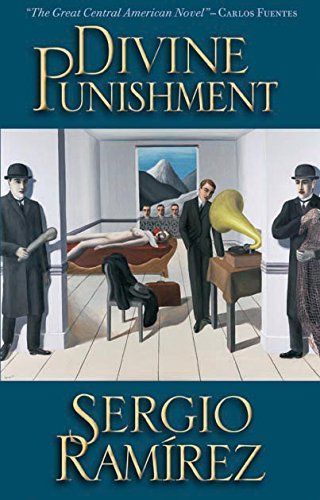
Cover of Divine Punishment

Divine Punishment

Sergio Ramirez

Original language: Spanish · hardcover

Divine Punishment is a novel by Sergio Ramirez built around a real criminal case from 1933 Nicaragua. At its center is Oliverio Castaneda, a socially ambitious young man accused of poisoning two wealthy women and his own employer in the city of Leon. The trial became one of the most talked-about events in Nicaraguan history, and Ramirez uses it as a lens to examine the society that produced it.

The novel layers courtroom proceedings, newspaper coverage, gossip, love affairs, and political maneuvering into a single tangled narrative. Medical testimony, judicial corruption, and class resentment all figure in the story, which unfolds against the backdrop of Nicaragua on the edge of the first Somoza dictatorship. Ramirez reconstructs not only the facts of the case but the atmosphere of a small, tightly connected society where private scandal and public power are difficult to separate.

Carlos Fuentes called Divine Punishment the quintessential Central American novel. Ramirez, who later served as vice president of Nicaragua, draws on historical documents and local memory to populate the book with voices from journalists, witnesses, lawyers, and bystanders, giving the story the texture of a city arguing with itself over what really happened.

Plot

In this, the greatest work of a storied literary career, Sergio Ramírez transforms the most celebrated criminal trial in Nicaraguan history the alleged murders in 1933 of two high society women and his employer by a social-climbing bon vivant named Oliverio Castañeda into an examination of the entire Nicaraguan society at the brink of the first Somosa dictatorship. Passion, money, sex, gossip, political intrigue, medical malpractice, and judicial corruption all merge into a novel that reads like a courtroom drama wrapped in yellow journalism disguised as historical fiction posing as a scandal of the first order.
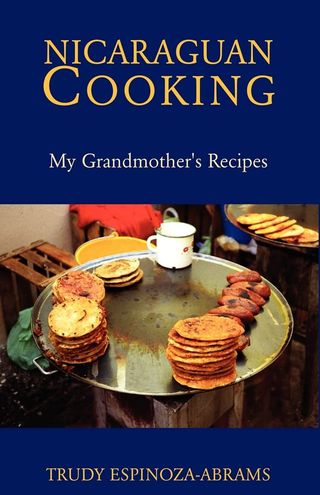
Cover of Nicaraguan Cooking: My Grandmother's Recipes

Nicaraguan Cooking: My Grandmother's Recipes

Trudy Espinoza-Abrams

Original language: English · Paperback · ISBN 978-1413437799

Nicaraguan Cooking: My Grandmother's Recipes is a collection of traditional Nicaraguan dishes written in English by Trudy Espinoza-Abrams. The book draws on the author's childhood in Granada, Nicaragua, and the time she spent watching and learning in her grandmother's kitchen. According to its own account, it was the first English-language cookbook focused on Nicaraguan food, and at the time of publication it described itself as the only dedicated Nicaraguan cookbook available in any language.

Granada, the city where Espinoza-Abrams grew up, sits on the northwestern shore of Lake Nicaragua, one of the largest lakes in Central America. The recipes in the book reflect a home cooking tradition shaped by that region's ingredients and methods. By organizing her grandmother's dishes into a written collection, Espinoza-Abrams preserved recipes that had previously been passed along through family practice rather than printed instructions.

The book works as a practical kitchen guide rather than a cultural survey. Its attention stays on the dishes themselves, with directions drawn from one family's long cooking habits in Granada and set down in a form that can be followed step by step in another kitchen.

Plot

In this first English-language book of Nicaraguan cooking (and indeed, the only one available in any language), Trudy Espinoza-Abrams has dug deep into her childhood in Granada, Nicaragua and sifted through the countless hours spent in her grandmother's kitchen.

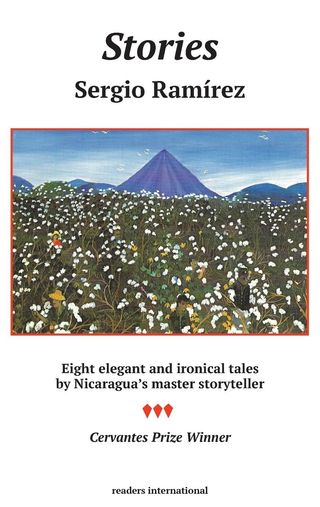
Cover of Stories

Stories

Original language: Spanish · Paperback · ISBN 978-0930523299

Sergio Ramírez is a Nicaraguan writer whose literary career has run alongside, and sometimes been interrupted by, a life in politics. He served as a leader within the Sandinista movement during one of the major leftist revolutions in the Americas, and for a period stepped away from fiction altogether. This collection gathers stories from two distinct phases: work written early in his career and work produced after his return to literature following that political gap.

The pieces in Stories reflect the range of a writer who spent years observing Nicaraguan society from inside its power structures before returning to the page. The record notes his subtlety, wit, and restraint as defining qualities of his prose. Since leaving active politics roughly two decades ago, Ramírez has steadily expanded his body of work and received growing recognition, including the Cervantes Prize, widely regarded as the highest literary honor in the Spanish-speaking world.

The collection offers a way to trace how his writing changed across those two periods and what continuities held. Ramírez occupies an unusual position as both a participant in Nicaraguan political history and a careful observer of it through fiction.

Plot

In the two decades since Sergio Ramírez left active politics as a Sandinista leader of one of the great leftist revolutions of the Americas, his output as a writer and the appreciation of his literary achievement have only grown larger, culminating in his winning the Cervantes Prize, the highest literary accolade for a writer in the Hispanic world.

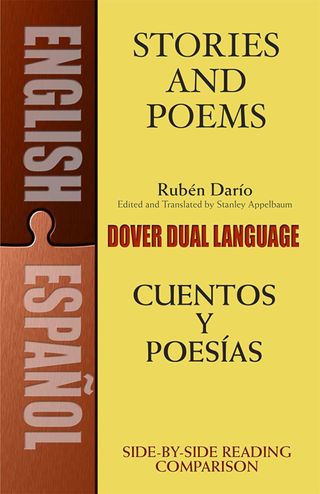
Cover of Stories and Poems

Stories and Poems

Rubén Darío

Original language: Spanish · Paperback · ISBN 978-0486420653

Rubén Darío, born in Nicaragua in 1867, became one of the most influential Spanish-language writers of his era. He is widely regarded as a central figure in the Modernismo movement, which reshaped poetry and prose across Latin America and Spain in the late nineteenth and early twentieth centuries. His writing drew on French Symbolism and Parnassianism while remaining rooted in the rhythms and possibilities of Spanish. This bilingual edition, edited and translated by Stanley Appelbaum, brings together a selection of his poems and stories drawn from several of his major works.

The source collections include Azul, Prosas profanas, Cantos de vida y esperanza, El canto errante, and Poema del otoño. Each piece appears in its original Spanish alongside an English translation. The poetry translations follow the original line by line, making the book useful for readers studying Spanish or comparing the two languages side by side. Appelbaum also provides an introduction covering Darío's life and work, along with annotations for individual selections.

Darío spent much of his adult life outside Nicaragua, living and working in Chile, Argentina, Spain, and France. His writing often moves between local Latin American subjects and wider European literary traditions, reflecting the international scope of his career and the Modernismo movement itself.

Plot

The present volume contains a rich selection of Darío's best poems and stories, carefully chosen from Azul (Blue), Prosas profanas (Worldly Hymns), Cantos de vida y esperanza (Songs of Life and Hope), El canto errante (The Wandering Song), and Poema del otoño (Poem of autumn). Stanley Appelbaum has provided accurate English translations (line for line in the poetry section) on the pages facing the original Spanish, as well as an informative introduction to Darío's life and work, and annotations to the individual stories and poems. The result is a superb resource for any student of Spanish language and literature or anyone interested in one of the earliest and most influential literary movements of the twentieth century.

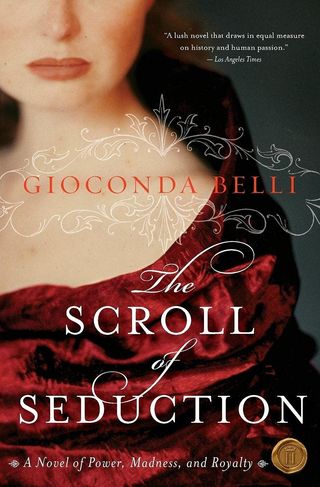
Cover of The Scroll of Seduction

The Scroll of Seduction

Gioconda Belli

Original language: Spanish · paperback

The Scroll of Seduction by Nicaraguan author Gioconda Belli tells two intertwined stories separated by centuries. In the present-day frame, a young woman named Lucía meets Manuel, an art historian, during an outing from her boarding school. Manuel begins recounting the life of Queen Juana of Castile, drawing Lucía into a historical narrative that gradually reshapes her own understanding of desire, autonomy, and power.

Juana of Castile, sometimes called Juana la Loca, was the daughter of Ferdinand and Isabella and heir to one of the largest empires of the Renaissance era. Her marriage to Philippe the Handsome of Burgundy was arranged for political reasons, but Juana developed an intense attachment to her husband. The novel explores how her open displays of passion and independence were used against her by courtiers and family members who questioned her fitness to rule. Whether Juana was genuinely unstable or was deliberately sidelined by those seeking control of the throne remains a central tension throughout the book.

Belli sets the historical sections against the courts and political landscapes of late fifteenth- and early sixteenth-century Spain and the Low Countries. The parallel between Lucía's growing awareness and Juana's constrained life gives the novel its dual structure, connecting questions about women's agency across very different periods.

Plot

On an outing from her boarding school, young Lucía meets Manuel—art historian and exquisite storyteller—who shares with her the tale of one of history's most tumultuous loves: Queen Juana of Castile's legendary devotion to her husband, Prince Philippe the Handsome. Embracing a union thrust upon her by political necessity, Juana responds with all the passionate abandon inherent in her fiery nature—and is forced to pay a high price for her honest sensuality. For there are those at the Renaissance court who will not allow such unabashed independence in the heir to one of the world's most powerful empires—and they declare Juana mad, denying her ascension to the throne. But is she truly insane, or is she merely a victim of her own impetuosity and unbridled desire? Or is Juana a pawn in a fierce power struggle for control of the throne?

More from Nicaragua

See the country page for Nicaragua for its map, facts and largest cities, or browse books from other countries.

Links go to Amazon; Hookito doesn’t sell books. Know a book that belongs here, or spotted a mistake? Write to submissions@hookito.com.

Where to next?

Back to the globe
Hookito landscape illustration