Hookito

Kingdom of the Netherlands · Books

Books from Kingdom of the Netherlands
10 books from and about Kingdom of the Netherlands: what each is about, the plot, and a note from Professor Kogi.

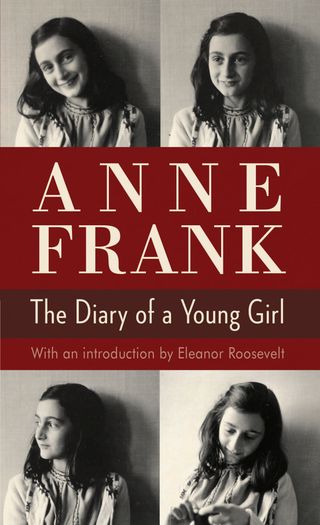
Cover of Anne Frank: The Diary of a Young Girl

Anne Frank: The Diary of a Young Girl

Anne Frank

Original language: Dutch · Paperback · ISBN 978-0553296983

In 1942, thirteen-year-old Anne Frank and her family left their home in Amsterdam to hide from the Nazi occupation of the Netherlands. Together with another family, they moved into concealed rooms above an office building, a space Anne called the Secret Annexe. For roughly two years, the group lived in these confined quarters, relying on trusted helpers to bring them food and news from outside.

Anne kept a diary throughout the period of hiding. She wrote about the daily tensions of sharing small rooms with several people, the boredom and fear that came with isolation, and her own thoughts on growing up under extraordinary pressure. Her entries move between ordinary adolescent concerns and sharp observations about the adults around her, the war beyond the walls, and her own changing sense of who she was becoming.

The diary was found in the annexe after the hiding place was betrayed and the occupants were arrested by the Gestapo. Anne's father, Otto Frank, was the only member of the family to survive the war. He arranged for the diary to be published, and it has since been translated into dozens of languages. The building at Prinsengracht 263 in Amsterdam, where the family hid, is now a museum.

Plot

In 1942, with the Nazis occupying Holland, a thirteen-year-old Jewish girl and her family fled their home in Amsterdam and went into hiding. For the next two years, until their whereabouts were betrayed to the Gestapo, the Franks and another family lived cloistered in the “Secret Annexe” of an old office building. Cut off from the outside world, they faced hunger, boredom, the constant cruelties of living in confined quarters, and the ever-present threat of discovery and death. In her diary, Anne Frank recorded vivid impressions of her experiences during this period.
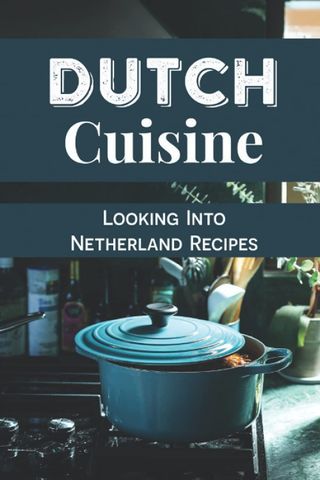
Cover of Dutch Cuisine

Dutch Cuisine

Alane Miraglia

Original language: English · Paperback · ISBN 979-8463158932

Dutch Cuisine by Alane Miraglia is a recipe collection focused on the food traditions of the Netherlands. The book covers both sweet and savory dishes, drawing on the country's multicultural history to present a range of recipes shaped by centuries of trade and migration. The Netherlands, positioned along the North Sea with major port cities like Rotterdam and Amsterdam, has long absorbed culinary influences from its former colonies and trading partners, and the book reflects that variety.

The recipes are designed for home cooking and span a broad selection of Dutch food, from well-known categories like baked goods and hearty stews to less familiar preparations. Dutch cooking is sometimes overshadowed in international conversations about European food, and this collection sets out to show how wide the country's kitchen repertoire actually is. Miraglia organizes the material to include both everyday staples and more unusual dishes.

The book is a compact introduction rather than an encyclopedic survey, offering a practical starting point for anyone curious about what people eat across the Netherlands. Measurements and instructions are aimed at cooks working in a standard home kitchen.

Plot

From the sweet and the savory – to the darn right crazy – there’s plenty to sink your teeth into. Just take a look at this book, with recipes to try at home. The Netherlands has a rich, multicultural history, so expect a lot of diverse recipes in this book. You will find Dutch recipes you will enjoy, so try some of them soon!

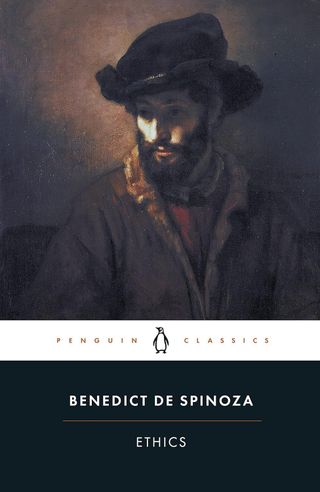
Cover of Ethics

Ethics

Benedict de Spinoza

Original language: Dutch · Paperback · ISBN 978-0140435719

Benedict de Spinoza wrote the Ethics while living in the Dutch Republic, and it was published only after his death in 1677. The work follows a geometric format borrowed from mathematics: definitions, axioms, propositions, and demonstrations that build on one another in order. Spinoza used this structure to describe reality starting from the nature of God, understood not as a separate creator but as identical with nature.

The book is divided into five parts. The first sets out Spinoza's account of substance and God. The second treats the mind and its relation to the body. The third analyzes emotions as natural events that follow regular patterns. The fourth examines human bondage, the limited power people hold over their own emotional lives. The fifth asks how clearer understanding can lead toward freedom and steadiness.

Spinoza ground optical lenses for a living during the years he worked on the text, and he shared parts of it privately rather than printing it while alive. The closing sections connect knowledge with a durable kind of happiness, treating careful thought as a path out of confusion about the causes of one's own feelings.

Plot

Published shortly after his death, the Ethics is undoubtedly Spinoza's greatest work - an elegant, fully cohesive cosmology derived from first principles, providing a coherent picture of reality, and a guide to the meaning of an ethical life. Following a logical step-by-step format, it defines in turn the nature of God, the mind, the emotions, human bondage to the emotions, and the power of understanding - moving from a consideration of the eternal, to speculate upon humanity's place in the natural order, the nature of freedom and the path to attainable happiness. A powerful work of elegant simplicity, the Ethics is a brilliantly insightful consideration of the possibility of redemption through intense thought and philosophical reflection.

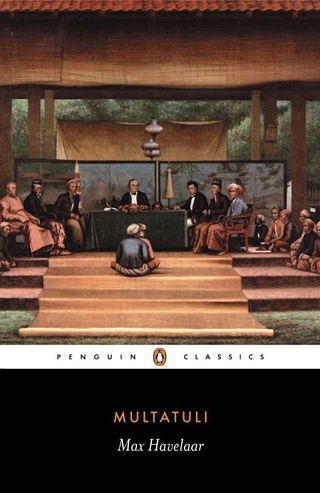
Cover of Max Havelaar

Max Havelaar

Eduard Douwes Dekker

Original language: Dutch · Paperback · ISBN 978-0140445169

Max Havelaar, first published in 1860, is a novel by Eduard Douwes Dekker, who wrote under the pen name Multatuli. The book draws on Dekker's own years as a colonial civil servant in Java, then part of the Dutch East Indies. Its subtitle points to coffee auctions and a Dutch trading company, naming the commerce that surrounds the story.

The story begins with a comfortable Amsterdam coffee broker before moving to Java, where the title character, a Dutch official, confronts the ill-treatment of local people under colonial administration. Havelaar acts from a fierce sense of justice, yet he is drawn as a flawed idealist whose stand against corruption carries a heavy personal cost. The layered narration keeps profit in Europe and conditions in the colony side by side.

Publication in 1860 caused a strong public reaction in the Netherlands and helped shift official thinking about the Dutch East Indies, contributing to welfare reforms in Java. The famous first line, spoken by the broker on the Lauriergracht in Amsterdam, is still widely quoted in Dutch. The name Max Havelaar was later taken up by fair-trade labelling in Europe.

Plot

Max Havelaar—a Dutch civil servant in Java—burns with an insatiable desire to end the ill-treatment and oppression inflicted on the native peoples by the colonial administration. Max is an inspirational figure, but he is also a flawed idealist whose vow to protect the Javanese from cruelty ends in his own downfall. In Max Havelaar, Multatuli (pseudonym for Eduard Douwes Dekker) vividly recreated his own experiences in Java and tellingly depicts the hypocrisy of those who gained from the corrupt coffee trade. Sending shockwaves through the Dutch nation when it was published in 1860, this damning exposé of the terrible conditions in the colonies led to welfare reforms in Java and continues to inspire the Fairtrade movement today.

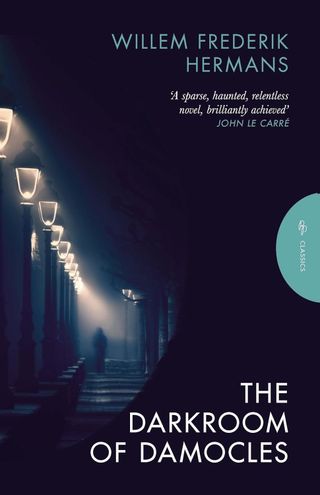
Cover of The Darkroom of Damocles

The Darkroom of Damocles

Willem Frederik Hermans

Original language: Dutch · Paperback · ISBN 978-1782276241

During the German occupation of the Netherlands, Henri Osewoudt leads a small, unremarkable life until a man named Dorbeck appears. Dorbeck looks almost exactly like him and pulls him into resistance work. Osewoudt begins carrying messages, helping British agents escape, and killing people identified as collaborators. His ordinary world flips into something dangerous and unrecognizable, described in the novel as a kind of photo negative of his former existence.

The book's central tension lies in uncertainty. How much of what Osewoudt experiences is verifiable, and how much depends on the word of a single person who may or may not exist as others see him? Dorbeck is both guide and shadow, and the line between resistance heroism and criminal violence keeps shifting. The story raises questions about identity, moral responsibility under occupation, and whether wartime conditions dissolve the difference between permitted and forbidden acts.

Willem Frederik Hermans published the novel in Dutch in 1958, and it became one of the most widely discussed works of postwar Dutch literature. The English translation brought the book to a broader audience under the title The Darkroom of Damocles. Hermans set much of his fiction against the landscape of wartime and postwar Holland, returning often to themes of distrust and ambiguity.

Plot

Under occupation, Henri Osewoudt finds himself drawn into the resistance by his near-doppelgänger, the ruthless Dorbeck, Soon Osewoudt has entered a world that is a photo negative of his previous humdrum existence - carrying messages, helping British agents to escape and killing collaborators. But how much of it is real?

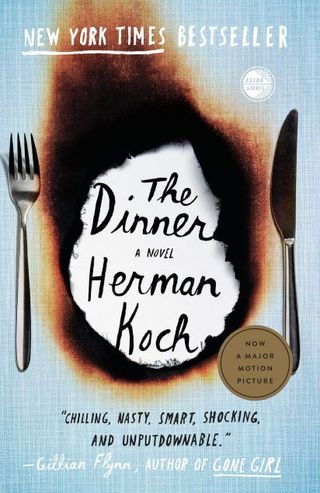
Cover of The Dinner

The Dinner

Herman Koch

Original language: Dutch · Paperback · ISBN 978-0385346856

On a warm evening in Amsterdam, two couples sit down at an upscale restaurant. The talk stays polite, moving through courses and small observations about the menu and wine. But a growing tension runs beneath every pleasantry. Both couples have fifteen-year-old sons, and both boys are connected to a single violent act that has drawn police attention. The real subject of the evening has not yet been spoken aloud.

Herman Koch structures the novel around the progression of a multi-course dinner, with each section named after a stage of the meal. As appetizers give way to the main course and dessert, the social performance between the four adults slowly fractures. One of the men is a prominent politician whose public reputation adds pressure to an already volatile situation. The question at the center of the story is not what happened, but how far each parent will go to shield their child from consequences.

Koch uses the confined setting of a single restaurant to expose the gap between public composure and private calculation. The novel examines parenting, class, moral compromise, and the limits of family loyalty, all filtered through strained conversation and careful silences. Originally published in Dutch, the book became a bestseller in the Netherlands before reaching international audiences.

Plot

It’s a summer’s evening in Amsterdam, and two couples meet at a fashionable restaurant for dinner. Between mouthfuls of food and over the scrapings of cutlery, the conversation remains a gentle hum of polite discourse. But behind the empty words, terrible things need to be said, and with every forced smile and every new course, the knives are being sharpened.

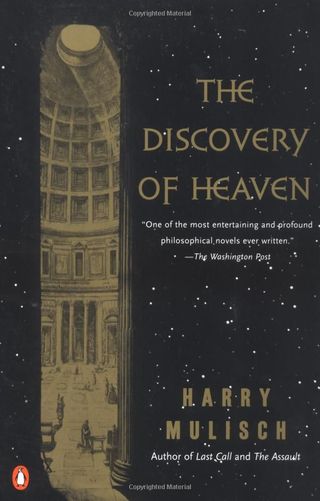
Cover of The Discovery of Heaven

The Discovery of Heaven

Harry Mulisch

Original language: Dutch · Paperback · ISBN 978-0140239379

The Discovery of Heaven follows two men, Onno and Max, whose lives become entangled after a chance meeting in the Netherlands. Onno is a linguist from a prominent Dutch political family, and Max is an astronomer whose past is marked by the Second World War. Their friendship deepens through shared intellectual obsessions, and both men become responsible for the arrival of a boy whose life takes on unusual significance.

Harry Mulisch built this long novel around fate, religion, science, and the aftermath of wartime trauma. A framing device set in a celestial register suggests that events on Earth may be steered by forces outside human understanding. The child born to the two friends grows into the figure charged with a task, and the story moves from Dutch cities through parts of Europe toward older ground further east.

Mulisch, one of the best known Dutch novelists of the twentieth century, first published the book in Dutch in 1992 as De ontdekking van de hemel. Alongside the philosophical and theological questions, he keeps a dry humor running through the pages. A film version directed by Jeroen Krabbe followed in 2001.

Plot

The story begins with the meeting of Onno and Max, two complicated individuals whom fate has mysteriously and magically brought together. They share responsibility for the birth of a remarkable and radiant boy who embarks on a mandated quest that takes the reader all over Europe and to the land where all such quests begin and end

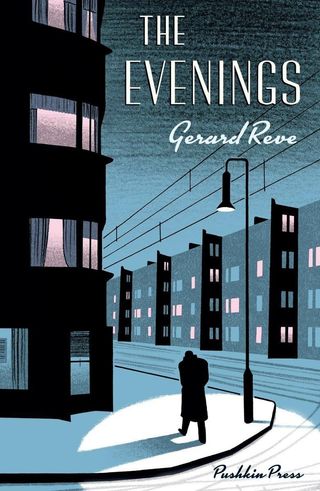
Cover of The Evenings: A Winter's Tale

The Evenings: A Winter's Tale

Gerard Reve

Original language: Dutch · Hardcover · ISBN 978-1782271789

Frits is twenty-three, an office worker who still lives with his parents in Amsterdam. The novel follows ten evenings at the end of December, when the light fails early and the days repeat themselves. He visits friends, drinks, smokes, and wanders gloomy streets, trying to fill hours that stretch ahead of him without shape or obvious purpose.

Very little happens by the standards of plot. Frits tells jokes that land badly, needles his parents over their small habits, and sometimes talks to a toy rabbit. His sleep brings disturbing dreams of death and destruction. The tension comes from his effort to get through each evening, not from any crisis arriving from outside the house.

Gerard Reve published the book in 1947, when he was in his early twenties and the German occupation of the Netherlands had ended only a couple of years before. That background is never the subject, though it shades the cold city and the guarded, circling conversations. The comedy is dry, assembled from repeated routines and close attention to ordinary rooms, meals, and remarks.

Plot

Twenty-three-year-old Frits - office worker, daydreamer, teller of inappropriate jokes - finds life absurd and inexplicable. He lives with his parents, who drive him mad. He has terrible, disturbing dreams of death and destruction. Sometimes he talks to a toy rabbit. This is the story of ten evenings in Frits's life at the end of December, as he drinks, smokes, sees friends, aimlessly wanders the gloomy city street and tries to make sense of the minutes, hours and days that stretch before him.

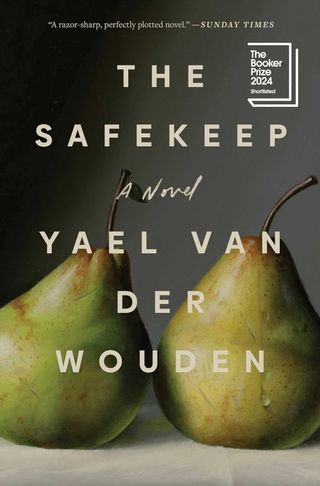
Cover of The Safekeep

The Safekeep

Yael van der Wouden

Original language: Dutch · Hardcover · ISBN 978-1668034347

Set in 1961, The Safekeep takes place in the Dutch province of Overijssel, where the physical scars of the Second World War have been repaired and daily life has returned to order. Isabel lives alone in the country house left by her late mother, holding tightly to routine and discipline. Her careful existence is disrupted when her brother Louis arrives with his new girlfriend Eva and asks Isabel to host her for the summer season.

Eva unsettles Isabel from the start. She moves through the house carelessly, sleeps late, and handles objects that are not hers. Small household items begin to go missing, and Isabel's irritation sharpens into suspicion and obsession. As the summer heat builds, her fixation on Eva shifts into something harder to name, pulling the two women into a charged and uneasy closeness.

Beneath the surface of this domestic tension, the novel follows a thread back to the war years and the traces they left on property, memory, and identity in the Netherlands. The house itself becomes central to the story, carrying meaning that neither woman fully controls. Yael van der Wouden sets the personal and the historical against each other inside a single building, letting both press slowly toward a point of collision.

Plot

It is 1961 and the rural Dutch province of Overijssel is quiet. Bomb craters have been filled, buildings reconstructed, and the war is truly over. Living alone in her late mother’s country home, Isabel knows her life is as it should be—led by routine and discipline. But all is upended when her brother Louis brings his graceless new girlfriend Eva, leaving her at Isabel’s doorstep as a guest, to stay for the season.

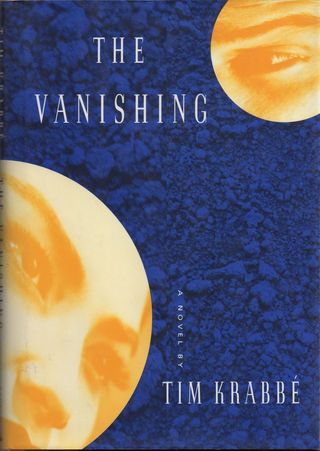
Cover of The Vanishing

The Vanishing

Tim Krabbé

Original language: Dutch · Hardcover · ISBN 978-0679419730

Tim Krabbé's The Vanishing first appeared in Dutch in 1984 as Het Gouden Ei, meaning The Golden Egg. During a summer holiday drive through rural France, a young Dutch woman named Saskia Ehlvest steps away at a roadside rest stop and does not come back. Her lover, Rex Hofmann, cannot accept the blank space she leaves, and his search stretches across years.

The book is short, closer to a novella than a long novel, and it works by accumulating ordinary detail: everyday travel routines and small choices made on the road. Krabbé arranges the telling so that readers learn things Rex does not know, so the pressure comes less from puzzle-solving than from watching a fixed idea take hold of a life.

Krabbé, born in Amsterdam in 1943, has also written about competitive cycling and chess, and his prose here stays plain and exact. The story was filmed in 1988 as Spoorloos, a Dutch-French production directed by George Sluizer, who later made an English-language version released in 1993. Obsession, chance, and the unremarkable places where both operate hold the novel together.

Plot

When Saskia Ehlvest, a young Dutch girl, disappears from a rest stop along a highway in rural France, her lover, Rex Hofmann, cannot accept her disappearance and embarks on an obsessive search for her that spans years

More from Kingdom of the Netherlands

See the country page for Kingdom of the Netherlands for its map, facts and largest cities, or browse books from other countries.

Free editions are on Project Gutenberg, matched by title and author. Links go to Amazon; Hookito doesn’t sell books. Know a book that belongs here, or spotted a mistake? Write to submissions@hookito.com.

Where to next?

Back to the globe
Hookito landscape illustration