Hookito

Pakistan · Books

Books from Pakistan

12 books from and about Pakistan: what each is about, the plot, and a note from Professor Kogi.

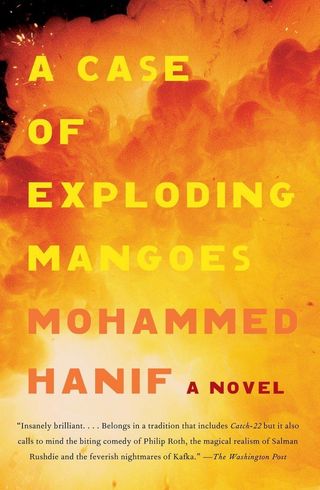
Cover of A Case of Exploding Mangoes

A Case of Exploding Mangoes

Mohammed Hanif

Original language: English · Paperback · ISBN 978-0307388186

Ali Shigri serves as a pilot in Pakistan's Air Force, where he is Silent Drill Commander of the Fury Squadron. His father, a colonel under General Zia ul-Haq, has died in circumstances the state calls suicide. Ali wants an explanation, and he sets his sights on the dictator himself. Those he draws in include his cologne-drenched roommate, an American lieutenant fond of hash, and a crow fixated on mangoes.

Mohammed Hanif's debut novel is set in the late 1980s, with American money moving through Pakistan, Soviet troops next door in Afghanistan, and Zia's government watching its own officers closely. The plot circles a real event: the plane crash of 1988 that killed Zia. Ali's search draws him into a knot of coincidences, competing interests, and cash that changes hands quietly.

The tone stays darkly comic. Ali gradually learns that the queue of people who want Zia gone is longer than he imagined, which turns his careful plan into one thread among many. Chapters also follow the general himself, uneasy about plots and about the loyalty of the men nearest to him. Love, betrayal, family duty, and the ordinary machinery of a tyranny run through the book.

Plot

Ali Shigri, Pakistan Air Force pilot and Silent Drill Commander of the Fury Squadron, is on a mission to avenge his father's suspicious death, which the government calls a suicide.Ali's target is none other than General Zia ul-Haq, dictator of Pakistani. Enlisting a rag-tag group of conspirators, including his cologne-bathed roommate, a hash-smoking American lieutenant, and a mango-besotted crow, Ali sets his elaborate plan in motion. There's only one problem: the line of would-be Zia assassins is longer than he could have possibly known.
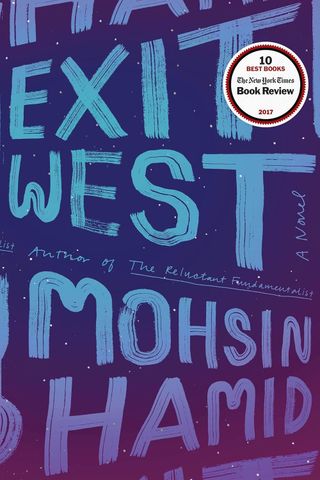

Cover of Exit West: A Novel

Exit West: A Novel

Mohsin Hamid

Original language: English · Hardcover · ISBN 978-0735212176

Nadia and Saeed meet in an unnamed city sliding toward civil war. Nadia is independent and sensual; Saeed is quieter and more reserved. Their relationship begins in secret, but as the conflict around them worsens, ordinary life contracts. Checkpoints and bomb blasts replace familiar streets, and the couple finds themselves pressed into a closeness that arrived faster than either expected.

Rumors spread through the city about mysterious doors, portals that can carry people to distant places for a price and at considerable risk. When staying is no longer possible, Nadia and Saeed step through one of these doors and leave their country behind. The novel follows them into unfamiliar cities, where they try to build new lives as displaced people. Their bond, formed under pressure, is tested by the different people they gradually become.

Mohsin Hamid, a Pakistani-born writer, uses the door device to compress the physical ordeals of migration into a single fantastic step. This lets the story concentrate on what comes after arrival: the slow work of deciding who you are when the places that once defined you are gone.

Plot

In a country teetering on the brink of civil war, two young people meet—sensual, fiercely independent Nadia and gentle, restrained Saeed. They embark on a furtive love affair, and are soon cloistered in a premature intimacy by the unrest roiling their city. When it explodes, turning familiar streets into a patchwork of checkpoints and bomb blasts, they begin to hear whispers about doors—doors that can whisk people far away, if perilously and for a price. As the violence escalates, Nadia and Saeed decide that they no longer have a choice. Leaving their homeland and their old lives behind, they find a door and step through. . . .

Cover of Home Fire

Home Fire

Kamila Shamsie

Original language: English · Hardcover · ISBN 978-0735217683

Home Fire follows three British Muslim siblings shaped by the shadow of a father they never knew. Isma, the eldest, spent years raising her younger sister Aneeka and brother Parvaiz after their mother's death. When she leaves London for an academic opportunity in America, she still worries about the two she left behind, especially Parvaiz, who has disappeared in pursuit of his father's legacy.

Parvaiz resurfaces far from London, confirming Isma's fears. Meanwhile Eamonn, son of a prominent political figure with a birthright of his own, becomes entangled with the sisters, and public power collides with a private crisis. Shamsie moves between Britain, America, and other locations as loyalties fracture and personal bonds strain against the demands of the state.

The novel reworks Sophocles' Antigone, a Greek tragedy about a sister who defies a ruler over her brother, and places that conflict between family duty and state authority in contemporary Britain. Kamila Shamsie was born in Karachi and has lived in Pakistan and the United Kingdom. Home Fire won the Women's Prize for Fiction in 2018.

Plot

Isma is free. After years of watching out for her younger siblings in the wake of their mother's death, she's accepted an invitation from a mentor in America that allows her to resume a dream long deferred. But she can't stop worrying about Aneeka, her beautiful, headstrong sister back in London, or their brother, Parvaiz, who's disappeared in pursuit of his own dream, to prove himself to the dark legacy of the jihadist father he never knew. When he resurfaces half a globe away, Isma's worst fears are confirmed.

Cover of I Am Malala

I Am Malala

Malala Yousafzai, Christina Lamb

Original language: English · Hardcover · ISBN 978-0316322409

I Am Malala is a memoir written by Malala Yousafzai with journalist Christina Lamb. It tells the story of a girl growing up in the Swat Valley of northern Pakistan, where her father ran a school and actively encouraged her education. When the Taliban gained control of the valley and began restricting girls from attending school, Malala spoke publicly against these policies, drawing both attention and danger.

On October 9, 2012, a gunman shot the fifteen-year-old in the head while she was riding a bus home from school. Her survival and long recovery brought international focus to the conditions in Swat and to the broader question of girls' access to education. She went on to address the United Nations and became the youngest-ever Nobel Peace Prize laureate.

The book covers the texture of daily life in Swat before and during the Taliban's presence, and describes how Malala's family responded to escalating threats. Her father's role is central to the account. He built schools in the region and supported his daughter's public voice at a time when doing so carried serious personal risk.

Plot

When the Taliban took control of the Swat Valley in Pakistan, one girl spoke out. Malala Yousafzai refused to be silenced and fought for her right to an education. On Tuesday, October 9, 2012, when she was fifteen, she almost paid the ultimate price. She was shot in the head at point-blank range while riding the bus home from school, and few expected her to survive. Instead, Malala's miraculous recovery has taken her on an extraordinary journey from a remote valley in northern Pakistan to the halls of the United Nations in New York. At sixteen, she became a global symbol of peaceful protest and the youngest nominee ever for the Nobel Peace Prize.

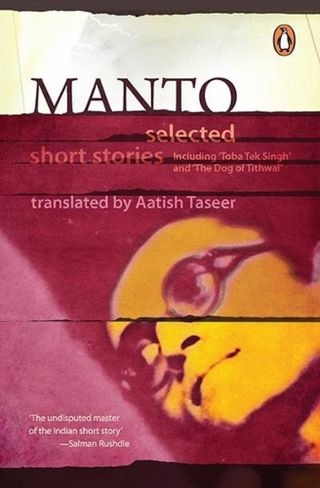
Cover of Manto: Selected Short Stories

Manto: Selected Short Stories

Saadat Hasan Manto

Original language: Urdu · Paperback · ISBN 978-8184001440

Saadat Hasan Manto wrote short fiction in Urdu during the 1940s and 1950s, a period that included the 1947 Partition of British India into India and Pakistan. His stories often center on people living at the edges of society: sex workers, rickshaw drivers, alcoholics, and others whose lives polite conversation tends to avoid. He set much of his work in Bombay and Lahore, cities he knew firsthand, and wrote in a plain, direct style that leaves little room for comfortable distance between the reader and the subject.

Several of his best-known stories deal with the violence and displacement of Partition. Rather than depicting large-scale political events, Manto typically narrows the frame to a single person or a brief encounter, using that small scale to expose cruelty, confusion, and sometimes absurd humor. He faced multiple obscenity trials during his lifetime for stories that authorities considered indecent, though the cases often reflected discomfort with his subject matter rather than explicit content.

This collection brings together a range of those stories in English translation. Manto was born in Ludhiana in 1912 and moved to Lahore after Partition, where he spent his final years. He is now widely regarded as one of the most significant short story writers in Urdu literature.

Plot

Saadat Hasan Manto’s short stories reveal the brutal truths of human nature and society, blending dark humor with unflinching portrayals of Partition’s horrors, social hypocrisy, and the lives of society’s outcasts. His simple, direct style delivers sharp psychological insight, making his work both disturbing and deeply humane. His work remains startlingly relevant, studied worldwide for its literary merit, moral courage, and raw portrayal of the human condition.

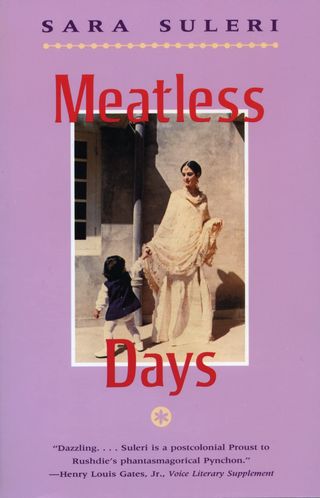
Cover of Meatless Days

Meatless Days

Sara Suleri

Original language: English · Paperback · ISBN 978-0226779812

Meatless Days is a memoir by Sara Suleri, structured as nine interconnected autobiographical pieces set across Pakistan, Britain, and the United States. The book centers on Suleri's family: her father, Z.A. Suleri, a prominent Pakistani political journalist; her Welsh mother; her grandmother Dadi; and her five siblings. Through their lives, the memoir traces the formation of postcolonial Pakistan and the personal costs carried by one family across borders and generations.

Suleri's approach blends private memory with political history rather than separating them into distinct threads. Scenes from domestic life in Pakistan sit alongside reflections on the country's independence and its aftermath. The title itself points to the way food, ritual, and everyday routine become entry points for larger questions about identity, nationhood, and displacement. Suleri moves between continents and time periods without following a strict chronological line, letting association and emotional logic guide the structure.

The memoir is notable for its prose style, which holds personal grief and historical observation in close proximity. Suleri writes as someone positioned between cultures, having grown up in Pakistan before moving to the West, and the book returns often to the distance between those worlds.

Plot

In this finely wrought memoir of life in postcolonial Pakistan, Suleri intertwines the violent history of Pakistan's independence with her own most intimate memories—of her Welsh mother; of her Pakistani father, prominent political journalist Z.A. Suleri; of her tenacious grandmother Dadi and five siblings; and of her own passage to the West. "Nine autobiographical tales that move easily back and forth among Pakistan, Britain, and the United States. . . . She forays lightly into Pakistani history, and deeply into the history of her family and friends. . . . The Suleri women at home in Pakistan make this book sing."—Daniel Wolfe, New York Times Book Review

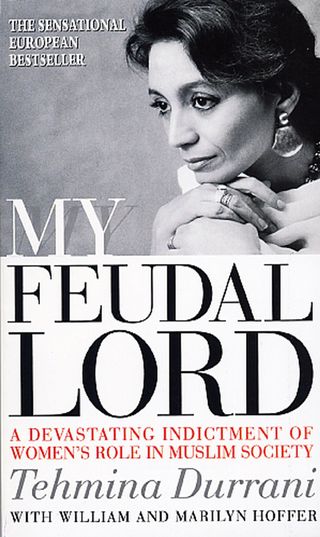
Cover of My Feudal Lord

My Feudal Lord

Tehmina Durrani

Original language: English · Paperback · ISBN 978-0552142397

Tehmina Durrani grew up in one of Pakistan's most prominent families in Lahore, educated alongside future prime minister Benazir Bhutto. Her upbringing followed the expectations placed on women of her social position: marriage to a wealthy Muslim man, children, and a life conducted largely behind closed doors. When she married Mustafa Khar, a leading political figure, the outward appearance was one of glamour and influence. In private, Khar became violent, possessive, and controlling, gradually isolating her from family and the outside world. The marriage lasted fourteen years.

My Feudal Lord is Durrani's autobiography of that period and her eventual decision to seek divorce. As a Muslim woman leaving her husband, she faced severe consequences. She gave up all financial support, lost custody of her children, and was disowned by her own parents. The book examines the distance between public respectability and private suffering within elite Pakistani society, where social rank offered no protection from domestic abuse.

Durrani originally self-published the book after publishers in Pakistan refused to take it on. Its release caused significant controversy in the country, drawing attention to subjects that had been kept largely out of public discussion.

Plot

Born into one of Pakistan's most influential families, Tehmina Durrani was raised in the privileged milieu of Lahore high society and educated at the same school as Benazir Bhutto. Like all women of her rank, she was expected to marry a wealthy Muslim, bear him many children and lead a sheltered life of air-conditioned leisure. When she married Mustafa Khar, one of Pakistan's most eminent political figures, she continued to move in the best circles and learned to keep up the public facade as a glamorous, cultivated wife, and mother of four children. In private, however, the story-book romance rapidly turned sour. Mustafa Khar became violently possessive and jealous and succeeded in cutting his wife off from the outside world. For the course of her 14-year marriage, she suffered alone, in silence. This is the story of Tehmina's rebellion from an unhappy marriage. As a Muslim woman seeking a divorce, she paid a high price. She signed away all financial support, lost custody of her children, and found herself alienated from her friends and disowned by her parents.

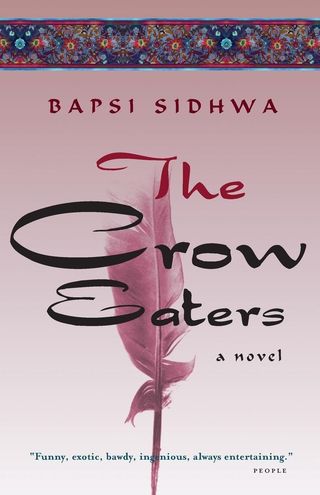
Cover of The Crow Eaters

The Crow Eaters

Bapsi Sidhwa

Original language: English · Paperback · ISBN 978-1571310507

Set in early twentieth-century Lahore, The Crow Eaters follows Freddy Junglewalla, a Parsee man who moves his young family from a rural forest home to the city. With him come his pregnant wife, their baby daughter, and Jerbanoo, his large and forceful mother-in-law. Freddy opens a shop and begins building a commercial life under British colonial rule as his fortunes rise.

Much of the novel's energy comes from the friction between Freddy and Jerbanoo, whose clashing temperaments shape household life as persistently as any outside pressure. Bapsi Sidhwa uses this domestic conflict as a lens onto the Parsee community, a small Zoroastrian minority with roots in Persia that settled across South Asia over centuries. Comedy sits alongside a portrait of how a close-knit minority keeps its customs while adapting to urban life.

Sidhwa was born in Lahore and grew up within the Parsee community, and that background shows in the novel's attention to household routine, trade, and the rhythms of family speech. Lahore, on the Ravi River in what is now Pakistan, was a long-established commercial city, and the Parsee families who settled there were part of a much wider spread of small merchant communities across the subcontinent.

Plot

At the dawn of the twentieth century in Pakistan, Freddy Junglewalla moves his family — pregnant wife, baby daughter, and Jerbanoo, his rotund mother-in-law — from their ancestral forest home to cosmopolitan Lahore. He opens a store, and as his fortunes grow, so does the animosity between Freddy and his mother-in-law. While Freddy prospers under British rule, life with the domineering Jerbanoo is another matter entirely.

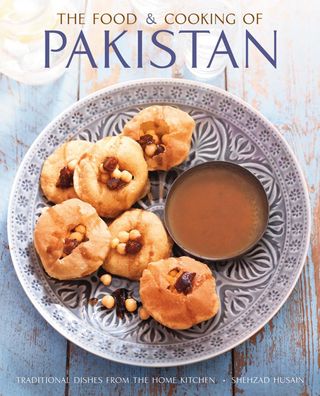
Cover of The Food and Cooking of Pakistan

The Food and Cooking of Pakistan

Shehzad Husain

Original language: English · Hardcover · ISBN 978-0754832393

The Food and Cooking of Pakistan by Shehzad Husain presents over 85 recipes spanning street food, main courses, desserts, and drinks. Each recipe is accompanied by step-by-step instructions and a photograph of the completed dish. The book covers well-known preparations such as biryanis, nehari, haleem, kebabs, gol gappay, qormas, and tikas, reflecting the regional variety found across Pakistan's provinces and cities.

Husain was born in Pakistan and has lived in London, where she built a career in food writing and television. She has appeared on multiple TV cooking shows and worked as an adviser to a major food retailer on their South Asian product lines. The book is her tenth, drawing on decades of professional experience with Pakistani and broader South Asian cooking. She has received several awards, among them the Asian Woman of Achievement honor.

The recipes highlight different cooking methods central to Pakistani cuisine, including tandoor ovens, kadahi pans, and open-coal barbecue. Spice combinations feature prominently throughout, and the collection moves between everyday home cooking and dishes associated with celebrations such as wedding banquets, where biryani is a traditional centerpiece.

Plot

Pakistan is proud of its culinary heritage and the regional dishes that are increasingly popular around the world. Classics include delectable biryanis – a must at every wedding banquet – nehari, haleem, kebabs, gol gappay, qormas, kunnas, tikas… to name just a few. Whether cooked over the glowing coals of a barbecue, in the belly of a tandoor or in a kadahi, Pakistani dishes evoke the essence of the country, with a heady combination of spices. Shehzad Husain was born in Pakistan and lives in London. She has appeared on many TV cooking shows, advised a leading food retailer on their Indian foods, and has won numerous awards including Asian Woman of Achievement. This is her tenth book.

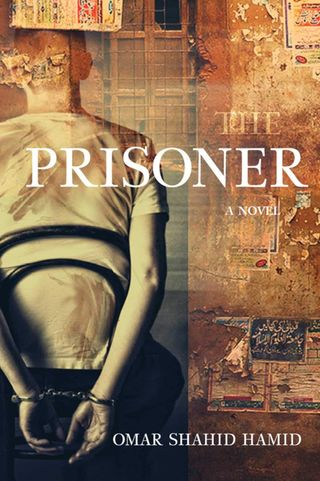
Cover of The Prisoner

The Prisoner

Omar Shahid Hamid

Original language: English · Hardcover · ISBN 978-1628725247

An American journalist is kidnapped in Karachi just days before the American president is scheduled to visit Pakistan. His captors have set a deadline: they will execute him on video on Christmas Day. With no other leads, the task of finding him falls to Constantine D'Souza, a Christian police officer working in a city where police corruption is routine and political loyalties shift without warning.

D'Souza's only real option is to enlist Akbar Khan, a former colleague now locked up for a crime he did not commit. Khan is a rogue cop with deep knowledge of Karachi's underworld, but getting his cooperation means entering a tangle of competing interests. The militant ruling party, known as the United Front, and the Pakistani Intelligence Agencies each have their own agendas, and D'Souza finds himself caught between them as the deadline closes in.

Omar Shahid Hamid, himself a police officer in Karachi, draws the novel from events with real-world parallels. The story is set against a landscape where extremism and institutional corruption overlap, and where the boundaries between law enforcement and criminality are difficult to locate. The pressure on D'Souza is both personal and national, with lives and diplomatic consequences at stake.

Plot

An American journalist has been kidnapped in Karachi, Pakistan, days before the American president is due to visit. Those responsible have promised to execute him on video on Christmas Day. With no other leads, Constantine D’Souza, a Christian police officer, must get his former colleague Akbar Khan, a rogue cop imprisoned for a crime he didn’t commit, to help track down the journalist. But to do so, he has to navigate the streets of Karachi, where police corruption is a way of life and political motives are never what they seem. Caught between the United Front—the militant ruling party—and the Pakistani Intelligence Agencies, D’Souza is in a race against time to save a man’s life and the honor of the nation.

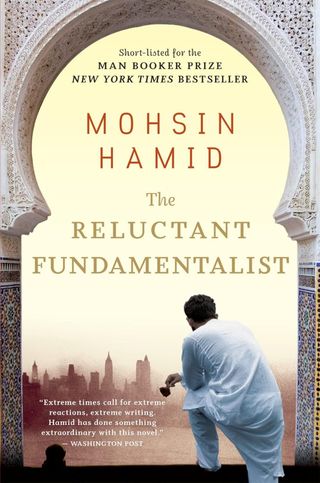
Cover of The Reluctant Fundamentalist

The Reluctant Fundamentalist

Mohsin Hamid

Original language: English · Paperback · ISBN 978-0156034029

The Reluctant Fundamentalist is structured as a one-sided conversation. In a café in Lahore, a Pakistani man speaks to an American stranger, recounting the life of Changez, a young Pakistani who moved to the United States and built a promising career there. Changez graduated near the top of his class at Princeton and was recruited by a prestigious valuation firm in New York. He began a relationship with an American woman named Erica and seemed poised to enter the upper reaches of Manhattan society, a world that mirrored the status his own family had once held in Lahore.

After the attacks of September 11, 2001, Changez finds his place in New York destabilized. The way others perceive him shifts, and his relationship with Erica changes in ways he cannot control. At the same time, his own sense of loyalty and belonging begins to pull him in a different direction, away from the corporate ambitions and social aspirations that had defined his years in America.

Mohsin Hamid sets the entire novel inside this café exchange, and the identity of the American listener, along with his reasons for being in Lahore, remains uncertain throughout. The framing device adds a layer of tension to a story already concerned with questions of nationality, class, and where a person chooses to place their allegiance.

Plot

At a café table in Lahore, a bearded Pakistani man converses with an uneasy American stranger. He begins to tell the story of a man named Changez, who is living an immigrant’s dream of America. At the top of his class at Princeton, he is snapped up by an elite valuation firm. He thrives on the energy of New York, and his budding romance with elegant, beautiful Erica promises entry into Manhattan society at the same exalted level once occupied by his own family back in Lahore. But in the wake of September 11, Changez finds his position in his adopted city suddenly overturned, and his relationship with Erica shifting. And Changez’s own identity is in seismic shift as well, unearthing allegiances more fundamental than money, power, and maybe even love.

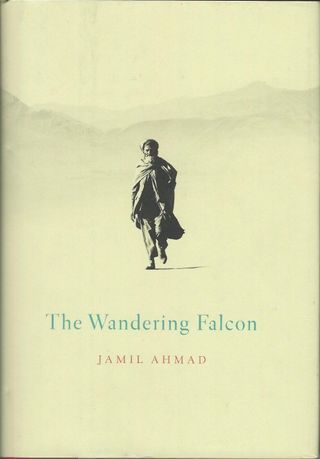
Cover of The Wandering Falcon

The Wandering Falcon

Jamil Ahmad

Original language: English · Hardcover · ISBN 978-1594488276

The Wandering Falcon by Jamil Ahmad follows a boy called Tor Baz, born to a couple who fled their tribe after breaking its rules around marriage and family. The two take refuge in a remote border region, and their son grows up between worlds. Tor Baz eventually moves among the tribal communities of the mountains and plains along the Pakistan-Afghanistan frontier, passing through camps, towns, and settlements that most outsiders never see.

The book is structured as a series of linked episodes rather than a single continuous plot. Each section introduces different people and situations across the tribal lands, with Tor Baz appearing as a connecting figure who drifts in and out of these stories. The episodes deal with codes of honor, hospitality, punishment, migration, and the friction between tribal customs and the modern state. Ahmad, who spent years working as a civil servant in the border regions of Pakistan, draws on direct familiarity with these communities and landscapes.

The setting spans arid plains, high mountain passes, and scattered encampments in territory that straddles national borders but follows older lines of loyalty and kinship. Ahmad's writing stays close to the ground, presenting daily life and social rules without external commentary.

Plot

The Wandering Falcon begins with a young couple, refugees from their tribe, who have traveled to the middle of nowhere to escape the cruel punishments meted out upon those who transgress the boundaries of marriage and family. Their son, Tor Baz, descended from both chiefs and outlaws, becomes "The Wandering Falcon," a character who travels among the tribes, over the mountains and the plains, into the towns and the tents that constitute the homes of the tribal people. The media today speak about this unimaginably remote region, a geopolitical hotbed of conspiracies, drone attacks, and conflict, but in the rich, dramatic tones of a master storyteller, this stunning, honor-bound culture is revealed from the inside.

More from Pakistan

See the country page for Pakistan for its map, facts and largest cities, or browse books from other countries.

Links go to Amazon; Hookito doesn’t sell books. Know a book that belongs here, or spotted a mistake? Write to submissions@hookito.com.

Where to next?

Back to the globe
Hookito landscape illustration