Hookito

Romania · Books

Books from Romania

13 books from and about Romania: what each is about, the plot, and a note from Professor Kogi.

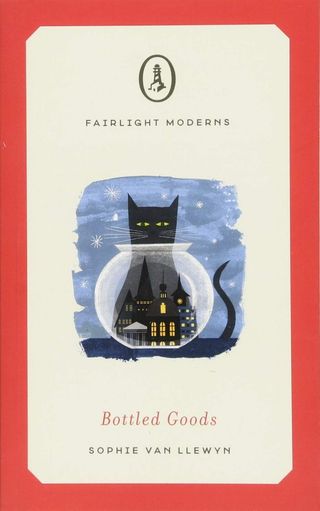
Cover of Bottled Goods

Bottled Goods

Sophie van Llewyn

Original language: English · Paperback · ISBN 978-1912054305

Bottled Goods is a novella-in-flash by Sophie van Llewyn, set in 1970s Romania under communist rule. The story follows Alina, whose life shifts abruptly after her brother-in-law defects to the West. She and her husband are placed under scrutiny by the secret services, and both lose professional standing as a result. The pressure begins to fracture their marriage from the inside.

Alina seeks support from her aunt, who occupies an unusual position in this world. The aunt is married to a communist official, yet she also practices older folk traditions in private. This tension between state authority and inherited custom runs through the book, and van Llewyn uses elements of magic realism to give shape to forces that are difficult to describe in plain terms: fear, loyalty, superstition, and the small negotiations people make to survive under surveillance.

The book is structured as a series of short, compressed chapters rather than continuous prose. It was longlisted for the Women's Prize for Fiction in 2019, the Republic of Consciousness Prize in 2019, and the People's Book Prize in 2018. Van Llewyn was born in Romania and later settled in other parts of Europe.

Plot

'When Alina's brother-in-law defects to the West, she and her husband become persons of interest to the secret services, causing both of their careers to come grinding to a halt. As the strain takes its toll on their marriage, Alina turns to her aunt for help - the wife of a communist leader and a secret practitioner of the old folk ways. Set in 1970s communist Romania, this novella-in-flash draws upon magic realism to weave a tale of everyday troubles that can't be put down. 'A story to savour, to smile at, to rage against and to weep over.' - Zoe Gilbert, author of 'Folk'
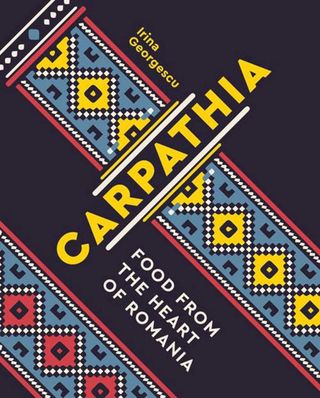
Cover of Carpathia: Food from the Heart of Romania

Carpathia: Food from the Heart of Romania

Irina Georgescu

Original language: English · Hardcover · ISBN 978-1623719548

Carpathia is a cookbook by food writer Irina Georgescu that focuses on Romanian cuisine. The book pairs recipes with photography and cultural background, covering dishes that reflect Romania's position at a crossroads of Central European, Balkan, and Ottoman culinary traditions. Georgescu organizes the collection around ingredients and techniques that define Romanian cooking, from chargrilled vegetables and polenta preparations to slow-cooked stews and filled breads.

The recipes range across everyday home cooking and more elaborate dishes. Readers will find items like butter bean hummus, bor? (a sour soup traditional to the region), and layered cakes shaped by Viennese pastry traditions that entered Romanian kitchens during the Austro-Hungarian period. The book treats these influences as part of a living food culture rather than museum pieces, presenting them alongside modern interpretations.

Romania sits where the Carpathian Mountains arc through the center of the country, separating Transylvania from the lowland regions of Wallachia and Moldavia. This geography has historically shaped local ingredients and cooking methods, and Georgescu uses it as a framework for the book. Carpathia was Georgescu's first published cookbook, positioning Romanian food within a broader European context.

Plot

Carpathia, the first book from food writer Irina Georgescu, aims to introduce readers to Romania’s unique, bold and delicious cuisine. Bringing the country to life with stunning photography and recipes, it will take the reader on a culinary journey to the very heart of the Balkans, exploring Romania’s history, traditions, and food, one mouth-watering recipe at a time. From chargrilled eggplants, polenta fritters, and butter bean hummus, to tangy bor?, stuffed breads, and Viennese-style layer cakes, this book is a true celebration of a country that’s never afraid to mix things up!

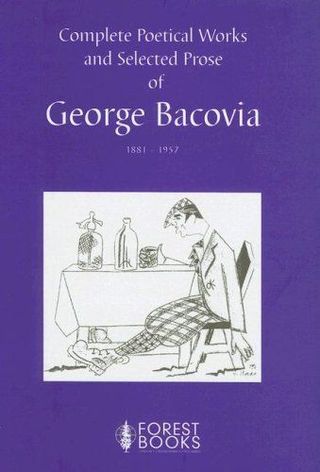
Cover of Complete Poetical Works And Selected Prose of George Bacovia

Complete Poetical Works And Selected Prose of George Bacovia

George Bacovia

Original language: Romanian · Hardcover · ISBN 978-1856100472

George Bacovia (1881-1957) is one of Romania's most recognized poets, closely linked to the Symbolist movement that shaped early twentieth-century Romanian literature. His verse is known for its spare, repetitive structures and an atmosphere heavy with rain, lead-gray skies, and the quiet stagnation of provincial towns. Much of his work draws on life in Bacău, the Moldavian city where he was born, and its surroundings. This collected volume brings together his full poetic output alongside selected prose, offering an unusually complete view of his writing.

The edition includes an introduction covering Bacovia's career, a chronology of his life, and translators' notes that help orient readers unfamiliar with Romanian literary history. A notable addition is a selection of sketches Bacovia drew, showing a lesser-known visual side of his creative work.

Bacovia's poetry returns often to figures on the social margins and to a persistent longing for changed conditions. His language tends toward the plain and the melancholic, building mood through color words, weather, and seasonal decay rather than elaborate imagery. The collection serves as a single-volume reference for his writing in English translation.

Plot

"This volume gathers [Bacovia's] full canon along with an introduction to his career, life chronology, and translators' notes, plus a nice bonus of numerous sketches he drew."" --Library Journal"

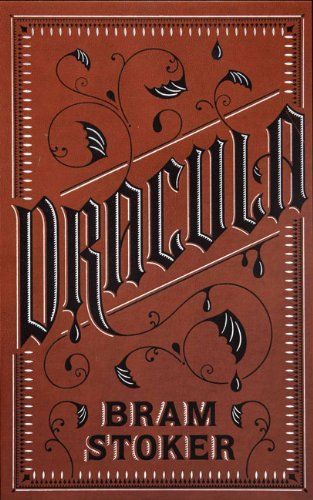
Cover of Dracula

Dracula

Bram Stoker

Original language: Englsih · Hardcover · ISBN 978-1435129733

Bram Stoker's Dracula, first published in 1897, follows Jonathan Harker, a young English solicitor sent to Transylvania to complete a property transaction with Count Dracula. The count has purchased Carfax Abbey in England and intends to relocate from his remote castle in the Carpathian Mountains to late nineteenth-century London. Harker gradually discovers that his host is a centuries-old vampire, a creature who survives on human blood and cannot be killed by ordinary means.

The novel is told through diary entries, letters, newspaper clippings, and telegrams rather than a single narrator. Once Dracula reaches England, he begins to target people close to Harker, including his wife Mina. A small group forms around Professor Abraham Van Helsing, a Dutch academic with knowledge of folklore and the supernatural, to track and confront the count. The story moves between locations in England and eastern Europe as the group pieces together Dracula's movements and weaknesses.

Stoker drew on Eastern European folklore about blood-drinking revenants and combined it with anxieties about foreign influence in Victorian England. The book shaped nearly every major portrayal of vampires in fiction and film that followed it.

Plot

Acting on behalf of his firm of solicitors, Jonathan Harker travels to the Carpathian Mountains to finalise the sale of England's Carfax Abbey to Transylvanian noble Count Dracula. Little does he realise that, in doing so, he endangers all that he loves. For Dracula is one of the Un-Dead; a centuries-old vampire who sleeps by day and stalks by night, feasting on the blood of his helpless victims. Once on English soil, the count sets his sights on Jonathan's circle of associates, among them his beloved wife Mina. To thwart Dracula's evil designs, Jonathan and his friends will have to accept as truth the most preposterous superstitions concerning vampires and in the company of legendary vampire hunter Abraham Van Helsing, embark on an unholy adventure for which even their worst nightmares have not prepared them.

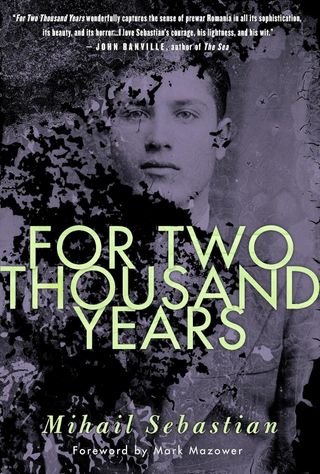
Cover of For Two Thousand Years

For Two Thousand Years

Mihail Sebastian

Original language: Romanian · Paperback · ISBN 978-1590518762

For Two Thousand Years, first published in 1934, is a novel by Romanian writer Mihail Sebastian. It takes the form of a journal kept by a young Jewish student living in Romania during the interwar period. The narrator faces routine threats of violence simply for attending university lectures, yet he also feels distant from the organized responses of his Jewish peers, uncertain whether their political activism addresses the deeper problem. His days pass between the streets of Bucharest and late nights spent among revolutionaries, idealists, and provocateurs.

Sebastian wrote the book as fascism was gaining strength across Europe and anti-Semitism was reshaping daily life in Romania. The novel traces its narrator from Bucharest to Paris, searching for some way to exist honestly in a society that increasingly rejects him. He moves through friendships, love, and intellectual argument without finding solid ground in any of them. The story captures a specific historical moment when personal loyalties and political positions were becoming impossible to separate.

The English translation appeared decades after the original Romanian publication, bringing Sebastian's sharp, observational writing to a wider audience for the first time. The novel is structured as a series of dated entries, giving it the close, unfiltered texture of a private record.

Plot

This literary masterpiece revives the ideological debates of the interwar period through the journal of a Romanian Jewish student caught between anti-Semitism and Zionism. Although he endures persistent threats just to attend lectures, he feels disconnected from his Jewish peers and questions whether their activism will be worth the cost. Spending his days walking the streets and his nights drinking and conversing with revolutionaries, zealots, and libertines, he remains isolated, even from the women he loves. From Bucharest to Paris, he strives to make peace with himself in an increasingly hostile world.

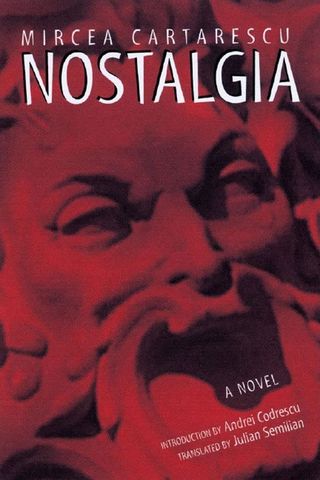
Cover of Nostalgia

Nostalgia

Mircea Cartarescu

Original language: Romanian · Paperback · ISBN 978-0811215886

Nostalgia is a novel by Mircea Cartarescu, first published in Romania in 1989, the same year the country's communist regime collapsed. Cartarescu, born in Bucharest in 1956, belongs to the Romanian literary movement known as the Eighties Generation, a group of writers who pursued experimental and avant-garde fiction during a period of heavy state censorship. The book assembles several interconnected narratives that move between childhood memory, dream logic, and the physical spaces of Bucharest, blurring the line between what is recalled and what is imagined.

Cartarescu's prose draws on a tradition of literary fantasy and layered storytelling. The record of his influences and peers stretches across several languages and literary cultures, with critics noting affinities to writers such as Kafka, Borges, Bruno Schulz, and Julio Cortazar. Like much of his generation's work, Nostalgia was translated into a number of European languages before eventually reaching English-language readers.

The novel's structure gives each section its own atmosphere while linking them through recurring motifs and a shared sense of place. Bucharest appears throughout as both a concrete city and a space shaped by personal and collective memory.

Plot

Mircea Cartarescu, born in 1956, is one of Romania's leading novelists and poets. This translation of his 1989 novel Nostalgia, writes Andrei Codrescu, "introduces to English a writer who has always had a place reserved for him in a constellation that includes the Brothers Grimm, Franz Kafka, Jorge Luis Borges, Bruno Schulz, Julio Cortazar, Gabriel Garcia Marquez, Milan Kundera, and Milorad Pavic, to mention just a few." Like most of his literary contemporaries of the avant-garde Eighties Generation, his major work has been translated into several European languages, with the notable exception, until now, of English.

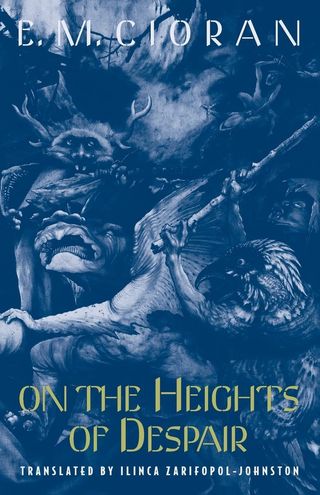
Cover of On the Heights of Despair

On the Heights of Despair

E. M. Cioran

Original language: Romanian · Paperback · ISBN 978-0226106717

E. M. Cioran wrote On the Heights of Despair in Romania in 1934, when he was twenty-two years old. The book grew out of a period of severe insomnia that Cioran later described as a state of unbearable clarity. In short, aphoristic chapters he confronts despair, death, madness, and the absurdity of being conscious at all. Rather than building systematic arguments, Cioran writes in an intensely personal and lyrical style, treating philosophy and physical suffering as closely linked experiences.

Cioran later recalled that writing this book kept him alive, calling it a substitute for and an antidote to self-destruction. He saw himself at the time as a young imitator of Nietzsche, full of dramatic poses and theatrical intensity. The text circles around the irrationality of existence, the sensation of decay, and the feeling of alienation from any stable meaning. Yet running alongside the anguish is a thread of dark, self-aware humor that prevents the work from collapsing into pure bleakness.

The themes Cioran raises here, including futility, absurdity, and the limits of reason, would recur throughout his later career. He eventually moved from Romanian to French and became known for a spare, polished prose style. This early work shows the raw starting point of that long development.

Plot

Born of a terrible insomnia—"a dizzying lucidity which would turn even paradise into hell"—this book presents the youthful Cioran, a self-described "Nietzsche still complete with his Zarathustra, his poses, his mystical clown's tricks, a whole circus of the heights." It also presents Cioran as a connoisseur of apocalypse, a theoretician of despair, for whom writing and philosophy both share the "lyrical virtues" that alone lead to a metaphysical revelation.

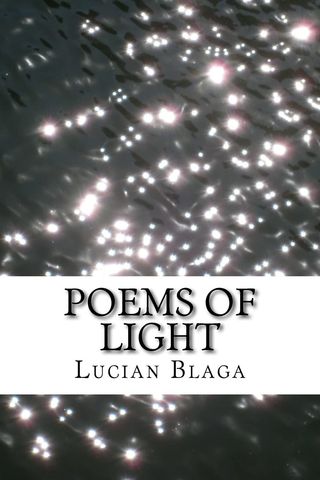
Cover of Poems of Light

Poems of Light

Lucian Blaga

Original language: Romanian · Paperback · ISBN 978-1724663917

Poems of Light is the earliest published collection by Romanian poet Lucian Blaga, one of the leading figures of modernist poetry in Romania. The book contains 38 poems written shortly after Blaga's marriage and dedicated to his wife. His subjects include love, spirituality, and nature, but his approach to these themes is far from straightforward or celebratory.

Blaga's style occupies an unusual middle ground. He carries forward certain Romantic conventions, particularly the impulse to seek meaning and connection through the natural world. Yet his poems regularly undercut that impulse with a modernist skepticism. In pieces such as The oak tree and The earth, the poetic speaker reaches toward nature hoping for reassurance, only to find reflections of mortality and solitude instead. Comfort gives way to questioning, and wonder coexists with doubt.

This tension between openness and suspicion runs through the collection as a whole. Blaga writes with genuine sensitivity, but the voice behind the poems is restless, unwilling to settle into easy answers about what nature or love can provide. The result is a body of early work where warmth and irony sit close together on every page.

Plot

This particular collection, consisting of 38 poems, is his earliest published work, written just after his marriage and dedicated to his wife. Blaga’s style sits somewhere between a Romantic sensibility and an ironic modernist distrust - his poems explore love, spirituality and nature with sensitivity and wonder, yet the poetic persona constantly questions them. Poems such as ‘The oak tree’ and ‘The earth’ follow the Romantic convention of portraying a persona who wants to connect with nature, yet instead of it providing a sense of comfort and stability, nature is transformed into a reminder of our mortality and isolation.

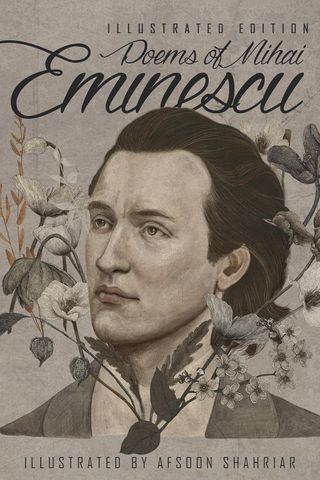
Cover of Poems of Mihai Eminescu

Poems of Mihai Eminescu

Mihai Eminescu

Original language: Romanian · Hardcover · ISBN 978-1592116973

Mihai Eminescu, born in 1850 and active until his early death in 1889, is widely considered Romania's national poet. His writing moves between love, nature, history, and cosmic themes, often mixing close observation of landscape with broader philosophical questions. This bilingual edition collects some of his best-known poems and presents them alongside their English translations, giving readers access to both the Romanian originals and rendered versions in a single volume.

The book is designed as a deluxe illustrated edition, with artwork by Afsoon Shahriari, an illustrator from Georgia. Her images accompany the poems visually, responding to the symbolic and emotional layers in Eminescu's writing. The pairing of illustration and verse gives the collection a visual dimension that a standard poetry edition would not carry.

Eminescu wrote during a period when Romanian literary language was still being shaped, and his work contributed to how the language was used in serious literature. He drew on folklore, classical references, and Romantic traditions from across Europe, producing poems that moved between intimate feeling and large-scale reflection on time and existence.

Plot

Widely regarded as Romania’s national poet, Eminescu (1850–1889) crafted verses of unparalleled depth, exploring themes of love, nature, history, and the cosmos. His lyrical mastery and philosophical reflections have captivated readers for generations, making him one of the most celebrated poets in European literature. This beautifully designed edition brings Eminescu’s most cherished poems to life with breathtaking artwork by Afsoon Shahriari, a talented illustrator from Georgia. Her evocative imagery enhances the emotional and symbolic richness of Eminescu’s work, offering readers a visually immersive experience.

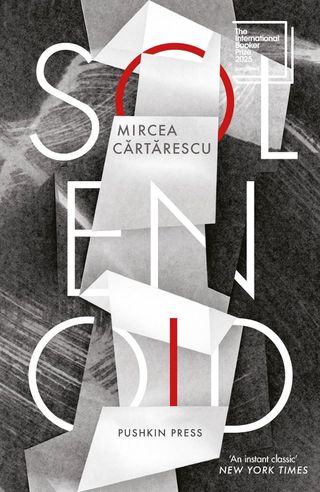
Cover of SOLENOID

SOLENOID

Mircea Cărtărescu

Original language: English · Paperback · ISBN 978-1805333197

Solenoid is a novel by Romanian writer Mircea Cărtărescu, drawn partly from his own years as a schoolteacher in Bucharest. The book takes the form of a diary kept by a failed poet who works in a crumbling school on the outskirts of the city. Set during Romania's communist period, the narrative moves through the routines of classroom life, difficult encounters with the state health system, and the strains of raising a family under an oppressive bureaucracy. These ordinary pressures are recorded with close, sometimes exhausting detail.

From this grounded starting point, the novel opens outward into stranger territory. The diarist visits a tuberculosis preventorium, encounters an organized movement protesting death itself, and follows a group dedicated to the study of dreams. One extended passage describes a miniature civilization of dust mites observed through a microscope. The book folds autobiography, fiction, philosophy, mathematics, and history into a single structure, searching for exits from the constraints of daily existence through alternate dimensions and parallel possibilities.

Cărtărescu is one of Romania's most prominent living writers. Solenoid, originally published in Romanian, is a large-scale work that mixes the domestic and the cosmic, treating Bucharest's streets and apartment blocks as sites where reality can split open without warning.

Plot

Grounded in the reality of communist Romania, it grapples with frightening health care, the absurdities of the education system and the struggles of family life, while investigating other universes and forking paths. In a surreal journey like no other, we visit a tuberculosis preventorium, an anti-death protest movement, a society of dream investigators and a minuscule world of dust mites living on a microscope slide. Combining fiction with autobiography and history, Solenoid searches for escape routes through the alternate dimensions of life and art, as various monstrous realities erupt within the present.

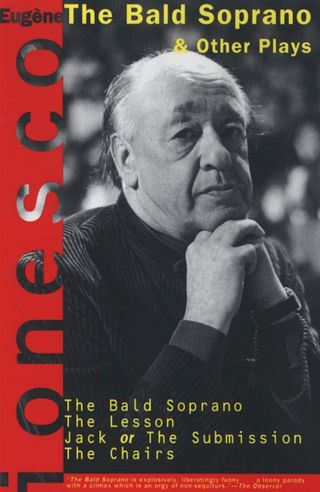
Cover of The Bald Soprano and Other Plays

The Bald Soprano and Other Plays

Eugène Ionesco

Original language: French · Paperback · ISBN 978-0802130792

Eugène Ionesco, born in Romania and later based in France, became one of the central figures of absurdist theater during the mid-twentieth century. The Bald Soprano, his first play, premiered in Paris in 1950 and opens with a conventional English couple, Mr. and Mrs. Smith, exchanging oddly hollow pleasantries in their London sitting room. As the dialogue continues, language itself begins to break down. Polite conversation loops, contradicts itself, and dissolves into nonsense syllables, exposing the gap between the sounds people make and what those sounds actually communicate.

This collection pairs The Bald Soprano with several other short plays by Ionesco. Across these works, everyday domestic situations tip into the strange and the mechanical. Characters forget who they are, objects multiply without explanation, and logic offers no reliable foothold. The comedy in these pieces comes not from jokes in the usual sense but from the growing distance between what the characters expect from language and what language delivers.

Ionesco once stated that theater is not literature and exists as something that cannot be expressed by any other means. His plays test that idea by stripping spoken language of its ordinary function and watching what remains on stage.

Plot

Ionesco went on to become an internationally renowned master of modern drama, famous for the comic proportions and bizarre effects that allow his work to be simultaneously hilarious, tragic, and profound. As Ionesco has said, “Theater is not literature. . . . It is simply what cannot be expressed by any other means.”

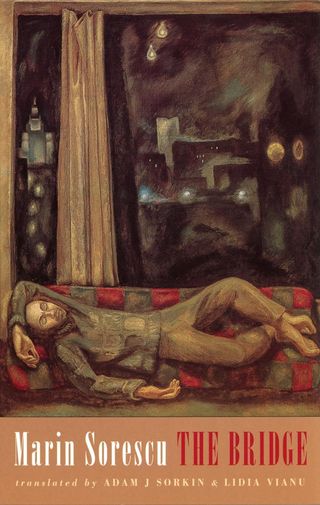
Cover of The Bridge

The Bridge

Marin Sorescu

Original language: Romanian · Paperback · ISBN 978-1852245771

The Bridge is a collection of poems by Marin Sorescu, one of the most recognized voices in Romanian literature. Written from his sickbed over the course of five weeks as he faced his own death, the poems move between mortality, pain, resistance, and creative transformation. The tone is not one of despair but of wry, questioning comedy, sometimes compared to a medieval dance of death in its steady, sombre procession.

Sorescu was known during the Communist era for mischievous poetry and satirical plays that earned wide popularity in Romania. His ironic parables did not attack the regime directly, but readers accustomed to double-speak found layered meanings in his playful treatment of the human condition. Born into a peasant family, he later became Minister of Culture, a turn he might have written into one of his own absurdist dramas.

The Bridge won the Corneliu M Popescu Prize for European Poetry in Translation. Its poems are breathlessly spoken and painfully comic, shaped by a writer whose lifelong instinct was to meet difficult subjects with wit rather than solemnity. The collection stands as a final, sustained sequence written under specific and pressing circumstances.

Plot

A book of wryly quizzical poems composed from his sickbed over five weeks as he waited for death to take him, his testament not just to human mortality and pain but to resistance and creative transformation. The Bridge is unlike any other poetry book: like a medieval dance of death but sombre in movement, a procession of breathlessly spoken, painfully comic poems. Marin Sorescu was a cheerfully melancholic comic genius, and one of the most original voices in Romanian literature. His mischievous poetry and satirical plays earned him great popularity during the Communist era. While his witty, ironic parables were not directly critical of the régime, Romanians used to a culture of double-speak could read other meanings in his playful mockery of the human condition. But later – like a hapless character from one of his absurdist dramas – the peasant-born people’s poet was made Minister of Culture.

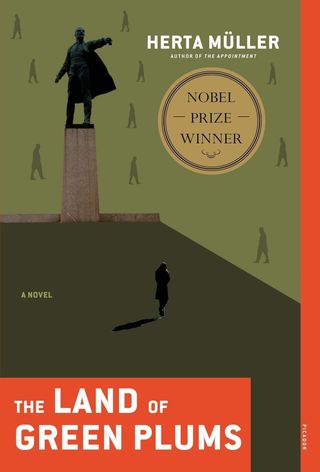
Cover of The Land of Green Plums

The Land of Green Plums

Herta Müller

Original language: German · Paperback · ISBN 978-0312429942

The Land of Green Plums by Herta Müller follows a group of young people in Romania during the Ceausescu dictatorship. They leave an impoverished rural province for the city, hoping for better prospects and companionship. What they find is that the regime reaches into every corner of urban life as thoroughly as it does the countryside. The narrator's circle of teachers and students holds only loosely dissident views.

Friendships collapse under the pressure of the police state. Some of the narrator's companions betray her, others take their own lives. Müller traces how a totalitarian system moves past political control and settles into private relationships, daily habits, and language itself. Small gestures of independence carry heavy consequences, and the line between compliance and simple survival becomes difficult to locate.

Müller grew up in Romania's German-speaking minority in the Banat region and lived under the Ceausescu government before leaving for Germany in 1987. She writes in German, and the novel reached English readers in a translation by Michael Hofmann. Her account of surveillance, interrogation, and constant suspicion draws on direct experience of that period rather than research alone.

Plot

Set in Romania at the height of Ceauescu's reign of terror, The Land of Green Plums tells the story of a group of young people who leave the impoverished province for the city in search of better prospects and camaraderie. But their hopes are ravaged, because the city, no less than the countryside, bears everywhere the mark of the dictatorship's corrosive touch. All the narrator's friends―teachers and students of vaguely dissident allegiance―betray her, do away with themselves, or both. As they do so, we see the way the totalitarian state comes to inhabit every human realm and how everyone, even the strongest, must either bend to the oppressors or resist them and thereby perish.

More from Romania

See the country page for Romania for its map, facts and largest cities, or browse books from other countries.

Free editions are on Project Gutenberg, matched by title and author. Links go to Amazon; Hookito doesn’t sell books. Know a book that belongs here, or spotted a mistake? Write to submissions@hookito.com.

Where to next?

Back to the globe
Hookito landscape illustration