Hookito

Sweden · Books

Books from Sweden

16 books from and about Sweden: what each is about, the plot, and a note from Professor Kogi.

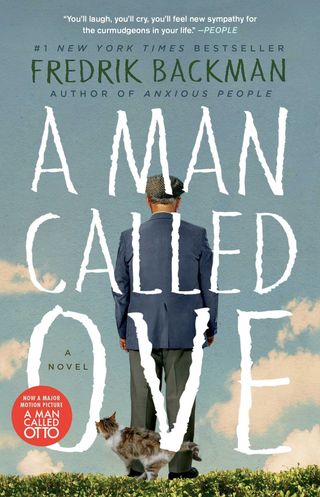
Cover of A Man Called Ove

A Man Called Ove

Fredrik Backman

Original language: Swedish · Paperback · ISBN 978-1476738024

Ove is a retired man with firm opinions, fixed habits, and very little patience for the people around him. His neighbors in a small Swedish residential community see him as difficult and hostile. He patrols the neighborhood enforcing rules, points accusingly at anyone who irritates him, and rarely offers a kind word. Fredrik Backman's first novel opens with this portrait of a person most would avoid, then slowly peels back what lies behind it.

When a young family with two small daughters moves in next door one November morning, their arrival upends Ove's carefully controlled daily life. The new neighbors are loud, clumsy, and persistent. They flatten his mailbox almost immediately. From this awkward beginning, an unlikely connection forms between Ove and the people he never asked for. The story gradually reveals the losses and personal history that shaped his rigid exterior, mixing comic situations with quieter, sadder material.

Backman originally wrote the novel in Swedish, and it became widely read in translation. A Swedish-language film adaptation followed. The book is set in a recognizable suburban landscape of shared driveways and residents' associations, where small disputes carry large emotional weight.

Plot

Meet Ove. He’s a curmudgeon—the kind of man who points at people he dislikes as if they were burglars caught outside his bedroom window. He has staunch principles, strict routines, and a short fuse. People call him “the bitter neighbor from hell.” But must Ove be bitter just because he doesn’t walk around with a smile plastered to his face all the time?

Cover of Amatka

Amatka

Karin Tidbeck

Original language: Swedish · Paperback · ISBN 978-1101973950

Vanja works as an information assistant in the city of Essre. She is sent to Amatka, a remote and cold colony, to gather data for the government. The colony operates under strict surveillance, and its residents behave in ways that unsettle her from the start. Though she plans a brief stay, a relationship with her housemate Nina keeps her there. Before long she notices signs of a serious danger facing Amatka, and efforts by the local administration to keep it hidden.

Inside the colony's system, language does not merely describe reality. It holds reality together. Objects, structures, and even the surrounding land must be named and labeled correctly and repeatedly, or they begin to lose their form. The rigid social controls exist partly to enforce this discipline. Vanja, drawn toward individual expression, is caught between maintaining a fragile order and using language on her own terms.

Karin Tidbeck, a Swedish author who writes in both Swedish and English, published Amatka as her debut novel. The book sits at the border of speculative fiction and dystopian storytelling, grounding its strangeness in a quiet, closely observed setting rather than grand spectacle.

Plot

Vanja, an information assistant, is sent from her home city of Essre to the austere, wintry colony of Amatka with an assignment to collect intelligence for the government. Immediately she feels that something strange is going on: people act oddly in Amatka, and citizens are monitored for signs of subversion. Intending to stay just a short while, Vanja falls in love with her housemate, Nina, and prolongs her visit. But when she stumbles on evidence of a growing threat to the colony, and a cover-up by its administration, she embarks on an investigation that puts her at tremendous risk.

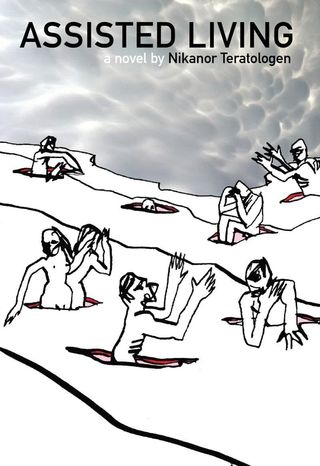
Cover of Assisted Living

Assisted Living

Nikanor Teratologen

Original language: English · Paperback · ISBN 978-1564786821

Assisted Living is a Swedish novel by Nikanor Teratologen, built around a series of disturbing episodes involving an eleven-year-old boy and his grandfather. The grandfather is a figure of unchecked brutality whose behavior spans murder, incest, drunkenness, violence, and philosophical musing, all treated with the same casual weight. The setting is a quiet Swedish suburb, and the contrast between its ordinariness and the extremity of the content is central to the book's unsettling effect.

The novel has been compared to works known for testing the boundaries of what literature can contain, including the Marquis de Sade's writings, William S. Burroughs's Naked Lunch, and James Dickey's Deliverance. It has also been read alongside gentler works like Tuesdays with Morrie, a pairing that highlights the book's dark comedy. Interpretations vary: some view it as a satire of provincial proto-fascism, others as a deliberate literary provocation, and others still as an unflinching portrayal of cruelty. Teratologen, whose pen name derives from the Greek word for the study of monsters, originally published the novel in Swedish before it was translated for English-language readers.

Plot

Reading like a deranged hybrid of Deliverance, Naked Lunch, and Tuesdays with Morrie, Assisted Living presents us with a series of queasy anecdotes concerning an eleven-year-old boy and his grandfather, a monster for whom murder, violence, incest, drunkenness, and philosophy are all equally appropriate ways to spend one's time. Whether it's a study in excess, a parody of provincial proto-fascism, a clear-eyed look at evil, or simply a prodigious literary dare, Assisted Living is unlikely to leave you indifferent.

Cover of Barabbas

Barabbas

Par Lagerkvist

Original language: Swedish · Paperback · ISBN 978-0679725442

Barabbas, by the Swedish writer Par Lagerkvist, takes up the biblical figure who was set free while Jesus of Nazareth was led away to be crucified on the hill of Golgotha. The novel begins where the Gospel account stops, following a condemned man whose sentence was exchanged for another death. Barabbas walks away alive, and that exchange stays with him afterwards.

Lagerkvist places his character between belief and refusal. The name of Christ Jesus is cut into a small disk hanging at his neck, yet the letters settle nothing inside him. He is drawn toward the followers of the executed man without being able to share their conviction. He cannot pray. He can only say that he wants to believe.

The book was written in Swedish and set in the Roman-ruled province where the crucifixion took place, a world of soldiers, public executions, and small gatherings of new believers. The prose is short and plain, closer to a parable than a detailed historical reconstruction, and the central question is left open: what does a man do with a life he did not choose to keep?

Plot

Barabbas is the acquitted; the man whose life was exchanged for that of Jesus of Nazareth, crucified upon the hill of Golgotha. Barabbas is a man condemned to have no god. "Christos Iesus" is carved on the disk suspended from his neck, but he cannot affirm his faith. He cannot pray. He can only say, "I want to believe."

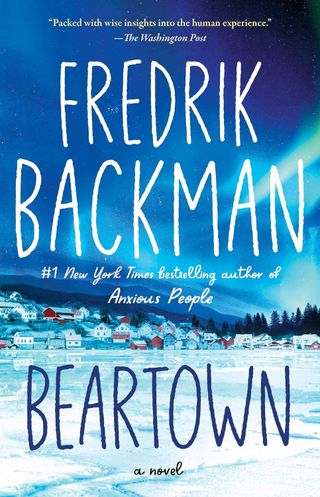
Cover of Beartown

Beartown

Fredrik Backman

Original language: Swedish · Paperback · ISBN 978-1501160776

Beartown is set in a small town in the Swedish forest, the kind of place where work is scarce and pride is hard to come by. Here that pride is ice hockey. The junior team is approaching the national semi-finals with a real chance of winning, and the hopes of the whole town rest on a handful of teenage boys.

Fredrik Backman builds the story around players such as Kevin, Amat, and Benji, along with parents, coaches, club officials, and neighbours whose sense of themselves is tied to the team. Under that pressure the match becomes the trigger for a violent act that leaves a young girl traumatized. Accusations follow, spreading through Beartown like ripples across water, and the town divides.

The novel follows how loyalty, silence, and self-interest shape each response, and what happens when a community's survival and identity are bound to the conduct of its most valued members. Class, gender, and the distance between public image and private behaviour run through the book. The setting is Sweden, but the pattern belongs to any small place organised around one team.

Plot

By the lake in Beartown is an old ice rink, and in that ice rink Kevin, Amat, Benji, and the rest of the town’s junior ice hockey team are about to compete in the national semi-finals—and they actually have a shot at winning. All the hopes and dreams of this place now rest on the shoulders of a handful of teenage boys. Under that heavy burden, the match becomes the catalyst for a violent act that will leave a young girl traumatized and a town in turmoil. Accusations are made and, like ripples on a pond, they travel through all of Beartown.

Cover of Let the Right One In

Let the Right One In

John Ajvide Lindqvist

Original language: Swedish · Paperback · ISBN 978-0312355296

Set in the autumn of 1981, Let the Right One In takes place in Blackeberg, a residential suburb on the western edge of Stockholm. A teenager's body is discovered drained of blood, and rumors of a ritual killing spread through the neighborhood. Twelve-year-old Oskar, isolated and routinely bullied at school, follows the case with intense interest. His daily life is shaped by the cruelty of his classmates and a quiet, building desire for retaliation.

Oskar's attention shifts when a girl his age moves into the apartment next door. She appears only after dark, seems unfamiliar with ordinary objects like a Rubik's Cube yet solves one instantly, and carries details about herself that do not add up. Their cautious friendship develops against the backdrop of a community unsettled by violence it cannot explain. The novel layers a coming-of-age story with elements of supernatural horror, grounding both in the texture of early-1980s Swedish suburban life.

John Ajvide Lindqvist, who grew up in Blackeberg, wrote the book drawing on the geography and social atmosphere of the place. The novel was first published in Swedish in 2004 and later translated into English. It was adapted into a Swedish film in 2008 and an American remake in 2010.

Plot

It is autumn 1981 when inconceivable horror comes to Blackeberg, a suburb in Sweden. The body of a teenager is found, emptied of blood, the murder rumored to be part of a ritual killing. Twelve-year-old Oskar is personally hoping that revenge has come at long last―revenge for the bullying he endures at school, day after day. But the murder is not the most important thing on his mind. A new girl has moved in next door―a girl who has never seen a Rubik’s Cube before, but who can solve it at once. There is something wrong with her, though, something odd. And she only comes out at night. . .

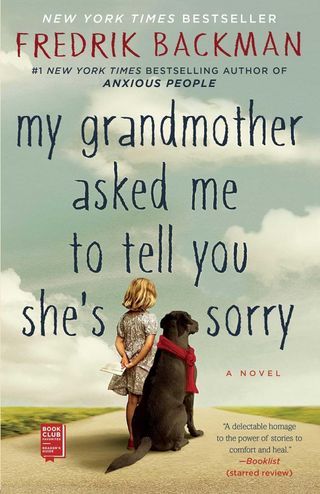
Cover of My Grandmother Asked Me to Tell You She's Sorry

My Grandmother Asked Me to Tell You She's Sorry

Fredrik Backman

Original language: Swedish · Paperback · ISBN 978-1501115073

Elsa is seven, sharp-minded, and mostly friendless at school. Her closest companion is her seventy-seven-year-old grandmother, who fires paintball guns from her balcony and tells elaborate bedtime stories set in imaginary kingdoms like the Land-of-Almost-Awake and Miamas. In those invented worlds, being different is ordinary and no one must fit a single idea of normal. The stories give Elsa a private shelter and a language she and her grandmother share.

When the grandmother dies, she leaves behind letters addressed to people she has wronged, and Elsa is tasked with delivering them. The recipients live in and around the apartment building, a place with difficult, eccentric, and sometimes frightening neighbours. As Elsa carries out the errand, she begins to learn who each person really is and what part her grandmother played in their lives.

Fredrik Backman, a Swedish author known for A Man Called Ove, sets the novel in an ordinary residential setting where grief, apology, and the private logic of childhood overlap. The story moves between Elsa's matter-of-fact view of adults and the imagined territories her grandmother built for her.

Plot

Elsa is seven years old and different. Her grandmother is seventy-seven years old and crazy—as in standing-on-the-balcony-firing-paintball-guns-at-strangers crazy. She is also Elsa’s best, and only, friend. At night Elsa takes refuge in her grandmother’s stories, in the Land-of-Almost-Awake and the Kingdom of Miamas, where everybody is different and nobody needs to be normal. When Elsa’s grandmother dies and leaves behind a series of letters apologizing to people she has wronged, Elsa’s greatest adventure begins. Her grandmother’s instructions lead her to an apartment building full of drunks, monsters, attack dogs, and old crones but also to the truth about fairy tales and kingdoms and a grandmother like no other.

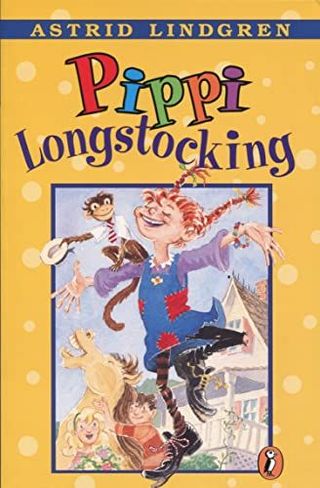
Cover of Pippi Longstocking

Pippi Longstocking

Astrid Lindgren

Original language: Swedish · Paperback · ISBN 978-0140309577

Pippi Longstocking, by the Swedish writer Astrid Lindgren, introduces a girl who moves into a house called Villa Villekulla at the edge of a small village. She lives there with no adults at all, sharing the place with a horse that stands on the porch and a small monkey named Mr. Nilsson. A bag of gold coins covers her expenses. Next door live Tommy and his sister Annika.

Pippi is presented as the strongest girl in the world, fearless and generous, and she does more or less as she pleases. Ordinary business such as scrubbing floors, working through arithmetic, or sitting at a formal tea party turns unpredictable once she takes part. The episodes are told in a calm, matter-of-fact voice that treats her behaviour as entirely normal, and that steady tone supplies much of the comedy.

Lindgren first published the story in Swedish in 1945, after telling versions of it to her daughter. It has since appeared in many languages; German readers know the house as Villa Kunterbunt and the girl as Pippi Langstrumpf. The setting stays small throughout: a village, two neighbouring gardens, and one house where the usual household rules do not apply.

Plot

Tommy and his sister Annika have a new neighbor, and her name is Pippi Longstocking. She has crazy red pigtails, no parents to tell her what to do, a horse that lives on her porch, and a pet monkey named Mr. Nilsson. Whether Pippi’s scrubbing her floors, doing arithmetic, or stirring things up at a fancy tea party, her flair for the outrageous always seems to lead to another adventure.

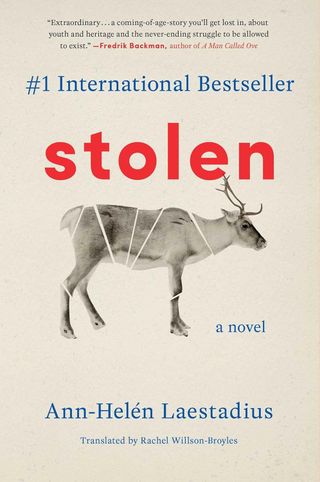
Cover of Stolen

Stolen

Ann-Helén Laestadius

Original language: English · Paperback · ISBN 978-1668007167

In northern Sweden, above the Arctic Circle, a nine-year-old Sámi girl named Elsa witnesses a man kill her reindeer calf and threaten her into silence. When her father tries to report the crime, local police dismiss it. Killings of reindeer in Sámi communities are officially classified as theft, and the reports pile up without investigation. For the Sámi, an Indigenous people whose culture and livelihood depend on reindeer herding, these acts carry a weight that goes far beyond property loss. The animals are central to spiritual life and everyday survival alike.

Ten years pass, and the violence has not stopped. Hatred toward the Sámi continues to grow in the region, and more reindeer are tortured and killed. Elsa, now a young woman, decides she can no longer accept the inaction of authorities and begins to confront the situation on her own terms. Her resistance draws dangerous attention.

Ann-Helén Laestadius, herself of Sámi heritage, based the novel on real events. The story is set in a landscape of snow, tundra, and sparse northern settlements where reindeer herding families have lived for generations. It follows Elsa from childhood through young adulthood, tracing how sustained injustice and cultural hostility shape her decisions. The book received recognition as an award-winning work.

Plot

On a winter day north of the Arctic Circle, nine-year-old Elsa—daughter of Sámi reindeer herders—sees a man brutally kill her beloved reindeer calf and threaten her into silence. When her father takes her to report the crime, local police tell them that there is nothing they can do about these “stolen” animals. Killings like these are classified as theft in the reports that continue to pile up, uninvestigated. But reindeer are not just the Sámi’s livelihood, they also hold spiritual significance; attacking a reindeer is an attack on the culture itself. Ten years later, hatred and threats against the Sámi keep escalating, and more reindeer are tortured and killed in Elsa’s community. Finally, she’s had enough and decides to push back on the apathetic police force. The hunter comes after her this time, leading to a catastrophic final confrontation.

Cover of Swedish Cakes and Cookies

Swedish Cakes and Cookies

Melody Favish

Original language: Swedish · Hardcover · ISBN 978-1602392625

Swedish Cakes and Cookies is a baking collection first published in 1945 and updated over the decades into a full-color edition containing close to 300 recipes. The book covers a wide range of baked goods, from familiar items like berry muffins, coconut macaroons, and jelly doughnuts to less common preparations such as German lemon cake, almond meringues, truffle tarts, and toffee crunch torte. Each recipe is accompanied by a photograph and step-by-step instructions.

The collection also includes recipes designed for specific dietary needs, with gluten-free, egg-free, and sugar-free options among the entries. Practical advice sections address technique and method for bakers at different skill levels. The book is organized by Melody Favish and connects to a tradition in Sweden where coffee and cake form a regular social occasion, sometimes called fika. That custom treats the pairing of a hot drink with something baked as an ordinary part of the day rather than a special event, and the recipes here are shaped with that kind of everyday baking in mind.

Plot

Modernized and improved over the years, today's full-color edition, with beautiful photographs of each recipe, contains nearly 300 recipes. Some, such as Berry Muffins, Coconut Macaroons, Linzer Torte, and Jelly Doughnuts, may be familiar, while others, such as German Lemon Cake, Almond Meringues, Truffle Tarts, and Toffee Crunch Torte, are deliciously unique. Gluten-free, egg-free, and sugar-free recipes ensure that this book is accessible to all dessert lovers. Beginners and experts will be reminded that baking is both easy and enjoyable when they read the practical advice and step-by-step instructions in each section. Swedish Cakes and Cookies is an essential resource for any home baker, and for anyone who loves to meet with friends for coffee and cake.

Cover of The 100-Year-Old Man Who Climbed Out the Window and Disappeared

The 100-Year-Old Man Who Climbed Out the Window and Disappeared

Jonas Jonasson

Original language: Swedish · Paperback · ISBN 978-1401324643

Allan Karlsson turns 100 years old in a nursing home and has no interest in the birthday party being planned for him. Instead, he opens a window, steps out in his slippers, and walks away. What follows is an unplanned chain of events that includes a suitcase full of money, a series of criminals looking for that suitcase, and a growing cast of unlikely companions picked up along the way, among them a hot-dog stand operator and, at one point, an elephant.

The novel by Swedish author Jonas Jonasson moves between two timelines. One follows Allan's present-day escape and the escalating trouble it causes. The other traces his long life backward through the twentieth century, placing him at key historical moments as an explosives expert whose practical skills keep drawing him into world events he has little ideological interest in. Allan is not a hero or a villain. He is someone who tends to say yes when asked and who finds dynamite more interesting than politics.

The tone is consistently comic, built on understatement and absurd coincidence rather than satire or slapstick. Jonasson treats Allan's century of life as a string of accidental encounters, each one stranger than the last.

Plot

After a long and eventful life, Allan Karlsson ends up in a nursing home, believing it to be his last stop. The only problem is that he's still in good health, and in one day, he turns 100. A big celebration is in the works, but Allan really isn't interested (and he'd like a bit more control over his vodka consumption). So he decides to escape. He climbs out the window in his slippers and embarks on a hilarious and entirely unexpected journey, involving, among other surprises, a suitcase stuffed with cash, some unpleasant criminals, a friendly hot-dog stand operator, and an elephant (not to mention a death by elephant).

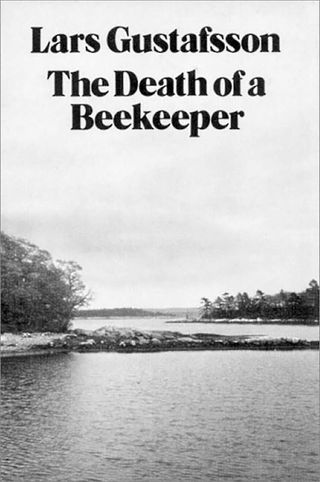
Cover of The Death of a Beekeeper

The Death of a Beekeeper

Lars Gustafsson

Original language: English · Paperback · ISBN 978-0811208109

Lars Lennart Westin is a former schoolteacher who has taken up beekeeping in the Swedish countryside. As winter begins to loosen its hold, he learns he has cancer and will not survive the coming spring. Rather than spend his remaining time in a hospital, he chooses to stay alone in his rural surroundings, continuing the quiet, self-directed life he has built for himself.

The novel is told through Westin's journal entries. In them, he records his observations of the landscape, his memories, and the steady presence of physical pain. Pain begins to alter his perception of the world around him, marking certain trees and fence posts with its own geography. The writing moves between small practical details and larger questions about what it means to remain conscious and attentive while the body fails. Moments of dry humor surface alongside passages of plain-spoken reflection.

Lars Gustafsson was a Swedish novelist, poet, and philosopher. The Death of a Beekeeper served as his American debut. The book is set in rural Sweden, and its form as a fictional journal gives the narrative a measured, interior pace. Gustafsson uses the structure of daily entries to track both the external seasons and the internal shifts that accompany serious illness.

Plot

In the beginning of the winter thaw, Lars Lennart Westin has learned that he has cancer and will not live through spring. Told through the journals of this schoolteacher turned apiarist, The Death of a Beekeeper, is his gentle, courageous, and sometimes comic meditation on living with pain. Westin has refused to surrender the time left him to the impersonation of a hospital, preferring to take his fate upon himself, to continue solitary, reflective life in the Swedish countryside. "I took little walks and noticed that in the last months the pain had actually colored the landscape in a peculiar way. Here and there is a tree where it really hurt, here and there is a fence against whose post I struck my hand in passing.

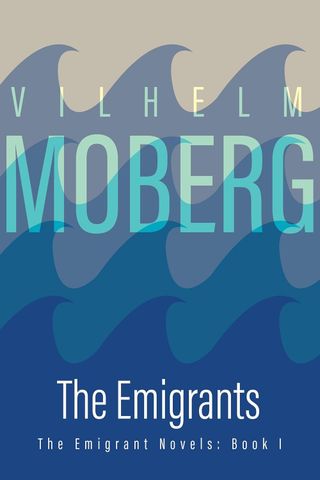
Cover of The Emigrants

The Emigrants

Vilhelm Moberg

Original language: Swedish · Paperback · ISBN 978-0873513197

In 1850, a group of fifteen people from the Swedish province of Småland set out to leave their country behind. Karl Oskar and Kristina Nilsson, along with their three young children, lead this small party of emigrants driven by poverty, religious persecution, and rigid social hierarchies. Vilhelm Moberg built their story from archival papers left by real Swedish emigrants, shaping what he called a documentary novel, a work grounded in historical detail but carried by fictional characters.

The Emigrants is the first of four books that Moberg published between 1949 and 1959. He regarded all four as parts of a single continuous work. The series follows Karl Oskar and Kristina from their decision to leave Sweden through the realities of starting over in America. Moberg drew heavily on letters, diaries, and official records to reconstruct the textures of daily pioneer life, from the practical struggles of farming to the emotional cost of cutting ties with home.

Later English reprints restored Moberg's original bibliography, which had been dropped from earlier translations. These editions also include introductions by Roger McKnight of Gustavus Adolphus College, providing context for readers encountering the series outside Sweden.

Plot

Moberg's extensive research in the papers of Swedish emigrants in archival collections enabled him to incorporate many details of pioneer life. First published between 1949 and 1959 in Swedish, these four books were considered a single work by Moberg, who intended that they be read as documentary novels. These reprint editions contain introductions written by Roger McKnight of Gustavus Adolphus College, and they restore Moberg's bibliography not included in earlier English editions. The first book in the series, The Emigrants introduces Karl Oskar and Kristina Nilsson, their three young children, and eleven others who make up a resolute party of Swedes fleeing the poverty, religious persecution, and social oppression of Småland in 1850.

Cover of The Girl with the Dragon Tattoo

The Girl with the Dragon Tattoo

Stieg Larsson

Original language: Swedish · Paperback · ISBN 978-0307949486

Mikael Blomkvist is a financial journalist in Stockholm who has just been convicted of libel against a powerful businessman. Stepping back from his work at the magazine Millennium, he accepts an unusual commission from Henrik Vanger, once one of Sweden's leading industrialists. Officially, Blomkvist will write the Vanger family history. In truth, Henrik wants to know what happened to his young relative Harriet, missing without trace for nearly forty years.

Every year on his birthday, Henrik receives a reminder in the post that stops him from abandoning the idea that she is still alive. The search looks hopeless at first, and Blomkvist needs help with research. He is directed toward Lisbeth Salander, a young woman with tattoos and piercings who also works as a professional hacker and an unusually capable investigator.

As the mismatched pair sift through decades of family records, they begin to suspect that someone in Henrik's closest circle is connected to a series of sadistic crimes. Larsson worked as a journalist before writing fiction, and this is the first of three books following Blomkvist and Salander. The Swedish original carries the title Man som hatar kvinnor, and it was published after the author's death in 2004.

Plot

Harriet Vanger, a scion of one of Sweden's wealthiest families disappeared over forty years ago. All these years later, her aged uncle continues to seek the truth. He hires Mikael Blomkvist, a crusading journalist recently trapped by a libel conviction, to investigate. He is aided by the pierced and tattooed punk prodigy Lisbeth Salander. Together they tap into a vein of unfathomable iniquity and astonishing corruption.

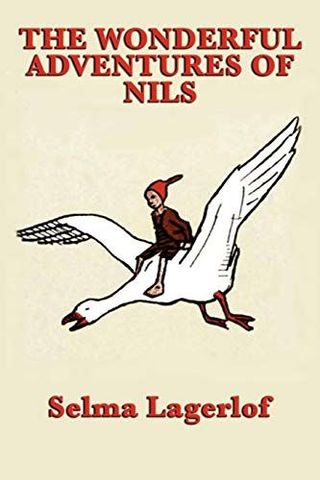
Cover of The Wonderful Adventures of Nils

The Wonderful Adventures of Nils

Selma Lagerlöf

Original language: Swedish · Paperback · ISBN 978-1604596243

Nils Holgersson is a lazy, mischievous boy on a farm in southern Sweden. After mistreating a tomte, a small supernatural creature from Scandinavian folklore, he is shrunk to that size himself. Tiny and vulnerable, he is carried into the sky by Martin, a young farmyard gander who joins a flock of wild geese flying north. Their route crosses Sweden from the flatlands of Skane to the far north, past animals, people, and local legends.

Selma Lagerlöf wrote the book in 1906 and 1907 as a geography reader commissioned for Swedish schools. Instead of a conventional textbook, she folded the geography of the country into a story, describing provinces, cities, industries, rivers, and wildlife through the eyes of a boy small enough to ride on a goose. She became the first woman to receive the Nobel Prize in Literature, in 1909.

The book works on two levels: an aerial tour of early twentieth-century Sweden, with its farming regions, forests, mining towns, and coastlines, and the account of a boy who must depend on animals he once tormented. Nils remains a familiar figure in Swedish children's literature, and his image appeared on the Swedish twenty-krona banknote for several decades.

Plot

Nils is a young lad who likes nothing more than eating and sleeping. He is a naughty boy who is transformed into a very little dwarf and goes through many adventures with the young goosey-gander named Martin, the wild geese, and other forest animals

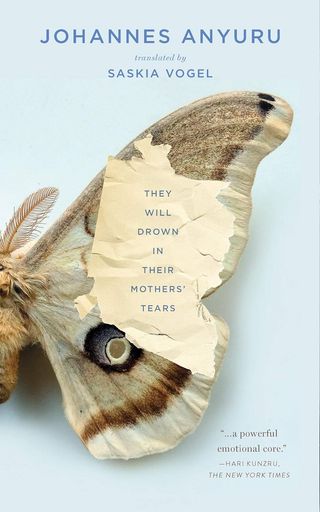
Cover of They Will Drown in Their Mothers' Tears

They Will Drown in Their Mothers' Tears

Johannes Anyuru

Original language: Swedish · Paperback · ISBN 978-1949641080

They Will Drown in Their Mothers' Tears by Swedish-Ugandan author Johannes Anyuru opens with a terrorist attack on a bookstore in Sweden. During a reading by a comic book artist known for inflammatory drawings of the prophet Mohammed, one of the attackers, a young woman, experiences a sudden shift in perception that alters what happens next. Two years later, she is living in a criminal psychiatric clinic and asks a writer to visit her. She tells him she has come from an alternate future.

In her account, the society she left behind has turned against people deemed insufficiently loyal to the state. Citizens labeled as threats are confined to a place called The Rabbit Yard, a segregated zone of surveillance and control. The writer listening to her story is skeptical at first, finding gaps and contradictions, but he grows absorbed as details accumulate and as his own life begins to intersect with what she describes. The novel moves between these two timeframes, building tension around the question of whether her version of events can be trusted.

Anyuru sets his story against recognizable anxieties about political polarization, anti-immigrant sentiment, and the boundaries of free expression. The speculative structure allows the book to examine how fear and exclusion can reshape a society without presenting a single fixed prediction.

Plot

In the midst of a terrorist attack on a bookstore reading by Göran Loberg, a comic book artist famous for demeaning drawings of the prophet Mohammed, one of the attackers, a young woman, has a sudden premonition that something is wrong, changing the course of history. Two years later, this unnamed woman invites a famous writer to visit her in the criminal psychiatric clinic where she’s living. She then shares with him an incredible story―she is a visitor from an alternate future. Despite discrepancies that make the writer highly skeptical, he becomes increasingly fascinated by her amazing tale: in her dystopian future, any so-called “anti-Swedish” citizens are forced into a horrific ghetto called The Rabbit Yard. As events begin to spiral and the author becomes more and more implicated in this woman’s tale, he comes to believe the unbelievable: she’s telling the truth.

More from Sweden

See the country page for Sweden for its map, facts and largest cities, or browse books from other countries.

Links go to Amazon; Hookito doesn’t sell books. Know a book that belongs here, or spotted a mistake? Write to submissions@hookito.com.

Where to next?

Back to the globe
Hookito landscape illustration