Hookito

Slovakia · Books

Books from Slovakia

7 books from and about Slovakia: what each is about, the plot, and a note from Professor Kogi.

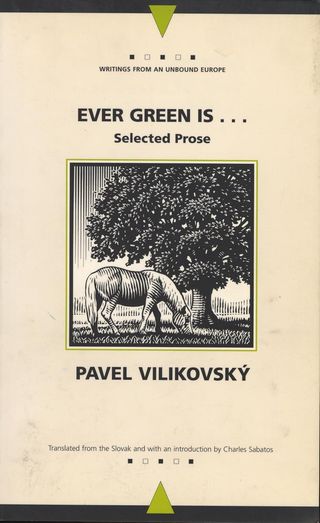
Cover of Ever Green Is

Ever Green Is

Pavel Vilikovsky

Original language: Slovak · Paperback · ISBN 978-0810119086

Pavel Vilikovsky began publishing fiction in 1965, well before the political changes that would reshape Central Europe over the following decades. A Slovak writer whose work covers a long arc of regional history, he is considered one of the significant literary voices to emerge from the post-Communist era in Eastern Europe. Ever Green Is collects prose pieces that move across different periods, from the time of the Austro-Hungarian empire through the decades of Communist rule and beyond.

The title piece opens with a scenario involving seduction by an intelligence officer, but that premise quickly fractures into something harder to pin down. Tall tales, cultural observations, ironic exaggerations, and questions about identity build up in overlapping layers. The narration is partly unreliable, mixing philosophical reflection with dry humor. Rather than following a single storyline, the text works as a mosaic, shifting between registers and timeframes.

This approach extends through the collection as a whole. Vilikovsky uses humor and digression to examine how people in Central Europe have understood themselves across changing borders and political systems. The prose keeps its footing through an accumulation of small, specific moments rather than grand historical sweep.

Plot

A collection of prose that spans Central European history, from the Austro-Hungarian empire through the Communist era, narrated through a partially unreliable, humorous, and philosophical voice. The title piece imagines being seduced by an intelligence officer, but quickly diverges into a mosaic of tall tales, cultural reflections, ironic exaggerations, and ruminations on identity.

Cover of Rivers of Babylon

Rivers of Babylon

Peter Pist'anek

Original language: Slovak · Hardcover · ISBN 978-0953587841

Rivers of Babylon is a novel by Slovak writer Peter Pišťanek, set in the period when Central Europe was shifting from communist rule to new democratic systems. The story follows a cast of criminals, intellectuals, and former secret police officers who find ways to exploit the uncertain power structures of a young democracy. At the center is a protagonist who has become one of the most recognized figures in Slovak fiction, a character whose ambition and resourcefulness reflect the chaotic energy of the era.

Pišťanek wrote with sharp, unsparing directness about Slovak society, stripping away national myths and comfortable self-images. The novel portrays a world where old loyalties dissolve quickly and where opportunism fills the space left by collapsed institutions. Its tone is closer to dark comedy than to political thriller, treating corruption and reinvention as ordinary features of everyday life rather than extraordinary scandals.

The English translation was produced by Peter Petro of the University of British Columbia, working in collaboration with Pišťanek himself. The book originally appeared in Slovak and became a defining work of post-1989 Slovak prose.

Plot

Rivers of Babylon tell the story of a Central Europe, where criminals, intellectuals and ex-secret policemen have infiltrated a new democracy . Slovaks see Peter Pist'anek as their most flamboyant and fearless writer, stripping the nation of its myths and false self-esteem. The novel has been translated by Peter Petro of British Columbia University, in collaboration with the author .

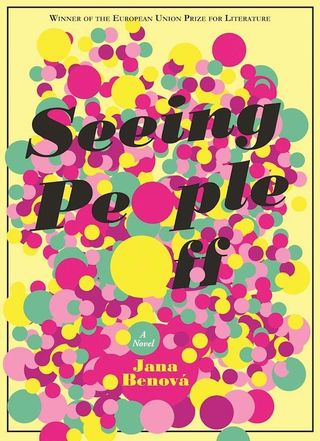
Cover of Seeing People Off

Seeing People Off

Jana Benova

Original language: Slovak · Paperback · ISBN 978-1937512590

Seeing People Off follows Elza and Ian, a young couple living in a huge apartment complex on the outskirts of Bratislava, where the walls play music and talk and time refuses to move in a straight line. Jana Benová builds the book from fragments: memories, small daily encounters, observations of post-socialist life, and Elza's attraction to an actor named Kalisto Tanzi. The result is closer to a mosaic of episodes than a conventional plot.

Benová moves between humor and loneliness, between domestic detail and larger questions about how people stay close or drift apart. The setting grounds the novel in a recognizable Slovak reality, the concrete housing estates that ring many Central European cities, while the prose turns stranger and more playful. Comparisons have been drawn to Renata Adler and Jenny Offill, though the sensibility stays her own.

The novel won the European Union Prize for Literature, an award given to emerging writers across Europe. Written in Slovak, it later appeared in English translation, carrying Benová's compressed, associative sentences to readers outside the region where such apartment blocks and street corners are ordinary sights.

Plot

There is a liveliness and effervescence to Jana Benová’s prose that is magnetic. Whether addressing the loneliness of relationships or the effectiveness of rat poison, her voice and observations call to mind the verve and sophistication of Renata Adler or Jenny Offill, while remaining utterly singular. Seeing People Off follows Elza and Ian, a young couple living in a humongous apartment complex outside Bratislava where the walls play music and talk, and time is immaterial. Drawing on her memories, everyday interactions, observations of post-socialist realities, and Elza’s attraction to actor, Kalisto Tanzi, Seeing People Off is a kaleidoscopic, poetic, and deeply funny portrait of a relationship.

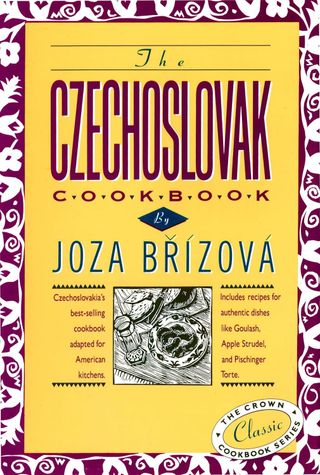
Cover of The Czechoslovak Cookbook

The Czechoslovak Cookbook

Joza Brizova

Original language: Czech · Hardcover · ISBN 978-0517505472

The Czechoslovak Cookbook by Joza Brizova is an English-language edition of the Czech cookbook Varime Zdrave Chutne a Hospodarne. It collects over 500 recipes drawn from the cooking traditions of the former Czechoslovakia, a Central European state that existed from 1918 to 1992 before splitting into the Czech Republic and Slovakia. The book covers a wide spread of dishes, from soups built on garlic, rye bread, and creamed fish to substantial meat preparations featuring beef, veal, mutton, and pork.

Meat dishes occupy a central place in the collection. Recipes include ginger roast beef, beef goulash, tartar beefsteak, mutton seasoned with marjoram, veal cutlets paired with mushrooms, stuffed breast of veal, and roast pork with capers. Braised sweetbreads and several pates round out the selection. A separate chapter covers poultry and game, with preparations for chicken paprika, roast capon, roast goose, stuffed roast squab, roast hare in sour cream, and leg of venison braised with red wine.

Sour cream, paprika, marjoram, and capers appear across many of the recipes, reflecting ingredients that have long been staples in Czech and Slovak kitchens. The book serves as a practical reference for home cooks interested in the everyday and festive food of this part of Central Europe.

Plot

Contained in this volume are recipes for such favorites as Garlic Soup, Creamed Fish Soup, and Rye Bread Soup. Robust meat dishes include Ginger Roast Beef, Braised Beef with Vegetables and Sour Cream, Beef Goulash, Tartar Beefsteak, Mutton with Marjoram, Veal Cutlets with Mushrooms, Stuffed Breast of Veal, Veal Paprika, Roast Pork with Capers, Braised Sweetbreads, and a variety of pates. The poultry and game chapter contains recipes for Chicken Paprika, Roast Capon, Roast Goose. Stuffed Roast Squab, Roast Hare with Sour Cream, and Leg of Venison with Red Wine.

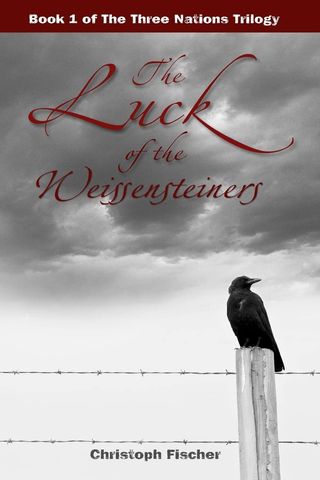
Cover of The Luck of the Weissensteiners

The Luck of the Weissensteiners

Christoph Fischer

Original language: English · Paperback · ISBN 978-1481130332

In 1933, Greta Weissensteiner, the daughter of a Jewish weaver, meets a bookseller from Berlin and follows him into the Winkelmeier family. The novel is set in Bratislava, then part of Czechoslovakia, a city where German, Hungarian, Slovak, and Jewish communities lived side by side in a balance that was already starting to shift. As political changes in Germany ripple outward across Central Europe, the tensions between these communities begin to reshape everyday relationships, including those inside Greta's own household.

Christoph Fischer traces the family's path through the years of war and into the difficult period that followed. Bratislava's position at the crossroads of several national and ethnic identities gives the story a layered backdrop. Czechoslovakia itself was fragmenting under outside pressure, and the novel uses this disintegration to show how large political forces enter private life through small, accumulating changes in trust, loyalty, and safety.

The title points to the family name itself, keeping attention on one line of people caught between borders, languages, and allegiances. Fischer follows both expected turns and less predictable ones, including the years after the war, when the question of how to live among former neighbours remained unsettled for many families in the region.

Plot

In the sleepy town of Bratislava in 1933 a romantic girl falls for a bookseller from Berlin. Greta Weissensteiner, daughter of a Jewish weaver, slowly settles in with the Winkelmeier clan just as the developments in Germany start to make waves in Europe. The political climate in the multifaceted cultural jigsaw puzzle of disintegrating Czechoslovakia becomes more complex and affects relations between the couple and the families. The story follows their lot through the war with its predictable and also its unexpected turns and events and the equally hard times after.

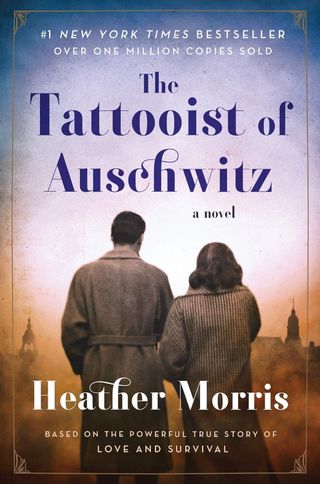
Cover of The Tattooist of Auschwitz

The Tattooist of Auschwitz

Heather Morris

Original language: English · Paperback · ISBN 978-0062797155

In April 1942, Ludwig (Lale) Sokolov, a Slovakian Jew, was transported to Auschwitz-Birkenau. Because he spoke several languages, the camp administration assigned him the role of Tätowierer, the person responsible for inking identification numbers onto the arms of incoming prisoners. This position placed him at the point where new arrivals first confronted the system that reduced them to numbered entries. The book, by Heather Morris, draws on interviews she conducted with Sokolov late in his life.

During more than two and a half years in the camps, Sokolov used whatever leverage his role provided. He traded valuables taken from murdered prisoners for food, smuggling it to others at considerable personal risk. In July 1942, he met a young woman named Gita while tattooing her arm. Their connection became a fixed point for both of them across the remaining years of imprisonment.

The narrative sits at the intersection of documented history and personal testimony. Sokolov's account carries specific details about daily routines, the camp hierarchy, and the small acts of defiance that were possible within a tightly controlled environment. Morris structures the story around his firsthand recollections, keeping the focus on individual experience rather than broad historical summary.

Plot

In April 1942, Lale Sokolov, a Slovakian Jew, is forcibly transported to the concentration camps at Auschwitz-Birkenau. When his captors discover that he speaks several languages, he is put to work as a Tätowierer (the German word for tattooist), tasked with permanently marking his fellow prisoners.

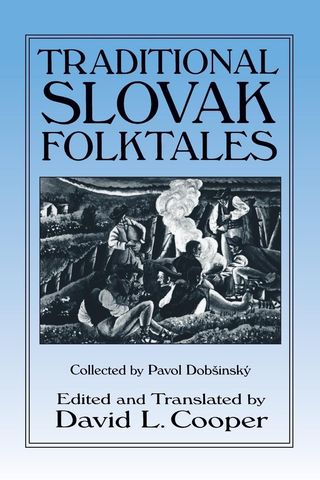
Cover of Traditional Slovak Folktales

Traditional Slovak Folktales

David L. Cooper

Original language: Slovak · Paperback · ISBN 978-0765607195

This collection brings together fifty Slovak folktales drawn from the work of Pavol Dobsinsky, a nineteenth-century folklorist who spent years gathering oral stories from villages across Slovakia. Most of these tales appear in English translation for the first time in this volume, edited and translated by David L. Cooper. The translation aims to preserve the poetic qualities of the Slovak originals while making them accessible to readers outside Central Europe.

Cooper provides an introduction covering the genres found within the folktale tradition and the particular features of Slovak storytelling. For readers with a scholarly interest, each tale has been classified using the Aarne-Thompson index, a widely used system that assigns numerical codes to recurring plot types found across world folklore. Many entries also include short commentaries informed by the research of Viera Gasparikova, a specialist in Slovak folk narrative.

The tales themselves range across the familiar categories of European oral literature: magical stories, animal tales, and stories built around trickery or moral lessons. Slovakia's folk tradition has historically received less attention in English-language publishing than the traditions of neighboring countries, which makes this compilation an unusual point of entry into a storytelling culture shaped by the mountains, rivers, and rural communities of the Carpathian region.

Plot

Most of the fifty tales assembled here from the collections of folklorist Pavol Dobsinsky are translated into English for the first time. The poetic qualities of the originals have been carefully preserved. The general reader will enjoy these tales immensely, and students will find an insightful introduction to the genres of the folktale and the specifics of Slovak tales. For expert readers, all of the tales have been classified according to the Aarne-Thompson index, and many include short commentaries that draw on the work of Viera Gasparikova.

More from Slovakia

See the country page for Slovakia for its map, facts and largest cities, or browse books from other countries.

Links go to Amazon; Hookito doesn’t sell books. Know a book that belongs here, or spotted a mistake? Write to submissions@hookito.com.

Where to next?

Back to the globe
Hookito landscape illustration