Hookito

Somalia · Books

Books from Somalia

11 books from and about Somalia: what each is about, the plot, and a note from Professor Kogi.

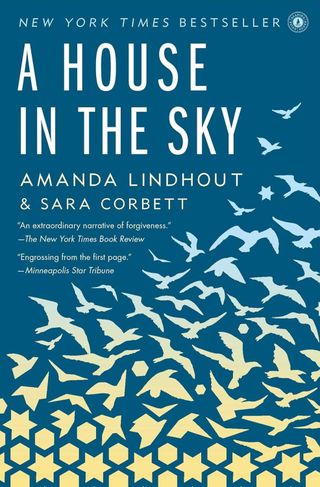
Cover of A House in the Sky: A Memoir

A House in the Sky: A Memoir

Amanda Lindhout, Sara Corbett

Original language: English · Paperback · ISBN 978-1451645613

Amanda Lindhout grew up in rural Alberta, Canada, and first left a violent household in her imagination, turning the pages of old issues of National Geographic. Working as a cocktail waitress in Calgary, she saved her tips for airfare. Her early routes crossed Latin America and parts of Asia, among them Laos, Bangladesh and India. Sudan, Syria and Pakistan followed, then television reporting work in Afghanistan and Iraq.

In August 2008 she travelled to Somalia to report on the conflict. On her fourth day in the country, she and a photojournalist working alongside her were seized by masked men on a dusty road. The captivity lasted 460 days. She was held in chains, given very little food, and abused. Written with Sara Corbett, the memoir traces the mental methods she used to endure.

The title refers to a place she built in her mind, a house in the sky above the room where she was kept. The account also looks at her guards, many of them young men, and at those who gave the orders, describing the conditions and beliefs behind their behaviour. After her release, Lindhout founded an organization supporting education in Somalia.

Plot

As a child, Amanda Lindhout escaped a violent household by paging through issues of National Geographic and imagining herself visiting its exotic locales. At the age of nineteen, working as a cocktail waitress, she began saving her tips so she could travel the globe. Aspiring to understand the world and live a significant life, she backpacked through Latin America, Laos, Bangladesh, and India, and emboldened by each adventure, went on to Sudan, Syria, and Pakistan. In war-ridden Afghanistan and Iraq she carved out a fledgling career as a television reporter. And then, in August 2008, she traveled to Somalia—“the most dangerous place on earth.” On her fourth day, she was abducted by a group of masked men along a dusty road. Held hostage for 460 days, Amanda survives on memory—every lush detail of the world she experienced in her life before captivity—and on strategy, fortitude, and hope. When she is most desperate, she visits a house in the sky, high above the woman kept in chains, in the dark.
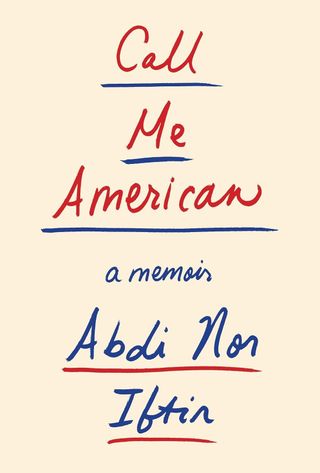
Cover of Call Me American: A Memoir

Call Me American: A Memoir

Abdi Nor Iftin

Original language: English · Hardcover · ISBN 978-1524732196

Abdi Nor Iftin grew up in Mogadishu, Somalia, where he taught himself English as a child by listening to American pop music and watching Hollywood action films. He adopted American fashion and dance styles, earning the nickname Abdi American among people in his neighborhood. His fascination with the United States deepened when U.S. marines arrived in Mogadishu during the conflict with local warlords, figures who reminded him of the characters he had seen on screen.

When the Islamist group al-Shabaab gained control in 2006, public displays of Western culture became a serious risk. Iftin found a way to use his English skills by recording and sending audio dispatches about daily life in Somalia, reaching listeners around the world through outlets including NPR. As conditions worsened, he eventually fled to Kenya as a refugee.

From Kenya, Iftin entered the U.S. diversity visa lottery and won a place, though his path from Nairobi to the United States involved further obstacles before he could travel. The memoir traces his life from childhood in a war-affected city through his years as a refugee and his eventual arrival in Maine, where he settled and began pursuing citizenship.

Plot

Abdi Nor Iftin first fell in love with America from afar. As a child, he learned English by listening to American pop and watching action films starring Arnold Schwarzenegger. When U.S. marines landed in Mogadishu to take on the warlords, Abdi cheered the arrival of these Americans, who seemed as heroic as those of the movies. Sporting American clothes and dance moves, he became known around Mogadishu as Abdi American, but when the radical Islamist group al-Shabaab rose to power in 2006, it became dangerous to celebrate Western culture. Desperate to make a living, Abdi used his language skills to post secret dispatches, which found an audience of worldwide listeners. Eventually, though, Abdi was forced to flee to Kenya. In an amazing stroke of luck, Abdi won entrance to the U.S. in the annual visa lottery, though his route to America did not come easily.

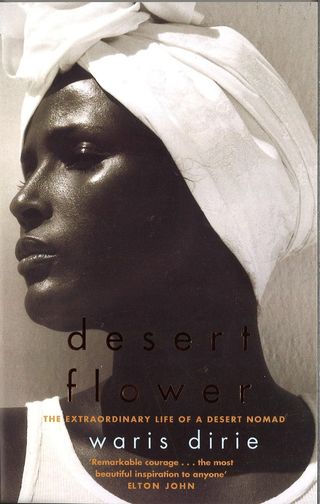
Cover of Desert Flower

Desert Flower

Waris Dirie

Original language: English · Paperback · ISBN 978-1860497582

Waris Dirie was born into a family of nomadic herders in Somalia, one of twelve children raised in the rhythms of desert life. Her early years were spent moving between grazing lands and racing camels. At five years old, she was subjected to female genital mutilation, a practice widespread among Somali girls at the time. When she was twelve, her father tried to arrange her marriage to a much older man in exchange for five camels. She refused, and fled alone across the Somali desert.

Her path led first to Mogadishu, then to London, where she worked as a domestic servant in the household of the Somali ambassador. When the family left, she stayed on with almost no English and no money, eventually taking a cleaning job at a McDonald's. There, a fashion photographer noticed her, and her life changed direction entirely. She went on to become an internationally known model.

Desert Flower is Dirie's memoir of that long arc, from nomadic childhood through escape and displacement to a public life. She later became a Special Ambassador for the United Nations, speaking against female genital mutilation and advocating for women's reproductive rights across the world.

Plot

Waris, one of 12 children, was born into a traditional family of desert nomads in East Africa. She remembers her early childhood as carefree- racing camels and moving on with her family to the next grazing spot - until it came her turn to meet the old woman who administered the ancient custom imposed on most Somalian girls: circumcision. Waris suffered this torture when she was just five years old. Then, aged 12, when her father attempted to arrange a marriage with a 60 year old stranger in exchange for five camels - she took flight. After an extraordinary escape through the dangerous desert she made her way to London and worked as a maid for the Somalian ambassador until that family returned home. Penniless and speaking little English, she became a janitor in McDonalds where she was famously discovered by a fashion photographer. Her story is a truly inspirational and extraordinary self-portrait of a remarkable woman whose spirit is as breathtaking as her beauty.

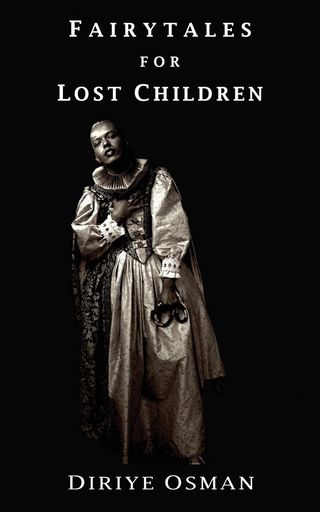
Cover of Fairytales for Lost Children

Fairytales for Lost Children

Diriye Osman

Original language: English · Paperback · ISBN 978-0956971944

Fairytales for Lost Children is a short story collection by Diriye Osman. Its characters are young gay and lesbian Somalis living across three distinct settings: Kenya, Somalia, and South London. Each story follows people caught between the expectations of family and community on one side and the need to live openly on the other. The title itself signals a kind of protective storytelling, offering space for lives that are often pushed to the margins.

The collection draws its tension from the immigrant experience and the overlapping pressures of cultural belonging, sexuality, and self-definition. Osman's characters are frequently at a turning point, on the edge of revealing something essential about themselves. The stories move between East Africa and the Somali diaspora in London, grounding personal struggles in specific neighborhoods and social worlds rather than treating displacement as an abstraction.

Osman is a Somali-born, Kenyan-raised writer whose own background connects to the geographies in these stories. The collection is notable for centering queer Somali voices in literary fiction, a perspective that remains uncommon. Its language carries a sense of play alongside emotional weight, shifting tone from story to story.

Plot

These characters - young, gay and lesbian Somalis - must navigate the complexities of family, identity and the immigrant experience as they tumble towards freedom. Set in Kenya, Somalia and South London, these stories are imbued with pathos, passion and linguistic playfulness, marking the arrival of a singular new voice in contemporary fiction.

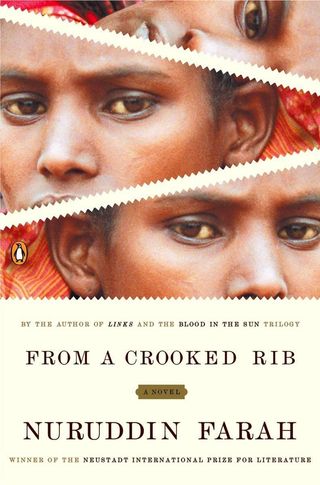
Cover of From a Crooked Rib

From a Crooked Rib

Nuruddin Farah

Original language: English · Paperback · ISBN 978-0143037262

Ebla is eighteen, an orphan living among nomadic herders in rural Somalia. When she learns that her grandfather has arranged her marriage to an older man, she flees. Her escape takes her from the bush toward the capital, Mogadishu, where she hopes to find independence. Instead, she encounters new forms of control. Men in the city prove no less willing to decide her future than the elders she left behind.

The novel follows Ebla through servitude, poverty, marriage, and violence as she tries to hold on to her own sense of self. Farah presents a society in which women can be exchanged like property, and Ebla's repeated attempts to claim her own choices meet resistance at every turn. The story moves between rural and urban Somalia, and the contrast between the two settings sharpens without simplifying the pressures Ebla faces.

From a Crooked Rib was Nuruddin Farah's first novel. Written from Ebla's perspective throughout, it stays close to her observations and inner reasoning. Farah, who was born in Baidoa in what is now southern Somalia, went on to write extensively about Somali life, politics, and displacement. This opening work established his attention to the specific constraints placed on women within the social structures he portrayed.

Plot

Ebla, an orphan of eighteen, runs away from her nomadic encampment in rural Somalia when she discovers that her grandfather has promised her in marriage to an older man. But even after her escape to Mogadishu, she finds herself as powerless and dependent on men as she was out in the bush. As she is propelled through servitude, marriage, poverty, and violence, Ebla has to fight to retain her identity in a world where women are "sold like cattle."

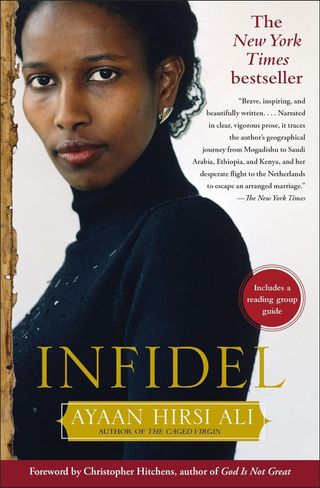
Cover of Infidel

Infidel

Ayaan Hirsi Ali

Original language: English · Paperback · ISBN 978-0743289696

Ayaan Hirsi Ali's memoir traces her life from childhood in Somalia through periods in Saudi Arabia, Ethiopia, and Kenya before she eventually reached the Netherlands. Raised within a strict Muslim household, she experienced civil war, forced marriage arrangements, and the growing influence of the Muslim Brotherhood during her adolescence. The book follows her path from obedient believer to someone who began questioning the rules and hierarchies she had been taught to accept.

After escaping a marriage she did not choose, Hirsi Ali applied for asylum in the Netherlands and enrolled in university, eventually earning a degree in political science. She entered Dutch politics as a member of Parliament, where she focused on the treatment of Muslim women and called for reform within Islam. The memoir also describes her efforts to support her sister, who struggled with depression after arriving in Europe.

Throughout this account, Hirsi Ali details the personal costs of her public positions. She was disowned by her father, separated from her extended family and clan, and faced persistent threats. The book presents these events in sequence, connecting her early experiences in East Africa and the Middle East to the political stance she later adopted in Europe.

Plot

Raised in a strict Muslim family, Hirsi Ali survived civil war, female mutilation, brutal beatings, adolescence as a devout believer during the rise of the Muslim Brotherhood, and life in four troubled, unstable countries ruled largely by despots. She escaped from a forced marriage and sought asylum in the Netherlands, where she earned a college degree in political science, tried to help her tragically depressed sister adjust to the West, and fought for the rights of Muslim women and the reform of Islam as a member of Parliament. Under constant threat, demonized by reactionary Islamists and politicians, disowned by her father, and expelled from family and clan, she refuses to be silenced.

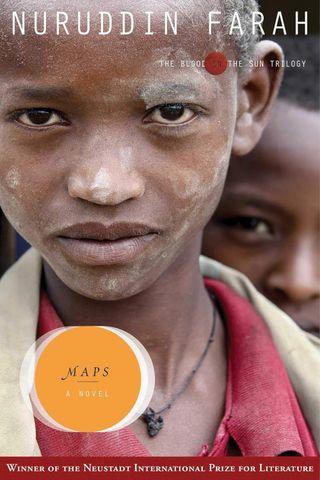
Cover of Maps

Maps

Nuruddin Farah

Original language: English · Paperback · ISBN 978-1628725858

Maps is the opening novel of Nuruddin Farah's Blood in the Sun trilogy. It follows Askar, a boy born into loss: his father was killed in the war between Ethiopia and Somalia, and his mother died during childbirth. He is raised by Misra, a caring woman in a small village, and the bond between them becomes the center of the story. As Askar reaches adolescence, he grows restless and leaves the village to live with his uncle and aunt in Mogadiscio.

In the capital, Askar encounters a city caught between political upheaval and the search for a coherent national identity. He is drawn into radical political activity as Somalia's borders and sense of self are contested. Meanwhile, accusations of murder and treason surface against Misra, forcing Askar to weigh personal loyalty against political conviction. The novel uses the relationship between a young man and the woman who raised him to examine how territory, belonging, and identity work at both personal and national scale.

Farah, a Somali writer who spent much of his life outside Somalia, received the Neustadt International Prize for Literature. Maps was first published in 1986 and draws on the aftermath of the Ogaden War of 1977-78, which shaped the Horn of Africa for decades.

Plot

Maps is the first novel in his acclaimed Blood in the Sun trilogy, set in his native land. Askar lost his father in the bloody war between Ethiopia and Somalia, and his mother died giving birth to him. Taken in by Misra, a kindhearted woman, he grows up in a small village. But as an adolescent, a true child of his times, he begins to feel suffocated there and goes to live with his cosmopolitan aunt and uncle in the capital. In dangerous and turbulent Mogadiscio, Somalis are struggling to recreate a national identity that has been destroyed by the upheavals of modernity and the betrayals of civil war. Askar throws himself into radical political activity in the midst of the turmoil. As allegations of murder and treason are leveled at Misra, Askar's personal sense identity and Somalia's political boundaries will be challenged with a ferocity he could have never imagined.

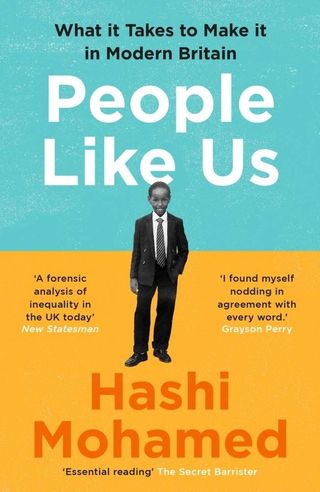
Cover of People Like Us

People Like Us

Hashi Mohamed

Original language: English · Paperback · ISBN 978-1788161138

Hashi Mohamed arrived in Britain at the age of nine as a refugee from the Somali civil war. He grew up on state benefits, attended some of the lowest-performing schools in the country, and eventually became a barrister. People Like Us draws on that personal history to examine the state of social mobility in Britain, asking how far individual effort can carry someone when structural barriers remain firmly in place.

Mohamed presents data showing that parental occupation remains the strongest predictor of a person's own career prospects. He notes that roughly seven per cent of the British population attend private schools, yet this group holds a disproportionate share of positions of power and influence. He also addresses research indicating that applicants whose names sound black or Asian must send out significantly more applications than white counterparts to receive the same number of responses. These patterns, he argues, reflect failures not only in education policy but in imagination and confidence at every level of society.

Rather than presenting his own trajectory as proof that the system works, Mohamed treats it as an outlier. The book examines how deep divisions in class, race, and access continue to shape outcomes for children from deprived backgrounds across the country.

Plot

Raised on benefits and having attended some of the lowest-performing schools in the country, barrister Hashi Mohamed knows something about social mobility. In People Like Us, he shares what he has learned: from the stark statistics that reveal the depth of the problem to the failures of imagination, education and confidence that compound it. We live in a society where the single greatest indicator of what your job will be is the job of your parents. Where power and privilege are concentrated among the 7 per cent of the population who were privately educated. Where, if your name sounds black or Asian, you'll need to send out twice as many job applications as your white neighbour.

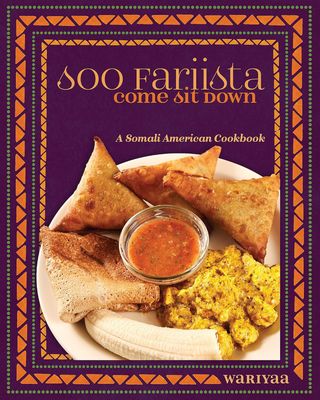
Cover of Soo Fariista Come Sit Down: A Somali American Cookbook

Soo Fariista Come Sit Down: A Somali American Cookbook

Wariyaa

Original language: English · Paperback · ISBN 978-1681340852

Soo Fariista, meaning Come Sit Down, is a Somali American cookbook containing seventy recipes that span the range of a Somali kitchen. Dishes include saabuuse (stuffed pastry), canjeelo (flatbread), suqaar (sauteed meat), and shushumow (fried sweet dough), among many others. The book opens with an introduction to Somali foodways and how they have changed as Somali communities have settled across the United States. Ingredients and techniques are adapted for what is available in American grocery stores and kitchens, while keeping the flavors rooted in East African cooking traditions.

The cookbook is credited to Wariyaa and built around the contributions of individual community members, each of whom is featured alongside their own story. Many of the original recipes existed without fixed measurements, passed along through demonstration and memory rather than written instructions. A recurring practical concern in the book is the translation of informal cooking knowledge into reproducible steps and quantities, making the dishes accessible to people unfamiliar with Somali cuisine as well as those already experienced with it.

The title phrase itself carries a social meaning. In Somali households, calling someone to sit down is an invitation to eat together, and the book frames mealtime as the place where a dispersed community reconnects with shared memory and habit.

Plot

In Soo Fariista / Come Sit Down, seventy recipes for everything from saabuuse (stuffed pastry) to suqaar (sauteed meat) to canjeelo (flatbread) to shushumow (fried sweet dough) honor memories and flavors from East Africa with adjustments for American realities. An introduction explores Somali foodways and their transitions in the United States, and each contributor is highlighted with his or her story. Notes on the recipes share the students’ journey from "a little of this and a little of that" to methods that will bring success in Somali American cooking to novices and practiced hands alike.

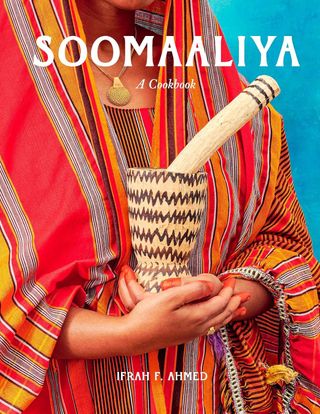
Cover of Soomaaliya: The Food, Memory, and Migration

Soomaaliya: The Food, Memory, and Migration

Ifrah F. Ahmed

Original language: English · Hardcover · ISBN 978-1958417836

Soomaaliya by Ifrah F. Ahmed is a cookbook that presents over 70 recipes rooted in Somali cooking traditions, organized around the country's history, geography, and people. Central to many of the dishes is xawaash, a spice blend combining cumin, coriander, black pepper, cinnamon, cardamom, cloves, and turmeric. This mixture appears across a wide range of preparations, from marinades to slow-cooked stews, and gives Somali food much of its recognizable character. The book traces these flavors back to Somalia's long involvement in the spice trade.

Recipes cover ground from herding and farming traditions to coastal cooking. Hilib ari, a goat meat stew, reflects the pastoral roots of Somali life, while freshly caught and fried fish draws on the country's extensive coastline along the Indian Ocean. Baasto, a pasta dish served with sauces ranging from simple tomato to richer ragus, carries the influence of Italian colonial rule. Lighter preparations include thin cardamom-scented crepes, sweet fried beignets called bur, and bariis, a spiced rice dish seasoned with cardamom and cumin.

The book also covers tea and afternoon sweets, among them shaah, a spiced tea paired with doolsho, a cardamom cake. Ahmed frames these recipes within stories of migration and memory, connecting food to the experience of carrying a culture across borders.

Plot

In Soomaaliya, Ifrah F. Ahmed tells the story of her country through its history, its food, and its people. Somalia’s role in the spice trade yields xawaash, the most distinctive of Somali flavors, a heady blend of cumin, coriander, black pepper, cinnamon, cardamom, cloves, and turmeric that’s used in everything from marinades to stews. Cardamom also finds its ways into thin, fragrant crepes, sweet fried beignets called bur, and bariis, rice spiced with cardamom and cumin. This rice is paired with hilib ari, tender goat meat stew that is a product of Somalia’s deep roots in herding and agrarianism. Baasto, or pasta, a relic of the long Italian colonial rule, is served with a range of simple tomato sauces to ragus. The bountiful waters supply fish freshly caught and fried. And for afternoon tea, a pot of spiced shaah, served with thick slices of doolsho, an aromatic cardamom cake. These are a just a few of the over 70 recipes included that introduce the foundational flavors and tastes of the Somali palate.

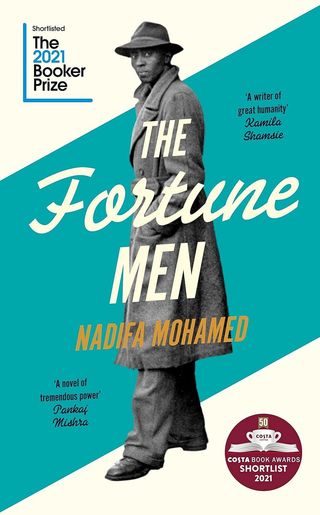
Cover of The Fortune Men

The Fortune Men

Mohamed Nadifa

Original language: English · Hardcover · ISBN 978-0241466940

In 1952, Mahmood Mattan, a young Somali sailor living in Cardiff's Tiger Bay, is accused of the murder of Violet Volacki, a local shopkeeper. Tiger Bay at that time was a busy docklands district where Somali and West Indian sailors, Maltese merchants, and Jewish families lived side by side. Mahmood is a gambler and occasional petty thief, a father of three, and estranged from his Welsh wife Laura. He is confident that his innocence will protect him, trusting in British justice to sort matters out. But as the trial approaches, the ground shifts beneath him.

The novel is based on a real case. Mahmood Mattan was the last person executed under a death sentence in Cardiff, and his conviction was quashed decades later, in 1998. Nadifa Mohamed reconstructs his story from the inside, following Mahmood through the weeks before and during the trial as a flawed police investigation, institutional prejudice, and deep-rooted racism close around him. The book gives close attention to the community of Tiger Bay itself, its overlapping cultures and tensions, and to the people whose testimony and silence shaped Mahmood's fate.

Plot

Mahmood Mattan is a fixture in Cardiff's Tiger Bay, 1952, which bustles with Somali and West Indian sailors, Maltese businessmen and Jewish families. He is a father, chancer, some-time petty thief. He is many things, in fact, but he is not a murderer. So when a shopkeeper is brutally killed and all eyes fall on him, Mahmood isn't too worried. It is true that he has been getting into trouble more often since his Welsh wife Laura left him. But Mahmood is secure in his innocence in a country where, he thinks, justice is served. It is only in the run-up to the trial, as the prospect of freedom dwindles, that it will dawn on Mahmood that he is in a terrifying fight for his life - against conspiracy, prejudice and the inhumanity of the state. And, under the shadow of the hangman's noose, he begins to realise that the truth may not be enough to save him.

More from Somalia

See the country page for Somalia for its map, facts and largest cities, or browse books from other countries.

Links go to Amazon; Hookito doesn’t sell books. Know a book that belongs here, or spotted a mistake? Write to submissions@hookito.com.

Where to next?

Back to the globe
Hookito landscape illustration