Hookito

El Salvador · Books

Books from El Salvador
4 books from and about El Salvador: what each is about, the plot, and a note from Professor Kogi.

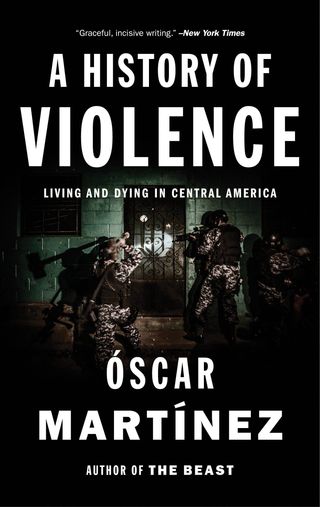
Cover of A History of Violence: Living and Dying in Central America

A History of Violence: Living and Dying in Central America

Oscar Martinez

Original language: English · Paperback · ISBN 978-1784781712

Oscar Martinez is a Salvadoran journalist whose earlier book, The Beast, was named one of the year's best titles by the Economist and the Financial Times. Here he reports across Central America, where El Salvador and Honduras have registered the world's highest homicide rates during the past decade. The book moves between very different settings rather than staying in one city.

Martinez travels to fishing towns in Nicaragua, remote jungle villages in Guatemala, crowded slums in El Salvador, and brothels in southern Mexico where trafficked women from Central America end up. His method is direct and physical: he drinks with narcos while undercover, joins police patrols, rides in boats used for smuggling, and shelters for a time with a gang informer. Encounters are recorded closely rather than from a safe distance.

Martinez also follows the crisis outward, tracing its roots and reach in North America and connecting it to arguments about immigration policy in the United States. The reporting links local conditions to the reasons millions of people have left the region, and it keeps its attention on named places and specific lives rather than statistics alone.

Plot

Martínez travels to Nicaraguan fishing towns, southern Mexican brothels where Central American women are trafficked, isolated Guatemalan jungle villages, and crime-ridden Salvadoran slums. With his precise and empathetic reporting, he explores the underbelly of these troubled places. He goes undercover to drink with narcos, accompanies police patrols, rides in trafficking boats, and hides out with a gang informer. The result is an unforgettable portrait of a region of fear and a subtle analysis of the North American roots and reaches of the crisis, helping to explain why this history of violence should matter to all of us.
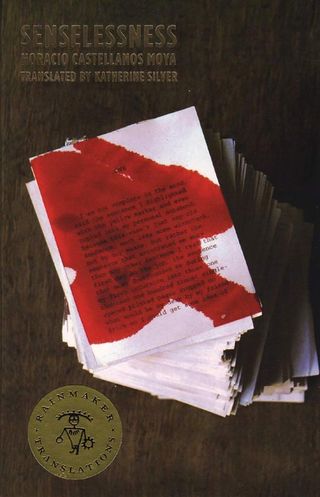
Cover of Senselessness

Senselessness

Horacio Castallanos Moya

Original language: Spanish · Paperback · ISBN 978-0811217071

In Senselessness, a hard-drinking writer takes a job proofreading a 1,100-page report for the Catholic Church, an institution he despises. The document records the army's massacre and torture of thousands of indigenous villagers a decade earlier, and it collects the testimonies of survivors. His task is simply to tidy the prose, but the phrasing of the witnesses begins to hold his attention.

Two pressures close in as the work continues. The survivors' sentences, plain and strange at once, take on the force of poetry for him and press on his already fragile composure. At the same time he understands that the generals responsible for the killings still run this unnamed Latin American country, which makes the report itself a dangerous object to be handling.

Horacio Castellanos Moya is a Salvadoran writer, and Senselessness was his first book to appear in English; the translation received a Rainmaker Translation Grant from the Black Mountain Institute. The novel keeps its setting deliberately unnamed, while the material it describes, an ecclesiastical human rights report built from indigenous testimony, belongs to a documented pattern in Central American history. Humor and obscenity run alongside the horror throughout.

Plot

A boozing, sex-obsessed writer finds himself employed by the Catholic Church (an institution he loathes) to proofread a 1,100-page report on the army's massacre and torture of thousands of indigenous villagers a decade earlier, including the testimonies of the survivors. The writer's job is to tidy it up: he rants, "that was what my work was all about, cleaning up and giving a manicure to the Catholic hands that were piously getting ready to squeeze the balls of the military tiger." Mesmerized by the strange Vallejo-like poetry of the Indians' phrases ("the houses they were sad because no people were inside them"), the increasingly agitated and frightened writer is endangered twice over: by the spell, the strangely beautiful heart-rending voices exert over his tenuous sanity, and by real danger―after all, the murderers are the very generals who still run this unnamed Latin American country.

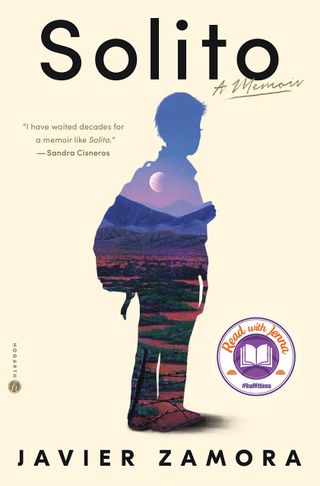
Cover of Solito

Solito

Javier Zamora

Original language: English · Hardcover · ISBN 978-0593498064

Solito is Javier Zamora's account of his own migration from El Salvador to the United States, made when he was nine years old. The route ran about three thousand miles, north through Guatemala and Mexico to the border crossing. He left his aunt and grandparents behind, heading toward a mother who had gone ahead four years earlier and a father he barely remembered.

Zamora traveled without family, joining a group of strangers led by a hired coyote, the word used for a paid guide who moves people across borders. He expected the trip to take two weeks. The book follows the crossing as a child experienced it, among adults he did not know, in landscapes and towns he had never seen.

The title is Spanish for alone, and it carries two meanings: a boy separated from everyone he knew, and the situation of many others who leave without much choice. Zamora keeps the account close to specifics, a small Salvadoran town, the shape of the route, and the strangers who became his temporary company along it.

Plot

Javier Zamora’s adventure is a three-thousand-mile journey from his small town in El Salvador, through Guatemala and Mexico, and across the U.S. border. He will leave behind his beloved aunt and grandparents to reunite with a mother who left four years ago and a father he barely remembers. Traveling alone amid a group of strangers and a “coyote” hired to lead them to safety, Javier expects his trip to last two short weeks.

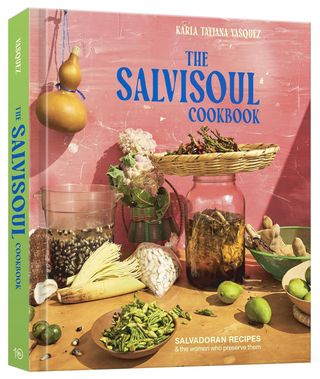
Cover of The SalviSoul Cookbook

The SalviSoul Cookbook

Karla Tatiana Vasquez

Original language: Spanish · Hardcover · ISBN 978-1984861429

The SalviSoul Cookbook by Karla Tatiana Vasquez collects eighty recipes rooted in Salvadoran cooking, each linked to the personal account of a woman who carries it. The recipes come from mothers, aunts, grandmothers, and friends, and Vasquez records their conversations about food, memory, and moving between countries. The subtitle points to a double purpose: cooking instructions that also hold voices which might otherwise go unrecorded.

Several of the contributors describe life in El Salvador before the civil war and the transition to building new lives in the United States. One contributor, Patricia, connects her Rellenos de Papa to the 1980s earthquakes in Los Angeles, a memory layered with more than physical danger. The book treats food as a practical archive, where a stuffing ratio or a preferred masa thickness can preserve details that formal histories tend to overlook.

Pupusas, thick masa tortillas stuffed with combinations of pork, cheese, and beans, appear in several variations, reflecting differences between households. Other dishes are tied to individual people, such as Flor de Izote con Huevos Revueltos, made with the flower of the izote plant and a favorite of Vasquez's father.

Plot

In this collection of eighty recipes, Karla shares her conversations with moms, aunts, grandmothers, and friends to preserve their histories so that they do not go unheard. Here are recipes for Rellenos de Papa from Patricia, who remembers the Los Angeles earthquakes of the 1980s for more reasons than just fear; Flor de Izote con Huevos Revueltos, a favorite of Karla's father; as well as variations on the beloved Salvadoran Pupusa, a thick masa tortilla stuffed with different combinations of pork, cheese, and beans. Though their stories vary, the women have a shared experience of what it was like in El Salvador before the war, and what life was like as Salvadoran women surviving in their new home in the United States.

More from El Salvador

See the country page for El Salvador for its map, facts and largest cities, or browse books from other countries.

Links go to Amazon; Hookito doesn’t sell books. Know a book that belongs here, or spotted a mistake? Write to submissions@hookito.com.

Where to next?

Back to the globe
Hookito landscape illustration