Hookito

Timor-Leste · Books

Books from Timor-Leste
5 books from and about Timor-Leste: what each is about, the plot, and a note from Professor Kogi.

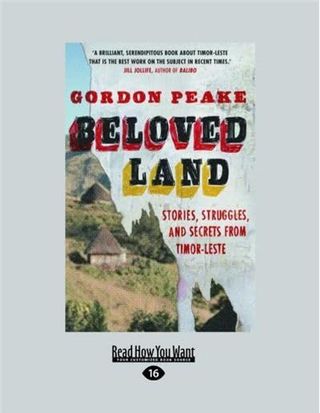
Cover of Beloved Land: Stories, Struggles and Secrets from Timor-leste

Beloved Land: Stories, Struggles and Secrets from Timor-leste

Gordon Peake

Original language: English · Paperback · ISBN 978-1459670464

At midnight on 20 May 2002, Timor-Leste formally became an independent state, the first new sovereign nation of the twenty-first century. After a long struggle against Indonesian occupation, the country faced a different and in some ways harder task: building functioning institutions, settling internal disputes, and shaping a national identity from the ground up. Gordon Peake's Beloved Land begins where most international coverage stopped, turning attention to the years that followed independence.

Peake lived in Timor-Leste for four years, and the book draws on that period to combine narrative history, travel writing, and personal observation. He portrays a range of Timorese and international figures whose lives intersect with the young nation's politics. Family loyalties, old rivalries, power contests, and lingering grievances from the occupation era all surface in his account. The book also examines the role of the international community in the country's development, noting how outside assistance can both support and complicate local efforts.

Timor-Leste occupies the eastern half of Timor island in Southeast Asia, sharing a land border with Indonesian West Timor. Peake's account places the reader inside a small, geographically distinct country where rumour, personal history, and national politics are closely intertwined.

Plot

At the stroke of midnight on 20 May 2002, the Democratic Republic of Timor-Leste became the first new nation of the 21st century. From that moment, those who fought for independence have faced a challenge even bigger than shaking off Indonesian occupation: running a country of their own. Beloved Land picks up the story where world attention left off. Blending narrative history, travelogue, and personal reminiscences based on four years of living in the country, Gordon Peake shows the daunting hurdles that the people of Timor-Leste must overcome to build a nation from scratch, and how much the international community has to learn if it is to help rather than hinder the process. Family politics, squabbles, power struggles, old romances, and even older grudges are woven into life in this land of intrigue and rumours in the most remarkable ways.
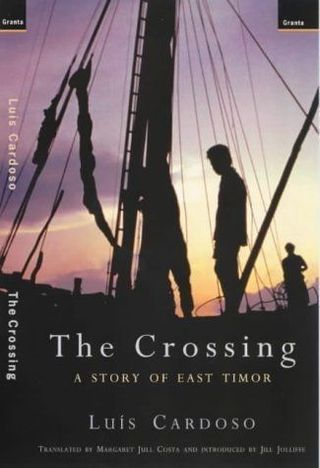
Cover of Crossing: A Story of East Timor

Crossing: A Story of East Timor

Luis Cardoso

Original language: Portuguese · Hardcover · ISBN 978-1862073524

Luis Cardoso grew up in East Timor during the early 1970s, when the territory was still a Portuguese colony. His memoir describes a place shaped by overlapping influences: local folk traditions mixed with Catholic teaching, and daily life in the capital Dili revolved around football, social gatherings, and the quiet hope of becoming a priest or a customs official. The colony looked toward Lisbon as a cultural center, yet received little of the metropolis's attention in return.

When Cardoso left East Timor on a student scholarship to study in Portugal, he expected arrival at a kind of homeland. Instead, Lisbon felt like another form of displacement. Back in East Timor, the Indonesian invasion of 1975 scattered communities and forced many Timorese, including Cardoso's father, into exile. Through letters and fragmented news, Cardoso began to learn what was happening to the people he had left behind.

The book traces how successive waves of outside control shaped Timorese culture and personal identity. Cardoso writes from a position between worlds, belonging fully to neither the colony nor the colonial capital. His account records a small society caught in transitions it did not choose, observed through the specific details of one family's experience.

Plot

As a Portuguese colony in the early 1970s, pining for the motherland's attention, Timor was a strange, unstable hybrid, where folk stories blended with stories from the Bible, where the summit of a young man's aspiration was to become a priest or a customs official, and where growing up in Dili meant football, flares, korem-metam parties and chatting up the tourists. But when, after failing at the seminary, Cardoso joins other Timorese students on scholarship in Lisbon, he soon realizes his pilgrimage to the great metropolis is in fact another exile. Meanwhile the Indonesian invasion of 1975 forces a second stage of the Timorese diaspora, including Cardoso's ailing father, from whom he learns the first details of the fate of his countrymen.

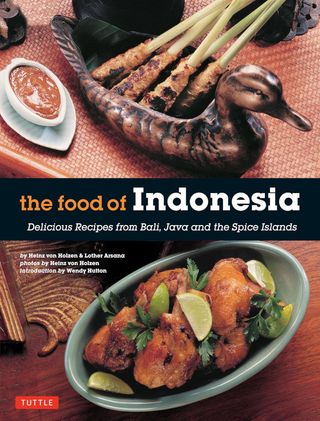
Cover of The Food of Indonesia

The Food of Indonesia

Heinz Von Holzen

Original language: English · Paperback · ISBN 978-0804845137

The Food of Indonesia by Heinz Von Holzen is a cookbook presenting 79 recipes drawn from across the Indonesian archipelago. The collection spans regional traditions from several major islands and smaller eastern territories. Dishes include spicy Padang-style food from West Sumatra, vegetable preparations rooted in Javanese cooking, and satay and poultry recipes associated with Bali and Lombok. The book also features less commonly published recipes from Kalimantan, Flores, and Timor.

Indonesia stretches across thousands of islands between the Indian and Pacific oceans, and its cooking reflects that geographic range. The book pairs its recipes with descriptions of ingredients and cooking methods intended to make the dishes accessible outside Indonesia. Each recipe includes enough detail for a home cook to work through unfamiliar spice combinations and techniques. Beyond the recipes themselves, the book provides background on the cultural traditions that shape how food is prepared and eaten in different parts of the country.

Von Holzen organized the collection to represent both well-known Indonesian dishes and regional specialties that receive less attention in English-language cookbooks. The inclusion of recipes from Flores and Timor points toward the culinary variety found in Indonesia's eastern islands, areas often overlooked in broader surveys of Southeast Asian food.

Plot

The fabled Spice Islands of Indonesia encompass the most astonishing physical and cultural diversity in Asia. The Food of Indonesia introduces a sampling of the most popular Indonesian food from across the archipelago. Included in this unique collection are spicy Padang favorites from West Sumatra, healthy Javanese vegetable creations, succulent satay and poultry dishes from Bali and Lombok, and unusual recipes from Kalimantan and the eastern isles of Flores and Timor. In addition to the range of exciting recipes, this book acquaints readers with Indonesia's varied cultural and culinary traditions.

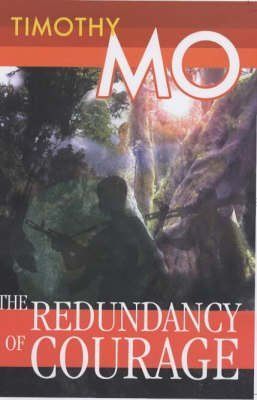
Cover of The Redundancy Of Courage

The Redundancy Of Courage

Timothy Mo

Original language: English · Paperback · ISBN 978-0952419341

Timothy Mo's novel is set in Danu, a fictional Southeast Asian country closely modeled on East Timor. The central figure is Adolph Ng, a Chinese hotel owner who studied in Canada and has settled into a comfortable life on the island. When a neighboring power invades and occupies Danu shortly after its independence, Ng finds himself drawn into a conflict he never sought. His position as an outsider within the local population, both culturally and personally, shapes how he navigates the occupation and the resistance forming around him.

The story follows Ng's gradual entanglement with rebels, political activists, and ordinary people trying to survive under military rule. Mo uses Ng's detached, sometimes sardonic perspective to examine the mechanics of occupation: the daily violence, the moral compromises forced on civilians, and the psychological toll of sustained resistance. Dark humor runs through the narrative, often surfacing at moments of absurdity or helplessness.

The novel was shortlisted for the 1991 Booker Prize. Its fictional framework draws on the real history of East Timor's invasion by Indonesia in 1975 and the long occupation that followed, a period that reshaped the lives of hundreds of thousands of people across the territory.

Plot

Set in the fictional Southeast Asian country of Danu, a thinly veiled representation of East Timor, the novel follows Adolph Ng, a Chinese businessman educated in Canada who runs a hotel in Danu. As the country faces invasion and occupation by its powerful neighbor, Ng becomes reluctantly entangled in the political turmoil and the struggles of the local population. Through the experiences of rebels, political activists, and ordinary citizens, the book explores the brutal realities of oppression, the moral and psychological complexities of resistance, and the personal costs of courage in the face of systemic injustice. Timothy Mo’s narrative blends vivid characterization, political insight, and dark humor to illuminate both the human and historical dimensions of the conflict.

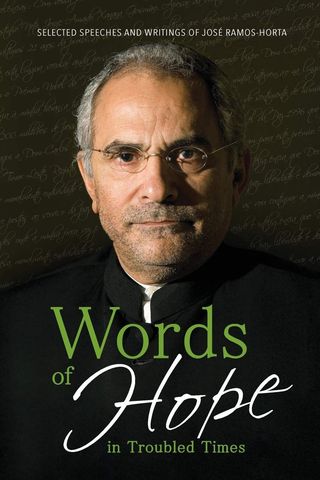
Cover of Words of Hope in Troubled Times

Words of Hope in Troubled Times

Jose Ramos-Horta

Original language: English · Paperback · ISBN 978-0648204718

Words of Hope in Troubled Times gathers speeches and writings by Jose Ramos-Horta spanning twenty-five years, from 1992 to 2017. Ramos-Horta is a central figure in Timor-Leste's path to independence and was awarded the Nobel Peace Prize in 1996 for his efforts toward a peaceful resolution of the conflict in East Timor. He later served as the country's president. The collection draws on decades of public addresses and essays shaped by his direct involvement in diplomacy, conflict resolution, and nation-building.

The texts cover a wide range of subjects, including climate change, the management of freshwater resources, ocean pollution, food security, and the reduction of military spending in favor of education and health. Ramos-Horta also addresses specific geopolitical tensions, among them the Korean Peninsula, the South China Sea, and relations between India, Pakistan, and China. Throughout, his argument returns to the idea that global problems require cooperative responses rather than isolated national strategies.

The period covered in this collection runs from the years before East Timor's 1999 independence referendum through the early decades of Timor-Leste as a sovereign state, giving the writings a concrete arc from resistance to governance.

Plot

"The Twenty-first Century offers us a chance, a unique chance, to coalesce around common global interests - to reverse the nefarious consequences of climate change, manage clean water reserves that are becoming a rare commodity, save our polluted rivers, lakes, and seas, replenish the depleted fish stock, eliminate extreme poverty and hunger, and de-escalate tensions on the Korean Peninsula and South China Sea, and between India and Pakistan, India and China. If we were to spend less on armament, we would be able to spend more on education, health, and food security for all." Jose Ramos-Horta

More from Timor-Leste

See the country page for Timor-Leste for its map, facts and largest cities, or browse books from other countries.

Links go to Amazon; Hookito doesn’t sell books. Know a book that belongs here, or spotted a mistake? Write to submissions@hookito.com.

Where to next?

Back to the globe
Hookito landscape illustration