Hookito

Tunisia · Books

Books from Tunisia

6 books from and about Tunisia: what each is about, the plot, and a note from Professor Kogi.

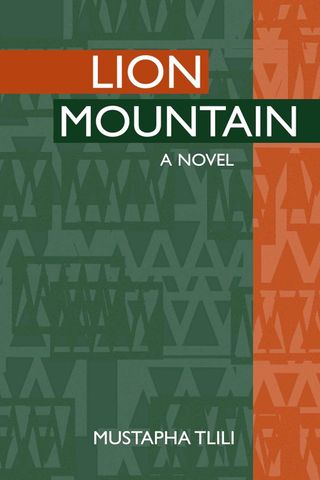
Cover of Lion Mountain

Lion Mountain

Mustapha Tlili

Original language: French · Paperback · ISBN 978-0894108785

Horia El-Gharib is a young widow raising two sons in a North African village during a period of political upheaval. After the death of her husband, she takes on responsibilities traditionally reserved for men, entering commerce and trade to secure her family's future. Her determination puts her at odds with a patriarchal society that is itself undergoing transformation as a newly independent regime reshapes the country around her.

The novel is set against the backdrop of post-independence Tunisia, where old social structures collide with the promises and uncertainties of a new political order. Horia must defend not only her own household but the integrity of her village as outside pressures mount. Among the characters who share her landscape are a one-legged Nubian war veteran and the mountain of the title, which serves as a fixed point in a world where nearly everything else is shifting.

Mustapha Tlili, a Tunisian-born writer, tells this story through the tensions between personal stubbornness and collective change. Horia's acts of self-reliance are practical rather than ideological, rooted in the immediate need to feed and protect her children. The novel stays close to the texture of daily life in a village caught between inherited customs and the demands of a new nation.

Plot

As a young widow with two boys to raise, Horia El-Gharib struggled to reconcile tradition and change. She dared to take on a man's role in commerce and trade to protect the future of her sons―but now, all is at risk in the midst of the turmoil of the newly independent regime. She struggles to make a life for herself and her sons and to defend the integrity of her village in a changing, though still patriarchal culture.
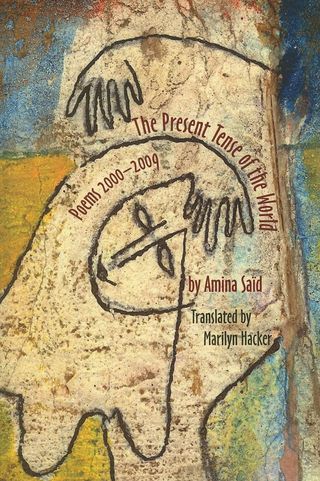
Cover of Present Tense of the World: Poems of Amina Said

Present Tense of the World: Poems of Amina Said

Amina Said

Original language: French · Paperback · ISBN 978-0984264070

Amina Said was born in Tunis, the Tunisian capital, and settled in Paris in 1978, where she has lived since. Readers of German, Turkish, Italian, and Arabic have long had her poems in translation, while English versions remained scattered fragments. This bilingual anthology, edited and translated by the poet Marilyn Hacker, gathers work from her previous ten years and is her first English-language survey.

Said's poems move between the intimate and the wide-angled, often placing images from the natural world alongside reflections on displacement and belonging. The experience of living between cultures and histories runs through much of the writing. Memory, exile, love, and the effort to find steady ground in a shifting present appear as recurring concerns. Her language tends toward the spare and precise, building its effects through quiet accumulation rather than dramatic gesture.

The bilingual format sets the French text on facing pages, so readers with some French can follow the original phrasing. Hacker, a poet and an established translator from French, shaped the English versions. The title points to a central idea in the collection: that recollection and present experience share one space, neither fully separable from the other.

Plot

This collection brings together Tunisian poet Amina Said’s meditative, lyrical poems that explore identity, memory, love, exile, and the search for spiritual grounding. Her verses move between intimacy and universality, weaving images of the natural world with reflections on displacement and belonging. The poems often carry a quiet intensity, evoking longing and resilience while confronting political and personal ruptures. Through spare yet evocative language, Said captures the experience of living between cultures and histories, always attentive to the “present tense” as a place where memory and desire coexist.

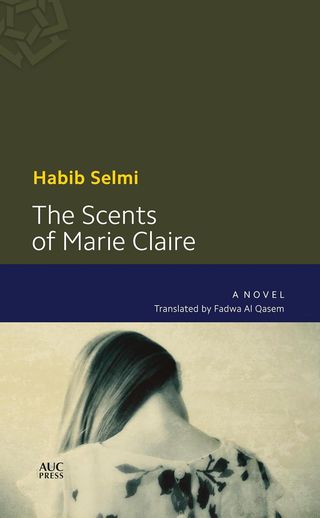
Cover of Scents of Marie-Claire

Scents of Marie-Claire

Habib Selmi

Original language: French · Paperback · ISBN 978-9774167409

Scents of Marie-Claire is a novel by Tunisian writer Habib Selmi, and the first of his works to appear in English translation. The story follows a love affair through its full arc, from early attraction to eventual rupture. Selmi builds the relationship through accumulated small details: morning routines, physical desire, restlessness, and the less flattering habits people reveal only in close proximity to another person.

The two central figures come from different cultural backgrounds, and their differences press against the relationship as it develops. Selmi treats ambiguity and confusion between the pair as structural elements rather than obstacles to be resolved. The novel pays close attention to the subtle exchanges between the lovers, the things said and left unsaid, and the way intimacy can expose fragility as readily as it creates closeness.

The setting reflects Selmi's position as a Tunisian author writing about cross-cultural encounter. Rather than broad commentary on cultural collision, the novel keeps its focus on the private space between two people, letting the wider tension surface through gesture, misunderstanding, and the ordinary friction of daily life together.

Plot

Moment by moment we become acquainted with the morning rituals, the desires of the flesh, the turbulence of the spirit, and even a few unattractive personal habits. It is a journey that takes us inside the nuances of what passes between two lovers, from the first glances of attraction to the final words of anger. It is a journey filled with all the hallmarks of the complex relationship between one man and one woman—the mystery and the ambiguity, the intricacy and the confusion—which, in the end, serve to expose its fragility. This is an intimate tale that manages to tell not only the story of two individuals, but also that of the collision of two cultures.

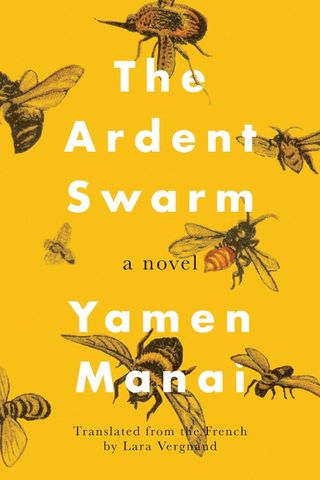
Cover of The Ardent Swarm

The Ardent Swarm

Yamen Manai

Original language: French · Paperback · ISBN 978-1542020459

Sidi is a beekeeper living a quiet, isolated life on the edge of Nawa, a small and struggling village in northern Tunisia. He knows his hives well, tending them with close attention and calling the bees his girls. One morning he discovers that one of his hives has been destroyed, every bee inside killed. The attackers turn out to be a swarm of hornets, aggressive and unfamiliar, and Sidi cannot explain where they came from or why they appeared.

To protect the rest of his hives, Sidi is forced to leave the solitude he has built around himself. His search for answers takes him first into the village, then into the city, and eventually further still. Along the way, the story expands from a single beekeeper's problem into something larger. The hornets and the bees become part of an allegory set against the social and political shifts Tunisia experienced after its revolution. Yamen Manai, a Tunisian author, uses this framework to explore how outside forces can threaten a fragile community and what it costs one person to resist. The novel stays grounded in Sidi's perspective, moving at the pace of his reluctant steps into a world he had chosen to leave behind.

Plot

Sidi lives a hermetic life as a bee whisperer, tending to his beloved “girls” on the outskirts of the desolate North African village of Nawa. He wakes one morning to find that something has attacked one of his beehives, brutally killing every inhabitant. Heartbroken, he soon learns that a mysterious swarm of vicious hornets committed the mass murder―but where did they come from, and how can he stop them? If he is going to unravel this mystery and save his bees from annihilation, Sidi must venture out into the village and then brave the big city and beyond in search of answers.

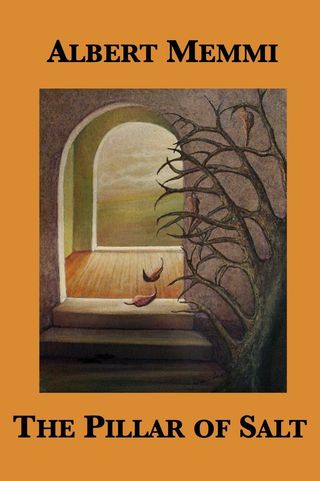
Cover of The Pillar of Salt

The Pillar of Salt

Albert Memmi

Original language: French · Paperback · ISBN 978-0807083277

The Pillar of Salt follows Alexandre Benillouche, a young Jewish man in colonial Tunisia, through his childhood and into early adulthood. Originally published in 1955, Albert Memmi's semi-autobiographical novel traces Alexandre's life in a society divided along lines of religion, language, and colonial authority. He grows up in a poor Jewish quarter, caught between an Arabic-speaking family, a French-language education system, and a colonial administration that treats local populations as secondary. Each sphere offers partial belonging but never full acceptance.

As Alexandre advances through school and begins to define himself intellectually, he encounters discrimination from multiple directions. His academic success opens doors but also widens the distance between him and his community. The tensions are not abstract: they appear in classroom encounters, family meals, neighborhood relationships, and the everyday friction of navigating languages and expectations that do not align. Eventually he leaves Tunisia for France, where the promise of a freer life meets a different kind of isolation.

Memmi, who was born in Tunis in 1920 and later settled in Paris, drew heavily on his own experience for the novel. The book sits alongside his later nonfiction work on colonialism and identity, grounding those broader arguments in the texture of one specific life.

Plot

This autobiographical novel follows Alexandre Benillouche, a young Jewish man growing up in colonial Tunisia, as he struggles with questions of identity, belonging, and freedom. Caught between his Jewish heritage, Arab culture, and French colonial influence, Alexandre feels alienated from all three worlds. As he moves from childhood into adulthood, he confronts discrimination, poverty, and the disintegration of his community, ultimately leaving Tunisia to seek liberation and self-definition in France — but discovers that exile carries its own form of solitude and loss.

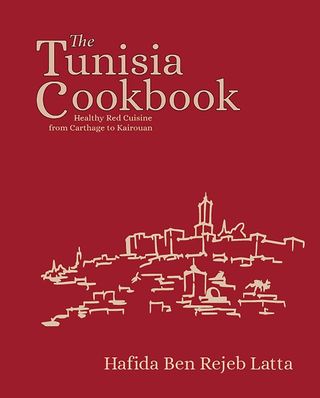
Cover of The Tunisia Cookbook: Healthy Red Cuisine from Carthage to Kairouan

The Tunisia Cookbook: Healthy Red Cuisine from Carthage to Kairouan

Haffida Ben Rejeb Latta

Original language: English · Hardcover · ISBN 978-1914325083

The Tunisia Cookbook by Haffida Ben Rejeb Latta presents traditional dishes from across Tunisia, tracing culinary roots that stretch back through centuries of layered cultural history. The book covers a broad range of recipes organized around what the author calls healthy red cuisine, connecting the food of modern Tunisia to traditions shaped by influences from Carthage to the inland city of Kairouan. Recipes are accompanied by dual measures, making the book accessible to cooks working in both metric and imperial systems.

A central thread running through the book is the olive tree and its place in Mediterranean cooking. Latta describes how nearly every part of the tree finds a use in Tunisian life: the fruit appears as appetizers or is pressed into oil for cooking and cosmetics, the wood is shaped into craft objects, and the foliage serves medicinal purposes. The olive tree becomes a way of explaining how deeply food production, health, and daily culture are connected in Tunisian society.

Beyond individual recipes, the book examines how diet supports community life at several levels. Latta treats Tunisian food not only as a collection of ingredients and techniques but as an expression of social continuity, linking the health of a food culture to the long-term well-being of the people who sustain it.

Plot

The culinary traditions we celebrate in Tunisia today are the flowering of a mature culture that has flourished and deepened over centuries. It explores the many levels at which diet contributes to the community. The Olive tree, which lies at the heart of Mediterranean cooking, is used comprehensively – its roots, trunk, branches, twigs, leaves and fruit are all used for the benefit of healthy living. The wood is turned into craft items and the foliage is often used for medicinal purposes, while the fruit appears as appetizers or in the form of oil for cooking and cosmetics. Without roots and trunks a tree cannot grow leaves and without supportive dietary roots societies, too, can wither in the same way. Includes dual measures.

More from Tunisia

See the country page for Tunisia for its map, facts and largest cities, or browse books from other countries.

Links go to Amazon; Hookito doesn’t sell books. Know a book that belongs here, or spotted a mistake? Write to submissions@hookito.com.

Where to next?

Back to the globe
Hookito landscape illustration