Hookito

Taiwan · Books

Books from Taiwan

4 books from and about Taiwan: what each is about, the plot, and a note from Professor Kogi.

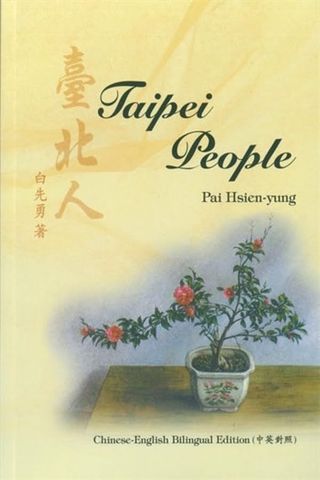
Cover of Taipei People

Taipei People

Pai Hsien-yung

Original language: Chinese · Paperback · ISBN 978-9622018594

Taipei People is a short story collection by Pai Hsien-yung, first published in the early 1970s. The book gathers fourteen stories set in Taipei, each centered on characters who have relocated to Taiwan from mainland China. Many of these figures carry memories of their former lives, social positions, and personal losses, and the stories observe how those memories shape daily existence in a changed setting.

The collection moves across a wide social range. Some characters are former military officers or officials; others are entertainers, widows, or aging socialites. Pai Hsien-yung writes each story with close attention to small, revealing details of speech, clothing, food, and gesture. The emotional register shifts between compassion for his characters and a clear-eyed awareness of their illusions. Nostalgia runs through the book, but it is treated as a condition to be examined rather than celebrated.

The stories are often compared to James Joyce's Dubliners for their city-bound structure and their interest in people caught between past and present. Pai Hsien-yung is recognized as a central figure in Taiwanese modernist fiction, and this collection is widely regarded as his defining work.

Plot

Pai Hsien-yung is among the most important writers in contemporary Chinese and world literature. His masterpiece Taipei People is a classic of Taiwanese modernism; with an intensity of vision comparable to James Joyce’s Dubliners, it follows the individual struggles of the people of Taipei, with a mix of compassion, nostalgia, mourning, and tenacious clarity.
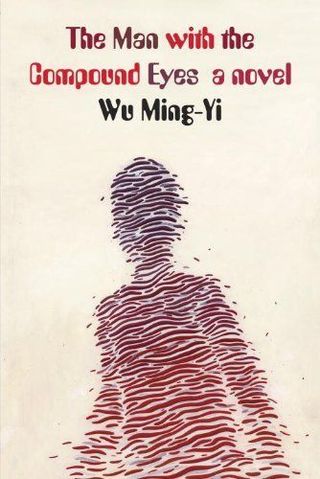
Cover of The Man with the Compound Eyes: A Novel

The Man with the Compound Eyes: A Novel

Wu Ming-Yi

Original language: Chinese · Hardcover · ISBN 978-0307907967

On the mythical Pacific island of Wayo-Wayo, a young man named Atile'i reaches his 180th full moon and is sent alone onto the open sea as a sacrifice to the Sea God, following the custom of his people. Adrift and close to death, he reaches an unexpected refuge, an enormous floating mass of human garbage, large enough to serve as an island.

Alice teaches literature in Taiwan. After her husband and son vanish, she decides to end her own life, but the collision of the trash island with her stretch of coastline interrupts that plan and wrecks her house. Meeting Atile'i gives her a reason to keep going, and together they try to trace what became of her family. Their exchanges cross a wide gap of language and experience.

Wu Ming-Yi widens the story to include Alice's neighbors and friends, environmentalists from other countries, and the elusive figure named in the title. The book moves between realistic detail and fantasy, keeping ocean pollution, coastal damage, and displaced communities in view. It was the author's first novel to appear in English, and it joins environmental fable with the private matter of family loss.

Plot

When a tsunami sends a massive island made entirely of trash crashing into the Taiwanese coast, two very different people—an outcast from a mythical island and a woman on the verge of suicide—are united in ways they never could have imagined. Here is the English-language debut of a new and exciting award-winning voice from Taiwan, who has written an “astonishing” novel (The Independent) that is at once fantasy, reality, and dystopian environmental saga.

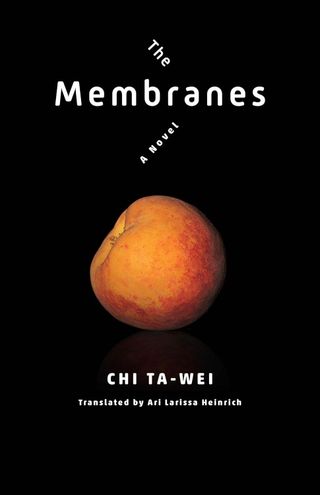
Cover of The Membranes

The Membranes

Chi Ta-wei

Original language: Chinese · Paperback · ISBN 978-0231195713

The Membranes is set in the late twenty-first century, after climate change has forced humanity into domes on the ocean floor. In this submerged world, powerful media corporations hold sway and cyborg workers are openly exploited. The story follows Momo, the most sought-after dermal care technician in T City, whose clients include well-known media personalities. She keeps to herself and stays busy, until a meeting with her estranged mother prompts her to examine her own identity.

Chi Ta-wei first published the novel in Taiwan in 1995, and it is regarded as a classic of queer speculative fiction in Chinese. Momo's self-examination opens questions about gender, memory, selfhood, and the limits of reality. Around her, the book assembles heirloom animals, radiation-proof combat drones, and surveillance systems, along with early guesses at fitness tracking and constant media exposure.

Ari Larissa Heinrich translated the book into English, carrying its hybrid punk style across languages. The narrative also turns attention to reading itself, keeping the reader's position in view while it examines technological control, concentrated capital, gender, and sexuality in a city sealed beneath the sea.

Plot

It is the late twenty-first century, and Momo is the most celebrated dermal care technician in all of T City. Humanity has migrated to domes at the bottom of the sea to escape devastating climate change. The world is dominated by powerful media conglomerates and runs on exploited cyborg labor. Momo prefers to keep to herself, and anyway she’s too busy for other relationships: her clients include some of the city’s best-known media personalities. But after meeting her estranged mother, she begins to explore her true identity, a journey that leads to questioning the bounds of gender, memory, self, and reality.

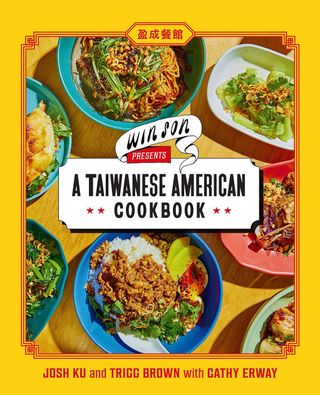
Cover of Win Son Presents a Taiwanese American Cookbook

Win Son Presents a Taiwanese American Cookbook

Josh Ku, Trigg Brown, Cathy Erway

Original language: English · Hardcover · ISBN 978-1419747083

Josh Ku and Trigg Brown are the co-owners of Win Son and Win Son Bakery in Brooklyn, New York. Ku grew up in Queens with parents from southern Taiwan, while Brown is from Virginia and trained under a Taiwanese American chef. Their partnership began with a shared appreciation for Taiwanese cooking, and this cookbook, written with Cathy Erway, collects around 100 recipes drawn from that foundation.

The dishes range from fried eggplant dressed with black vinegar, labneh, and spiced cashews to black sesame noodles with mushrooms and big chicken buns with fermented tofu mayo. Some recipes stay close to traditional Taiwanese preparation, while others fold in ingredients and techniques from other cooking traditions. The book also features tsang ying tou, sometimes translated as flies' head, a classic dish built on chopped budding chives cooked with pork fat.

The cookbook reflects a specific version of Taiwanese food shaped by the experience of growing up in or around Taiwanese American households and restaurant kitchens, then running a restaurant in Brooklyn. It is organized around the menu and kitchen practices of Win Son itself, connecting home cooking and restaurant cooking through shared ingredients and methods.

Plot

Josh Ku, born in Queens to parents from southern Taiwan, and Trigg Brown, a native Virginian whose mentor was a Taiwanese American chef, forged a friendship over food—specifically, excellent tsang ying tou, or “flies’ head,” a dish of chopped budding chives kissed with pork fat. The mouthwatering recipes include: Fried Eggplant with Black Vinegar, Labneh, and Spiced Cashews Grilled Shrimp with Chili Butter and Cilantro Black Sesame Noodles with Mushrooms Big Chicken Buns with Fu Ru Mayo, Cilantro, and Scallions Pei’s White Mapo Tofu

More from Taiwan

See the country page for Taiwan for its map, facts and largest cities, or browse books from other countries.

Links go to Amazon; Hookito doesn’t sell books. Know a book that belongs here, or spotted a mistake? Write to submissions@hookito.com.

Where to next?

Back to the globe
Hookito landscape illustration