Hookito

Tanzania · Books

Books from Tanzania

5 books from and about Tanzania: what each is about, the plot, and a note from Professor Kogi.

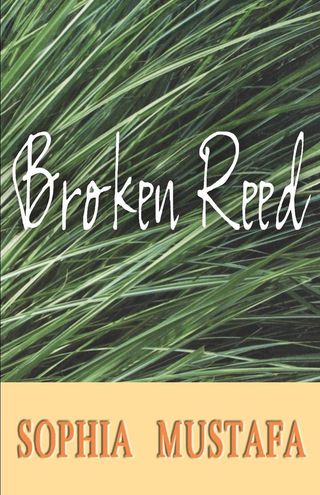
Cover of Broken Reed

Broken Reed

Sophia Mustafa

Original language: English · Paperback · ISBN 978-9987411177

Broken Reed by Sophia Mustafa follows Nureen, a Muslim woman living through the 1947 partition of the Indian subcontinent, the political event that divided British India into the independent states of India and Pakistan. Nureen finds herself caught between personal longing for freedom and the pressures of a society fracturing along religious lines. The novel frames her experience within the larger upheaval of communities uprooted and redefined by the new national borders.

Family conflict runs through the story as a second axis of tension. Nureen contends not only with the disorder of partition but also with the constraints imposed by tradition and culture on women of the subcontinent. Mustafa presents modernity and inherited social codes as forces pulling in opposite directions, and Nureen must navigate both without clear guidance from either.

Mustafa, based in Tanzania, brings an outsider perspective to the subcontinent's colonial aftermath. The novel connects post-colonial nationalism with questions of gender, examining how political independence did not automatically extend personal independence to women within their own households and communities.

Plot

This tale of confinement, love and the urge for freedom takes place during a sensitive and traumatic period in the history of the Indian subcontinent - the partition of 1947 and the creation of India and Pakistan as separate states. A Muslim protagonist, Nureen, is caught up in the emotional turmoil resulting from Independence amid the religious groupings of India's diverse communities.

Cover of Eva Pendaeli's Original Tanzania Cookbook

Eva Pendaeli's Original Tanzania Cookbook

Eva Pendaeli

Original language: English · Paperback · ISBN 978-9976101256

Eva Pendaeli's Original Tanzania Cookbook is presented as the first cookbook dedicated to authentic Tanzanian cuisine. The book focuses on the country's wide range of spices, many of which grow locally and can be found fresh at the sokoni, the Swahili word for a local vegetable market. Each spice name appears in both English and Swahili, a practical choice for readers shopping in Tanzanian markets or looking for close equivalents abroad.

The recipes draw on ingredients native to or commonly grown in Tanzania, and they are scaled to work for a single serving, a family meal, or a larger gathering. Pendaeli's approach treats spice selection as the defining element of each dish, emphasizing fresh ingredients over dried or processed alternatives wherever possible. The book positions itself as a record of home cooking traditions passed between generations, with particular attention to the flavors associated with everyday family meals.

Tanzania sits along the East African coast and includes the islands of Zanzibar, historically a major hub in the Indian Ocean spice trade. That geographic position shaped the country's cooking, blending coastal, inland, and island ingredients into a cuisine that varies notably from region to region.

Plot

As is known to all, spices are what distinguishes one recipe from another. Tanzania is abundantly endowed with numerous spices, most of which are available in their fresh state. Names of the spices in the book are given in both English and Swahili for those who want the freshest from sokoni (the local vegetable market) and for those who are near good vegetable markets elsewhere. This book will introduce you to locally available ingredients rich with local flavours. With the recipes provided by this book, you can prepare meals for a single person, several family members even a large gathering where good food is a prime component. They are also a great reminder of mama's cooking prepared with love.

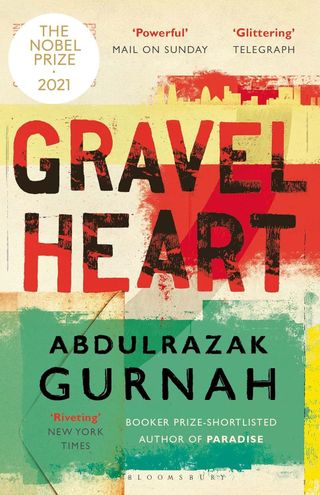
Cover of Gravel Heart

Gravel Heart

Abdulrazak Gurnah

Original language: English · Paperback · ISBN 978-1639730018

Gravel Heart follows Salim, a quiet, bookish boy growing up in 1970s Zanzibar in a household where much goes unspoken. He lives with his parents and his Uncle Amir, aware from an early age that his father seems to reject him. The island itself is in transition: British colonial rule has ended, revolution has reshaped the political order, and tourists are beginning to arrive on its beaches. At home, Salim watches his family fracture. His father leaves, withdrawing into solitude, while his mother offers no explanation for the upheaval or for her own unexplained absences.

When Uncle Amir, now holding a diplomatic position, arranges for Salim to study in London, the teenager seizes the chance. London proves difficult in its own way. The cold climate, the crowds, and the isolation of immigrant life press on him as he tries to establish himself far from everything familiar. At the same time, questions about his family's buried history follow him across the distance.

Abdulrazak Gurnah, who was awarded the 2021 Nobel Prize in Literature, sets the novel at the intersection of personal secrecy and political change. Salim's search for clarity about his parents and uncle runs alongside a wider portrait of Zanzibar's post-revolution society and the particular loneliness of displacement.

Plot

Salim has always known that his father does not want him. Living with his parents and his adored Uncle Amir in a house full of secrets, he is a bookish child, a dreamer haunted by night terrors. It is the 1970s and Zanzibar is changing. Tourists arrive, the island's white sands obscuring the memory of recent conflict--the longed-for independence from British colonialism swiftly followed by bloody revolution. When his father moves out, retreating into disheveled introspection, Salim is confused and ashamed. His mother does not discuss the change, nor does she explain her absences with a strange man; silence is layered on silence.

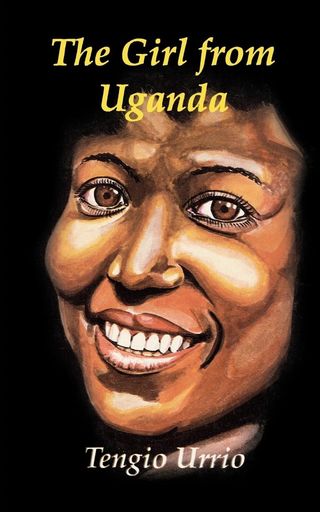
Cover of The Girl from Uganda

The Girl from Uganda

Tengio Urrio

Original language: English · Paperback · ISBN 978-9966469656

The Girl from Uganda is a first novel by Tengio Urrio, a Tanzanian public health physician. It follows a senior civil servant from Tanzania who earns a scholarship for postgraduate study in the United States. He arrives excited by the country's glamorous reputation, expecting a life that matches the image projected abroad. What he finds instead is a place far removed from his expectations, and the early chapters trace his growing discomfort as the gap between fantasy and reality widens.

The story shifts when the protagonist meets Betty, a young woman from Uganda, and the connection between two East Africans abroad becomes central to the narrative. Their shared background gives the novel room to explore questions of cultural identity, migration, and belonging in a foreign setting. The book is set across Tanzania and the United States, grounding its characters in specific places while following a pattern familiar to many international students: the contrast between an imagined destination and the lived experience of actually being there.

Urrio draws on his own professional background in public health, and the novel reflects the perspective of someone who has navigated institutional life in both East Africa and the West. The book was published with an ISBN registered in Kenya.

Plot

Set in Tanzania, this first novel from a Tanzanian public health physician, tells the story of a senior civil servant who wins a scholarship to undertake post-graduate work course in the USA. He is thrilled at the prospect of living in America, with its glamorous reputation. But the America he discovers is a far cry from the fantasy, until he meets Betty, the girl from Uganda.

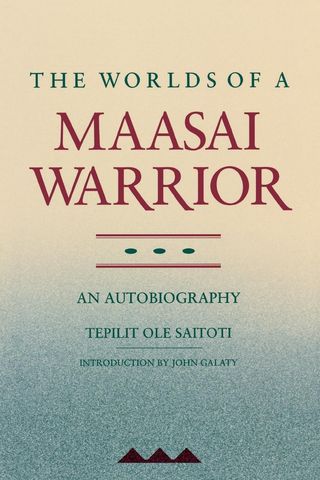
Cover of The Worlds of a Maasai Warrior

The Worlds of a Maasai Warrior

Tepilit ole Saitoti

Original language: English · Paperback · ISBN 978-0520063259

Tepilit ole Saitoti grew up among the Maasai, a pastoralist people whose life centers on cattle herding across the grasslands of East Africa. His memoir follows a path from early childhood through the stages of Maasai age-set progression, including circumcision and the period of junior warriorhood that defines a young man's place in the community. Saitoti describes daily routines, ceremonies, family relationships, and the physical landscape of the Serengeti plains in northern Tanzania, where seasonal movement with livestock shaped the rhythm of the year.

The book's second arc traces Saitoti's departure from that setting. He traveled to Europe and later to America, where he pursued formal education. The memoir records his responses to unfamiliar environments and social systems while he continued to identify with the pastoral world he had left. Rather than presenting Maasai culture as a fixed or vanishing way of life, Saitoti writes from the position of someone who has lived on both sides of a sharp cultural boundary.

The account is structured around the Maasai age-set system, which organizes male life into distinct phases with specific responsibilities. Each transition carries social weight, and Saitoti details the expectations placed on him at every stage, from dependent child to recognized warrior to student abroad.

Plot

An autobiographical memoir revealing the traditional childhood, adolescence, and coming of age in Maasailond also documents the author's life on the plains of the Serengeti and his education and experiences as he journeyed to Europe and America

More from Tanzania

See the country page for Tanzania for its map, facts and largest cities, or browse books from other countries.

Links go to Amazon; Hookito doesn’t sell books. Know a book that belongs here, or spotted a mistake? Write to submissions@hookito.com.

Where to next?

Back to the globe
Hookito landscape illustration