Hookito

Ukraine · Books

Books from Ukraine

6 books from and about Ukraine: what each is about, the plot, and a note from Professor Kogi.

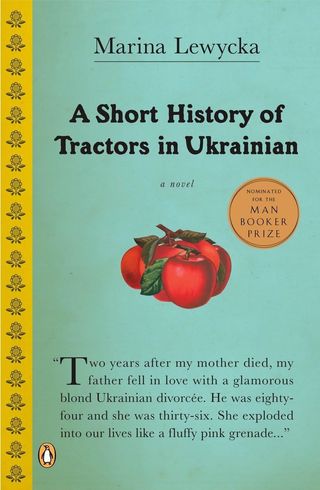
Cover of A Short History of Tractors in Ukrainian

A Short History of Tractors in Ukrainian

Marina Lewycka

Original language: English · Paperback · ISBN 978-0143036746

Marina Lewycka's debut novel opens with an eighty-four-year-old widower, a Ukrainian-born engineer living in England, who announces he plans to marry a thirty-six-year-old Ukrainian divorcee named Valentina. His two daughters, Vera and Nadezhda, have spent years at odds with each other, but the arrival of Valentina forces them into an uneasy alliance. Valentina is brash, determined, and openly pursuing a comfortable Western life, and the sisters set out to protect their father from what they see as a transparent scheme.

The story unfolds against a background of family history shaped by emigration and twentieth-century upheaval in Ukraine. As Vera and Nadezhda work together, long-buried tensions and memories surface between them, including disagreements rooted in their different experiences of displacement. Their father, meanwhile, occupies himself by writing a manuscript about the history of tractors in Ukrainian, a project that threads through the novel and connects his engineering past to his sense of identity.

Lewycka uses sharp, often physical comedy to carry the plot forward, setting domestic battles over green satin underwear, boil-in-the-bag meals, and immigration paperwork alongside quieter passages about aging, loyalty, and what family members owe each other across generations.

Plot

'Two years after my mother died, my father fell in love with a glamorous blonde Ukrainian divorcee. He was eighty-four and she was thirty-six. She exploded into our lives like a fluffy pink grenade, churning up the murky water, bringing to the surface a sludge of sloughed-off memories, giving the family ghosts a kick up the backside.' Sisters Vera and Nadezhda must aside a lifetime of feuding to save their émigré engineer father from voluptuous gold-digger Valentina. With her proclivity for green satin underwear and boil-in-the-bag cuisine, she will stop at nothing in her pursuit of Western wealth.
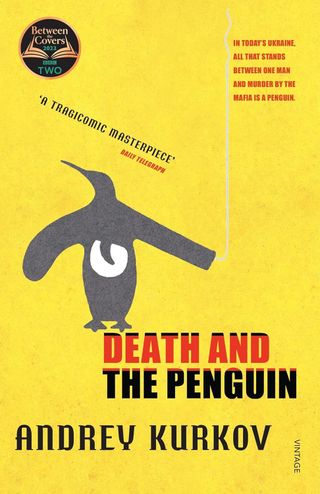

Cover of Death and the Penguin

Death and the Penguin

Andrey Kurkov

Original language: Russian · Paperback · ISBN 978-1860469459

Viktor, a struggling writer in post-Soviet Kyiv, shares his apartment with an unlikely companion: a penguin named Misha, adopted from the city zoo after it could no longer afford to feed its animals. Viktor's personal life is in poor shape. His girlfriend has left, his fiction goes nowhere, and his flat is cold and dim. Misha watches it all without comment.

A newspaper editor offers Viktor steady work writing obituaries, but the assignment has an odd condition. The subjects are not dead. They are prominent figures in Ukraine's new post-Communist order, and the obituaries are to be kept on file, ready for use when needed. Viktor accepts, glad for the income and the chance to see his writing in print. Before long, the subjects of his prepared obituaries begin dying, and Viktor realizes he has been pulled closer to something dangerous than a simple writing job should allow.

Andrey Kurkov sets his story in the Kyiv of the 1990s, a city adjusting to sudden economic and political change. The novel pairs dry, understated humor with a plot that grows steadily darker, using Viktor and his penguin as quiet observers of a society where power operates through arrangements most people never see.

Plot

Victor is depressed: his lover has dumped him, his short stories are too short, and the light has gone off in his dingy apartment. His only companion is Misha, the penguin he rescued from Kiev's Zoo, when it couldn't feed the animals anymore. Misha is the silent witness to Victor's despair, and joins in his celebration—fish and vodka—when Victor's luck seems to turn: he is commissioned to write obituaries. The weird thing is that the editor wants him to select subjects who are still alive, the movers and the shakers of the new, post-Communist society.

Cover of Kobzar

Kobzar

Taras Shevchenko

Original language: Ukrainian · paperback

Kobzar is a collection of poems by Taras Shevchenko, first published in 1840. The title refers to a kobzar, a traditional Ukrainian traveling musician who played the kobza, a stringed instrument. Shevchenko himself was born into serfdom in 1814 and gained his freedom in 1838, shortly before the book appeared. His poems addressed Ukrainian history, language, folk life, and the conditions of ordinary people under imperial rule. Early editions were censored by the Russian czar, and Shevchenko was later arrested and sent into exile, where he was forbidden to write or paint.

Despite censorship, the collection became a foundational work for the Ukrainian language and literary tradition. Shevchenko wrote in Ukrainian at a time when the language had limited presence in published literature, and his poetry helped shape its modern written form. The book grew through successive editions as more poems were added over the years, and it remains closely tied to questions of Ukrainian cultural identity.

Peter Fedynsky, a Voice of America journalist with a background in Ukrainian studies, produced what is described in the record as the first complete English translation of the Kobzar, making the full collection accessible to English-speaking readers.

Plot

Masterfully fulfilled by Peter Fedynsky, Voice of America journalist and expert on Ukrainian studies, this first-ever English translation of the complete Kobzar brings out Ukraine's rich cultural heritage. As a foundational text, The Kobzar has played an important role in galvanizing the Ukrainian identity and in the development of Ukraine’s written language and Ukrainian literature.

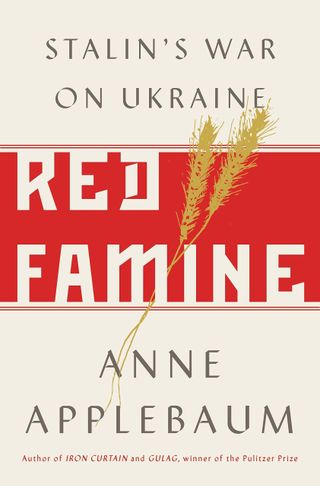
Cover of Red Famine: Stalin's War on Ukraine

Red Famine: Stalin's War on Ukraine

Anne Applebaum

Original language: English · hardcover

In 1929, Joseph Stalin imposed agricultural collectivization across the Soviet Union, forcing millions of peasants from their land and into state-run collective farms. The policy triggered widespread crop failure and starvation. Between 1931 and 1933, at least five million people died of famine across the USSR, making it the most lethal famine recorded in European history. Anne Applebaum's Red Famine examines this period with a specific focus on Ukraine, where the death toll was concentrated and where the famine carried a particular political dimension.

Applebaum argues that more than three million Ukrainians who died in this period were not incidental victims of poor planning. She presents evidence that the Soviet state used the famine as a tool to suppress Ukrainian national identity and political resistance. Rather than directing relief to starving regions, authorities tightened grain requisitions and restricted movement out of affected areas. The book traces how Soviet leadership turned an agricultural disaster into a deliberate instrument of control.

The study draws on Ukrainian and Russian archival sources, many of which became accessible only after the end of the Soviet Union. Applebaum reconstructs events at multiple levels, from decisions made in Moscow to the experiences of individual villages and families across the Ukrainian countryside.

Plot

In 1929 Stalin launched his policy of agricultural collectivization—in effect a second Russian revolution—which forced millions of peasants off their land and onto collective farms. The result was a catastrophic famine, the most lethal in European history. At least five million people died between 1931 and 1933 in the USSR. But instead of sending relief, the Soviet state made use of the catastrophe to rid itself of a political problem.

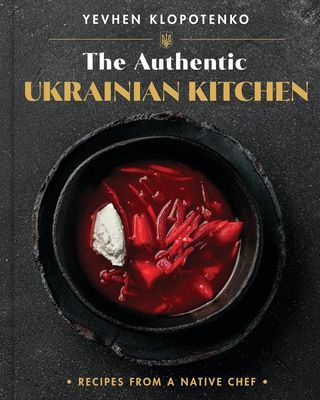
Cover of The Authentic Ukrainian Kitchen

The Authentic Ukrainian Kitchen

Yevhen Klopotenko

Original language: English · Hardcover · ISBN 978-0316559393

Yevhen Klopotenko is widely regarded as Ukraine's most internationally recognized chef, and this cookbook collects 100 recipes drawn from years of research into regional cooking traditions across the country. The book covers a broad range of dishes, from borsch in its many regional variations to varenyky (filled dumplings), deruny (fried potato pancakes), and pampushky (garlic bread rolls). Fermentation, pickling, braised meats, baked goods, and desserts such as Lviv-style cheesecake and nut torte also feature throughout.

Klopotenko's approach centers on identifying dishes shaped by Ukraine's geography, agriculture, and local tradition. Ukraine has long been called the breadbasket of Europe, and the recipes here reflect that grain-growing landscape alongside an abundance of root vegetables, dairy, and preserved foods. The book presents these dishes in modern form while grounding them in their regional origins, distinguishing Ukrainian cuisine from the broader Soviet-era culinary narrative that often absorbed or relabeled it.

The collection is organized around everyday cooking as much as celebration. Breakfast dishes, simple salads, dips, and long-simmered braises sit alongside sweet baked goods and candied fruit. Vegetables receive particular attention, with fresh approaches to common ingredients found across Ukrainian kitchens.

Plot

Now, more than ever, Ukrainian cuisine and culture deserve to be known around the world. Here, Yevhen Klopotenko shares modern recipes for the dishes that best express Ukraine’s unique culinary heritage and define the independent spirit of its people. Inside you’ll find fresh ideas about how to use common vegetables, new approaches to fermentation and pickling, the delight of dumplings and simple baked goods, hearty long-simmered braises, and the pleasure of babka, torte, candied fruit, and so much more. Klopotenko is Ukraine’s most internationally celebrated chef, and these recipes are the result of years of research into regional Ukrainian cooking. He has peeled back layers of propaganda to identify true Ukrainian cuisine, shaped by tradition, geography, and agriculture. Known as the “breadbasket of Europe,” Ukraine’s beloved dishes include: Borsch, the national treasure, and its many variations Pampushky, easy garlic bread rolls Varenyky, dumplings stuffed with sweet or savory fillings Deruny, fried potato pancakes Sweet and savory breakfasts, simple salads and dips, and hearty braises Lviv-style cheesecake, nut torte, and many more desserts

Cover of Voices from Chernobyl

Voices from Chernobyl

Svetlana Alexievich

Original language: Russian · Paperback · ISBN 978-0312425845

On April 26, 1986, a reactor at the Chernobyl nuclear power plant in northern Ukraine exploded, releasing radioactive contamination across large parts of Europe. Svetlana Alexievich spent years collecting testimony from people who lived through the disaster and its aftermath: firefighters, evacuees, soldiers, scientists, doctors, and ordinary residents of the surrounding zone. Their accounts are presented in monologue form, each person speaking in their own voice about what they witnessed and what followed.

The book records experiences that do not fit neatly into the language of industrial accidents or political failures. People describe a changed relationship with everyday things: soil, water, food, rain. Contamination was invisible and odorless, and the danger it posed could not be sensed directly. Many of those interviewed were sent to clean up the site or were resettled from towns and villages that had to be abandoned. Others stayed. Alexievich arranges their words so that the scale of the event emerges through individual detail rather than summary.

The collection received the National Book Critics Circle Award in 2006. Alexievich later won the Nobel Prize in Literature in 2015, recognized for her method of assembling individual voices into a composite record of Soviet and post-Soviet life.

Plot

On April 26, 1986, the worst nuclear reactor accident in history occurred in Chernobyl and contaminated as much as three-quarters of Europe. Voices from Chernobyl is the first book to present personal accounts of the tragedy.

More from Ukraine

See the country page for Ukraine for its map, facts and largest cities, or browse books from other countries.

Links go to Amazon; Hookito doesn’t sell books. Know a book that belongs here, or spotted a mistake? Write to submissions@hookito.com.

Where to next?

Back to the globe
Hookito landscape illustration