Hookito

Uruguay · Books

Books from Uruguay

5 books from and about Uruguay: what each is about, the plot, and a note from Professor Kogi.

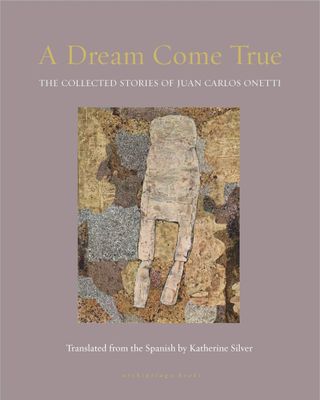
Cover of A Dream Come True

A Dream Come True

Juan Carlos Onetti

Original language: Spanish · Paperback · ISBN 978-1939810465

A Dream Come True gathers the complete short fiction of Uruguayan writer Juan Carlos Onetti, translated into English by Katherine Silver. The collection spans his full career, from early pieces like the brief Avenida de Mayo - Diagonal - Avenida de Mayo to longer works such as the detective story The Face of Disgrace and the novella Death and the Girl, set in his recurring fictional town of Santa María. Onetti won the Cervantes Prize in 1980, and writers including Mario Vargas Llosa and Gabriel García Márquez regarded him as a central figure in Latin American literature.

The stories move between philosophical inquiry and the ordinary tensions of small-town life. A woman passes time alone at a coastal hotel while recovering from illness. A grandmother prepares coffee for schoolboys who remind her of a grandson she has lost. Onetti's writing style is indirect and layered, with events and motives suggested rather than stated outright. His characters often appear unmoored, passing through unfamiliar settings among strangers.

Santa María, the invented town that recurs across several of these stories, serves as a contained space where Onetti examines violence, isolation, and the texture of daily routine in places modeled loosely on Uruguayan and Argentine river towns.

Plot

Juan Carlos Onetti's A Dream Come True depicts a sharp, coherent, literary voice, encompassing Onetti's early stages of writing and his later texts. They span from a few pages in Avenida de Mayo - Diagonal - Avenida de Mayo to short novellas, like the celebrated detective story The Face of Disgrace and Death and the Girl, an existential masterpiece that explores the complexity of violence and murder in the mythical town of Santa María. His stories create a world of writing which is both universal and highly local, mediating between philosophical characters and the quotidian melodrama of Uruguayan villages.
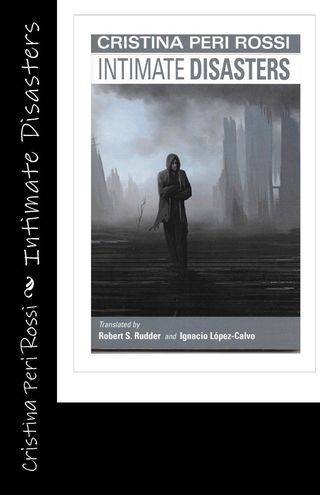
Cover of Intimate Disasters

Intimate Disasters

Cristina Peri Rossi

Original language: Spanish · Paperback · ISBN 978-1891270543

Cristina Peri Rossi, a Uruguayan novelist, poet, and short story writer, is recognized as one of the prominent voices of Latin American literature's post-boom generation. Intimate Disasters is a collection of stories that turns inward, focusing on characters caught in personal fixations and quiet crises rather than grand historical events. Each story centers on people whose inner lives have grown ungovernable in some specific way.

The cast includes a group of fetishists who meet to openly catalog their obsessions, a man drawn to a woman he describes in whale-like terms, a husband adjusting to the fact that his wife has left him for another woman, and a secretary and mother who feels slowly suffocated by the demands of family life. These are not sensational portraits. Peri Rossi treats desire, loneliness, and domestic tension as ordinary forces that shape how people see themselves and others.

The stories share a concern with subjectivity, the idea that private experience resists the flattening effects of mass communication. Peri Rossi writes from a position rooted in Uruguay but addressing patterns of human behavior that cross borders and cultures. The collection was published in English translation, making these stories accessible beyond Spanish-language readers.

Plot

In this modern age, when the means of communication have turned individual and collective history into a spectacle, literature is the privileged place of subjectivity. This book allows us to peer into the fascinating world of characters trapped in their particular deliriums: a club of fetishists who discuss their particular manias, a man in love with a whale woman, a man whose wife has left him for another woman, and a beautiful secretary who is also a mother feeling asphyxiated by her family. Readers, no matter how they see themselves and what their sexual preferences may be, will experience the same sensation.

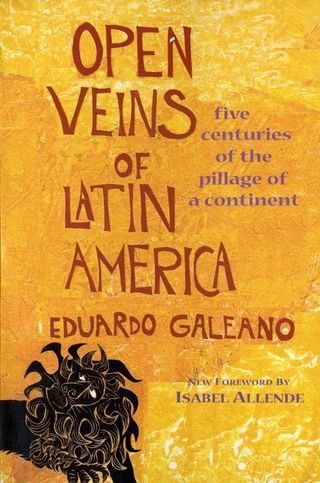
Cover of Open Veins of Latin America

Open Veins of Latin America

Eduardo Galeano

Original language: Spanish · Paperback · ISBN 978-0853459910

Eduardo Galeano's Open Veins of Latin America organizes five centuries of the continent's history not by dates or governments but by commodities. Gold, silver, rubber, coffee, copper, tin, petroleum, and other raw materials each form a thread through the narrative. Galeano follows these resources from extraction sites across Latin America and the Caribbean to the markets and treasuries of the United States and Europe, tracing how wealth flowed outward while poverty settled in.

The book examines how foreign enterprises drew large profits from operations across the region, and how local elites often cooperated with outside powers rather than resisting them. Galeano argues that these relationships produced deeply unequal societies whose structures persisted across generations. His approach blends economic history with accounts of specific industries, crops, and minerals, connecting the fates of workers and landscapes to distant financial interests.

First published in 1971, the book was written in Uruguay and became widely read across Spanish-speaking countries. The edition referenced here, marking the book's twenty-fifth year in print, includes an introduction by Chilean-born novelist Isabel Allende. Galeano's organizational method, sorting history by exported resources rather than by era or nation, remains one of its most distinctive features.

Plot

Rather than chronology, geography, or political successions, Eduardo Galeano has organized the various facets of Latin American history according to the patterns of five centuries of exploitation. Thus he is concerned with gold and silver, cacao and cotton, rubber and coffee, fruit, hides and wool, petroleum, iron, nickel, manganese, copper, aluminum ore, nitrates, and tin. These are the veins that he traces through the body of the entire continent, up to the Rio Grande and throughout the Caribbean, and all the way to their open ends where they empty into the coffers of wealth in the United States and Europe. Weaving fact and imagery into a rich tapestry, Galeano fuses scientific analysis with the passions of a plundered and suffering people. An immense gathering of materials is framed with a vigorous style that never falters in its command of themes. All readers interested in great historical, economic, political, and social writing will find a singular analytical achievement and an overwhelming narrative that makes history speak, unforgettably. This classic is now further honored by Isabel Allende’s inspiring introduction. Universally recognized as one of the most important writers of our time, Allende once again contributes her talents to literature, to political principles, and to enlightenment.

Cover of Piano Stories

Piano Stories

Felisberto Hernandez

Original language: Spanish · Paperback · ISBN 978-0811221801

Felisberto Hernández was a Uruguayan writer who spent much of his early life as a traveling pianist, performing in small towns across Uruguay and Argentina. That musical background shaped his fiction in visible ways, lending it an attention to rhythm, sensation, and the odd textures of memory. Piano Stories collects fifteen of his short works, including pieces such as The Daisy Dolls, The Usher, and The Flooded House. Italo Calvino wrote an introduction to the collection, describing Hernández as a writer who fits no easy category, whether European or Latin American.

The stories tend to move by association rather than conventional plot. Objects, rooms, and physical sensations often carry as much weight as characters do, and everyday settings can shift into something stranger without warning. Hernández had a persistent interest in the gap between what people perceive and what they understand, and his narrators frequently find themselves caught in that gap.

Hernández published during his lifetime but remained little known outside Uruguay and Argentina until translations brought his work to wider attention. This English-language edition, introduced by Calvino, gathers pieces that span different periods of his writing career and gives a broad view of his distinctive style.

Plot

Piano Stories presents fifteen wonderful works by the great Uruguayan author Felisberto Hernández, “a writer like no other,” as Italo Calvino declares in his introduction: “like no European or Latin American. He is an ‘irregular,’ who eludes all classifications and labelings ― yet he is unmistakable on any page to which one might randomly open one of his books.” Piano Stories contains classic tales such as “The Daisy Dolls,” “The Usher,” and “The Flooded House.”

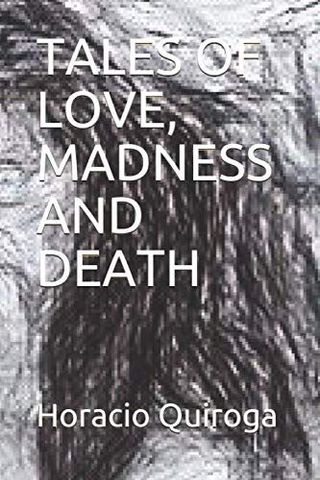
Cover of Tales of Love, Madness and Death

Tales of Love, Madness and Death

Horacio Quiroga

Original language: Spanish · Paperback · ISBN 978-1078184656

Horacio Quiroga was born in Salto, Uruguay, in 1878 and spent much of his adult life in Misiones, a province in northeastern Argentina near the subtropical forest along the Paraná River. That setting runs through this 1917 story collection, where the natural world acts as a force rather than a backdrop. The title names its three concerns directly, and the stories place people in close contact with animals, illness, heat, and isolation.

Several stories grant animals a striking degree of reason, while human characters drift toward instinct and compulsion. One widely read tale turns a feather pillow into a source of horror through a parasite. Others follow settlers, workers, and families whose ordinary tasks near the forest carry real danger. Quiroga's prose stays measured even when events turn violent, and his attention rests on the moment control slips away.

Quiroga is often compared with Edgar Allan Poe for his handling of dread inside short, tightly built narratives. He wrote in Spanish, and the collection has since appeared in other languages. Read today, some of its medical and natural details reflect what was understood about parasites and infection in the early twentieth century.

Plot

The work deals mainly with death, although it touches on other topics such as the humanization of animals, being who together with an entirely rational thought direct the respective stories. But although animals carry reason, it ends with the brute strength of man. Another issue addressed is the dehumanization of man who gives his will to the most primitive instincts. Following his impulses arise the problems and the plot of several stories. It is amazing that the feathered hummingbird describes as the cause of death and one of the main causes of diseases in the world today, mites and fleas on pillows and mattresses are not only the main cause of allergies, but also can infect what a person has and inoculate it systematically, so it is necessary to disinfect or fumigate mattresses and pillows at least once a year no matter where we live in the world, but that was not known when the author wrote this work.

More from Uruguay

See the country page for Uruguay for its map, facts and largest cities, or browse books from other countries.

Links go to Amazon; Hookito doesn’t sell books. Know a book that belongs here, or spotted a mistake? Write to submissions@hookito.com.

Where to next?

Back to the globe
Hookito landscape illustration