Hookito

Vatican City · Books

Books from Vatican City
7 books from and about Vatican City: what each is about, the plot, and a note from Professor Kogi.

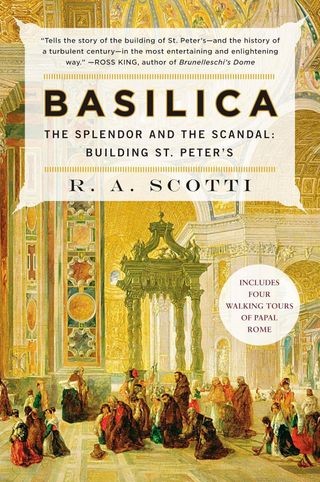
Cover of Basilica: The Splendor and the Scandal: Building St. Peter's

Basilica: The Splendor and the Scandal: Building St. Peter's

R. A. Scotti

Original language: English · Paperback · ISBN 978-0452288607

R. A. Scotti's Basilica follows the construction of St. Peter's Basilica in Rome, a project that began in 1506 under Pope Julius II and took roughly two centuries to complete. The book covers the succession of architects, popes, and political forces that shaped the building over that long span. Among the figures involved were Bramante, who drafted the original centralized plan, Raphael, who succeeded him, and Michelangelo, who redesigned the dome late in his life. Each brought a different architectural vision, and the project changed direction repeatedly as leadership shifted.

Scotti also traces the wider consequences of the construction. Funding the basilica required enormous sums, and the sale of indulgences to raise money became one of the grievances that fueled Martin Luther's break with the Catholic Church. The building's timeline overlapped with the Protestant Reformation, the late Renaissance, and the early colonial era. Scotti uses these parallels to give a sense of scale: by the time the basilica was finished, Shakespeare's plays had already been written and English settlers had crossed the Atlantic.

The book is set largely in Vatican City and Rome, drawing on the politics of the papal court, the rivalries among artists and architects, and the physical challenges of constructing the largest church in Christendom at that time.

Plot

In this dramatic journey through religious and artistic history, R. A. Scotti traces the defining event of a glorious epoch: the building of St. Peter's Basilica. Begun by the ferociously ambitious Pope Julius II in 1506, the endeavor would span two tumultuous centuries, challenge the greatest Renaissance masters—Michelangelo, Raphael, and Bramante—and enrage Martin Luther. By the time it was completed, Shakespeare had written all of his plays, the Mayflower had reached Plymouth—and Rome had risen with its astounding basilica to become Europe's holy metropolis.
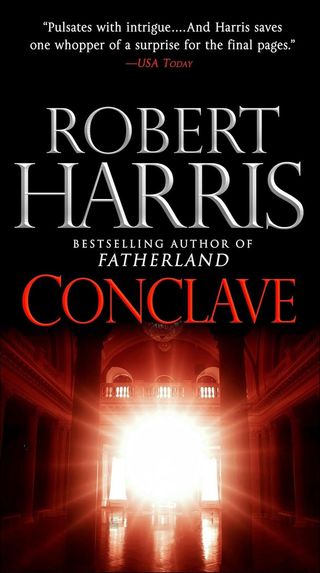
Cover of Conclave

Conclave

Robert Harris

Original language: English · Paperback · ISBN 978-1101972908

Robert Harris sets this thriller inside the Vatican during a papal conclave, the closed election that follows the death of a pope. One hundred and eighteen cardinals gather behind the locked doors of the Sistine Chapel to choose a successor. The process is among the most secretive in the world: no phones, no contact with the outside, and strict rituals governing every round of voting. Harris uses this enclosed, high-pressure setting to build tension from the opening pages.

The novel follows the cardinals as factions form, alliances shift, and personal ambitions surface beneath the formal solemnity of the occasion. These are senior figures in the Catholic Church, drawn from countries across every continent, yet the political instincts at work inside the conclave mirror those found in any contested election. Loyalty, persuasion, grudges, and surprise revelations all play their part over the course of roughly seventy-two hours.

Harris is known for thrillers built on institutional settings, including Enigma, set around wartime codebreaking, and Fatherland, set in an alternate-history Europe. Conclave applies the same approach to one of the oldest governing structures still active today, placing its drama within the small walled territory of Vatican City.

Plot

The pope is dead. Behind the locked doors of the Sistine Chapel, one hundred and eighteen cardinals from all over the globe will gather to cast their votes in the world's most secretive election. They are holy men. But they are not immune to the human temptations of power and glory. And they are not above the tribalism and factionalism that consumes humanity. When all is said and done, one of them will become the most powerful spiritual figure on Earth.

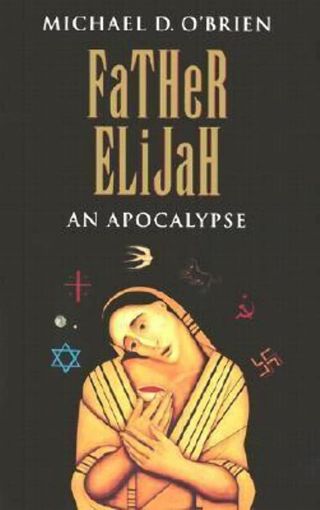
Cover of Father Elijah: An Apocalypse

Father Elijah: An Apocalypse

Michael D. O'Brien

Original language: English · Paperback · ISBN 978-0898706901

Father Elijah is a novel set within the Roman Catholic Church during a period of global crisis. Its central character is a Jewish convert to Catholicism who survived the Holocaust and once held influence in Israel. For two decades he has lived in seclusion as a Carmelite monk on Mount Carmel, the biblical mountain associated with the prophet Elijah. His quiet life ends when the Pope and the Cardinal Secretary of State summon him for a sensitive mission: to make contact with a powerful political figure they suspect may be the Antichrist, and to call that figure to repentance.

The mission takes Father Elijah across Europe and the Middle East, where he moves through layers of political and ecclesiastical power. Along the way he encounters priests, journalists, mystics, judges, and heads of state, as well as figures inside the Church whose loyalties are uncertain. The novel follows the structure of an apocalypse in the older literary sense, a narrative concerned with hidden realities being uncovered rather than simple destruction.

Michael D. O'Brien frames the story around questions of faith under pressure, institutional loyalty, and the tension between spiritual obedience and personal judgment. The plot draws on Catholic eschatology, the branch of theology concerned with the end times, and places its fictional events within recognizable modern settings and institutions.

Plot

Father Elijah is a convert from Judaism, a survivor of the Holocaust, a man once powerful in Israel. For twenty years he has been "buried in the dark night of Carmel" on the mountain of the prophet Elijah. The Pope and the Cardinal Secretary of State call him out of obscurity and give him a task of the highest sensitivity: to penetrate into the inner circles of a man whom they believe may be the Antichrist. Their purpose: to call the Man of Sin to repentance, and thus to postpone the great tribulation long enough to preach the Gospel to the whole world. In this richly textured tale, Father Elijah crosses Europe and the Middle East, moves through the echelons of world power, meets saints and sinners, presidents, judges, mystics, embattled Catholic journalists, faithful priests and a conspiracy of traitors within the very House of God. This is an apocalypse in the old literary sense, but one that was written in the light of Christian revelation.

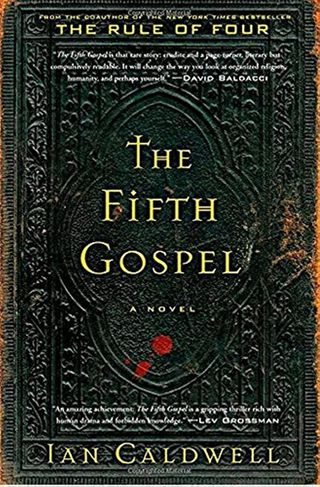
Cover of The Fifth Gospel: A Novel

The Fifth Gospel: A Novel

Ian Caldwell

Original language: English · Hardcover · ISBN 978-1451694147

In 2004, during the final months of Pope John Paul II's papacy, a curator working on a new exhibit at the Vatican Museums is found murdered after a secret meeting on the outskirts of Rome. The same night, someone breaks into the home of Father Alex Andreou, a Greek Catholic priest who lives inside Vatican City with his young son and who had been the curator's research partner. When the papal police make little progress on either crime, Alex begins investigating on his own, driven by fear for his family's safety and loyalty to his dead colleague.

The investigation pulls Alex into the curator's unfinished research, which centered on the Diatessaron, a second-century text that wove the four canonical gospels into a single continuous narrative. What the Diatessaron might reveal about one of Christianity's most debated holy relics becomes the key question of the novel. Alex must navigate the internal politics of the Vatican, the tensions between the Roman Catholic and Greek Catholic traditions, and the interests of people who have strong reasons to control what the exhibit will say. Ian Caldwell sets the story almost entirely within Vatican City, using its small geography, layered institutions, and overlapping jurisdictions as both backdrop and pressure chamber.

Plot

In 2004, as Pope John Paul II’s reign enters its twilight, a mysterious exhibit is under construction at the Vatican Museums. A week before it is scheduled to open, its curator is murdered at a clandestine meeting on the outskirts of Rome. That same night, a violent break-in rocks the home of the curator’s research partner, Father Alex Andreou, a Greek Catholic priest who lives inside the Vatican with his five-year-old son. When the papal police fail to identify a suspect in either crime, Father Alex, desperate to keep his family safe, undertakes his own investigation. To find the killer he must reconstruct the dead curator’s secret: what the four Christian gospels—and a little-known, true-to-life fifth gospel known as the Diatessaron—reveal about the Church’s most controversial holy relic. But just as he begins to understand the truth about his friend’s death and its consequences for the future of the world’s two largest Christian Churches, Father Alex finds himself hunted down by someone with a vested stake in the exhibit—someone he must outwit to survive.

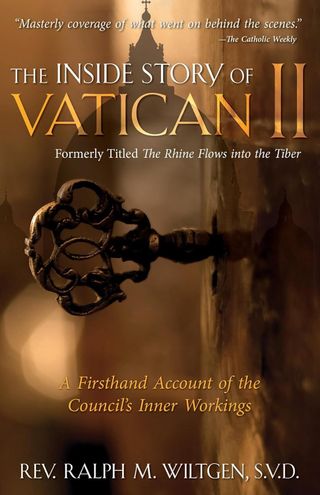
Cover of The Rhine Flows into the Tiber: A History of Vatican II

The Rhine Flows into the Tiber: A History of Vatican II

Ralph Wiltgen

Original language: English · Paperback · ISBN 978-0895551863

The Rhine Flows into the Tiber is a history of the Second Vatican Council by Ralph Wiltgen, a Catholic priest and professional journalist who attended the Council as it unfolded between 1962 and 1965. He had direct access to bishops, theologians, and officials, and used it to record what happened in the formal sessions and in the meetings around them.

The title points to the influence of German-speaking and northern European bishops on the Council's direction. The Rhine, which runs through Switzerland, Germany, and the Netherlands, stands as shorthand for a group whose theological outlook shaped many debates. The Tiber, in turn, is Rome's river. Wiltgen traces how these figures organized, built alliances, and steered discussions on questions that would reshape Catholic practice for decades.

The book first appeared in 1967, two years after the Council closed, and was published in four languages. Wiltgen concentrates on specific episodes, votes, and negotiations rather than a broad theological survey. A later revised and updated edition carried the account forward as discussion of the Council's meaning continued among Catholic readers.

Plot

Widely hailed for its balanced, factual reporting, this eye-opening insider's account was written by Rev. Ralph M. Wiltgen, a priest and professional journalist who was an eyewitness with unparalleled access to the principal figures and events of the Council. The Inside Story of Vatican II is a revised, updated edition of that ground-breaking contemporary account, which details in particular the crucial influence on the Council's proceedings exerted by its German-speaking bishops. As Catholics continue to debate the meaning and impact of Vatican II, they will find this book an indispensable guide for understanding what actually took place there behind the scenes.

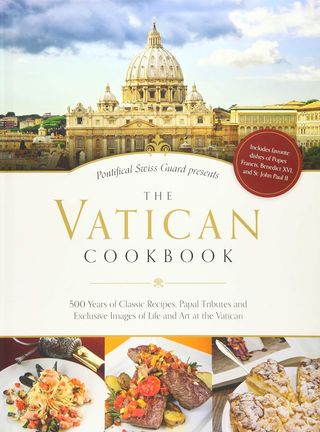
Cover of The Vatican Cookbook: Presented by the Pontifical Swiss Guard

The Vatican Cookbook: Presented by the Pontifical Swiss Guard

David Geisser, Erwin Niederberger

Original language: English · Hardcover · ISBN 978-1622823321

The Vatican Cookbook gathers recipes connected to the Pontifical Swiss Guard, the small military corps that has protected the Pope since 1506. Co-authored by David Geisser and Erwin Niederberger, the book collects dishes served at Vatican tables, ranging from everyday meals to holiday feasts. It also includes recipes linked to three popes and the food traditions of their home countries: Argentina for Pope Francis, Bavaria for Pope Benedict XVI, and Poland for Pope John Paul II.

Beyond the recipes, the book presents photographs from inside Vatican City, including views of St. Peter's Basilica, the Vatican Museums, and the Sistine Chapel. It shares stories and legends passed down within the Swiss Guard over the centuries. The Guard itself is one of the oldest active military units in the world, and its members live and eat within the walls of this small city-state.

The collection moves between simple staples and more elaborate preparations, reflecting the modest daily meals of the Guard alongside the formal Roman cuisine associated with papal occasions. Vatican City is an independent state surrounded by Rome, and the Guard's members are recruited from Switzerland, which places two culinary traditions inside the same walls.

Plot

Pontifical Swiss Guard presents ... a book like no other. From the elite protectors of the Popes and Defenders of the Faith for more than 500 years, a unique collection of exceptional recipes from simple to sublime, everyday staples to holiday feasts. Here are the classics served at Vatican tables for centuries and the finest of modern cuisine. Best of all, we pay tribute to Pope Francis, Pope Benedict XVI and Holy Pope John Paul II with the personal favorite dishes from their homelands of Argentina, Bavaria, and Poland. A marvelous cookbook and so much more. The Vatican Cookbook features superb photographs that take us behind the scenes to secret and special places of Vatican City. Walk the hallowed halls of St. Peter's Basilica, the Vatican Museums, and the Sistine Chapel. Enjoy the stories and legends of the Swiss Guard handed down since the days of Michelangelo.

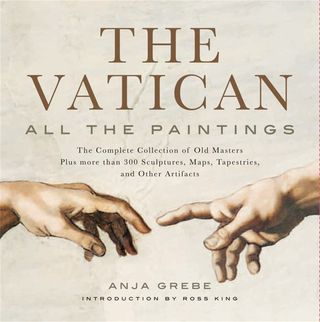
Cover of Vatican: All the Paintings

Vatican: All the Paintings

Anja Grebe

Original language: English · Hardcover · ISBN 978-1579129439

Vatican: All the Paintings is a large-format art book by Anja Grebe that reproduces 976 works held across the museums, chapels, and palaces of Vatican City. The book is organized into 22 sections corresponding to specific locations within the Vatican complex, including the Pinacoteca, the Sistine Chapel, the Raphael Rooms, the Borgia Apartments, and St. Peter's Basilica. Ross King, known for his books on Brunelleschi's Dome and Michelangelo, contributes an introduction.

The collection extends well beyond Christian subjects. It covers objects from ancient Egypt, Mesopotamia, Greece, and Rome alongside religious and secular European art, reaching into the twentieth century. This range reflects the Vatican's long history as a collector and patron across cultures and periods. Of the nearly one thousand works reproduced, 180 receive individual commentary from Grebe, who discusses their notable features and historical context in detail.

The book arrives in a slipcase and functions as a visual catalog of one of the world's most concentrated art holdings. Vatican City itself covers roughly 44 hectares, making it the smallest internationally recognized state, yet it houses collections built up over centuries of papal patronage and diplomatic exchange.

Plot

Organized into 22 sections representing the museums and areas of the Vatican, including the Pinacoteca (painting gallery), the Sistine Chapel, the Raphael Rooms, the Borgia Apartments, the Vatican Palaces, and St. Peter’s Basilica, The Vatican: All the Paintings includes 976 works of art. This slipcased edition features not only Christian art but also includes works from ancient Egypt, Mesopotamia, Greece, Rome, as well as many other works of religious and secular art right up to and including a selection of 20th century art and artifacts. One hundred and eighty of the most iconic and significant works of art are illuminated by art historian Anja Grebe with discussions on the key attributes of the masterpiece.

More from Vatican City

See the country page for Vatican City for its map, facts and largest cities, or browse books from other countries.

Links go to Amazon; Hookito doesn’t sell books. Know a book that belongs here, or spotted a mistake? Write to submissions@hookito.com.

Where to next?

Back to the globe
Hookito landscape illustration