
Hookito

Mayotte · Books

Books from Mayotte

2 books from and about Mayotte: what each is about, the plot, and a note from Professor Kogi.

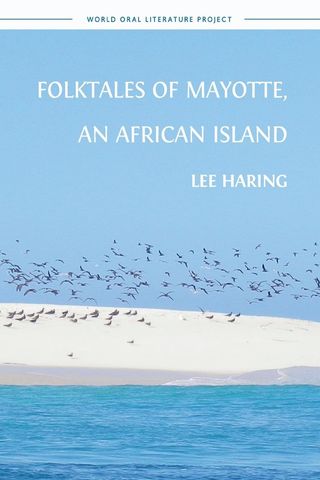
Cover of Folktales of Mayotte, an African Island

Folktales of Mayotte, an African Island

Lee Haring

Original language: English · Paperback · ISBN 978-1805110040

Mayotte is a small island in the Comoros archipelago, in the Mozambique Channel between Madagascar and the African mainland. During the 1970s and 1980s it was shifting from a neglected colony toward becoming an overseas department of France. Lee Haring draws on fieldwork by three French ethnographers who recorded storytellers during those years, examining how narrators used folktales to hold onto older values amid rapid change.

Haring's central approach is to treat printed ethnographic transcripts as records of live performances rather than fixed texts. He reads them almost as scripts, attentive to the choices each teller made. Women narrators receive particular focus: they blended plots and characters from African, Malagasy, Indian, and European traditions into stories that sounded inherited yet were original combinations. Haring finds irony and ambiguity in their tales, where compliance and resistance sit side by side.

The book presents this body of oral literature to English-speaking readers, describing Mayotte's storytelling as a system of word arts built from many cultural currents and distinct individual styles. Haring argues that tellers of those decades were both keeping and questioning the social order they had inherited, working through symbol and suggestion rather than direct statement.

Plot

Relying on the researches of three French ethnographers who interviewed storytellers in the 1970s-80s, Lee Haring shows a once-colonised people using verbal art to preserve ancient values in the postcolonial world, when the island of Mayotte was transforming itself from a neglected colony to an overseas department of France. The author's innovation is to read ethnographic researches as play scripts-to see printed folktales as accounts of live performances. One storyteller after another comments symbolically on what it is like to be a formerly colonised population. Storytelling women, in particular, combine diverse plots and characters to create traditional-sounding stories, which could not have been predicted from the African, Malagasy, Indian, and European traditions coexisting in Mayotte.
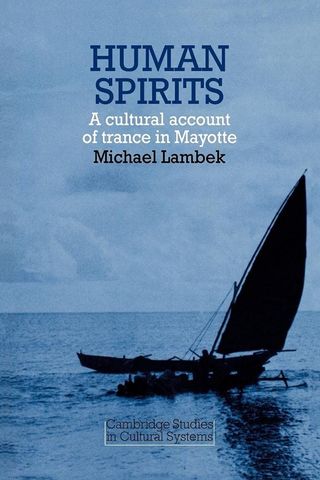
Cover of Human Spirits: A Cultural Account of Trance in Mayotte

Human Spirits: A Cultural Account of Trance in Mayotte

Michael Lambek

Original language: English · Paperback · ISBN 978-0521282550

Human Spirits is an ethnographic study by Michael Lambek, based on extended fieldwork among Malagasy-speaking communities on Mayotte, a small island in the Comoros archipelago between Madagascar and the East African coast. The book documents how residents, most often women, enter trance states during which they understand their bodies to be occupied by spirits. Lambek follows individual cases over time, recording the stages through which people recognize, negotiate with, and accommodate these spirits in daily life.

Central to the study is Lambek's argument that trance should not be reduced to a psychological disorder, a conscious performance, or a tool for social manipulation. Instead, he treats possession as a structured social activity operating within a coherent system of cultural meaning. The book presents detailed case studies that track how specific individuals and their families respond to possession episodes across months and years, making it one of the more thorough longitudinal accounts of spirit possession available for a single society.

The conventions governing trance behavior receive close attention, including the recognized rules for how spirits are expected to act once they arrive and how human hosts and their communities respond. Lambek situates these practices within broader patterns of ritual and symbolic life on the island.

Plot

Professor Lambek describes how the people of Mayotte (most often women) enter into trances, during which they believe their bodies are inhabited by spirits. He then analyses the conventions for behaviour in trance and the process by which the individuals come to terms with the spirits in their midst. The book presents thorough case studies of spirit possession over time, providing one of the most detailed accounts of possession phenomena available for a single society. The author argues that trance can best be understood as a social activity within a defined system of cultural meaning rather than as a psychological problem, a simple deception or a means of manipulating others. This book should be of particular interest to those concerned with the study of ritual, symbols and non-Western religious systems.

More from Mayotte

See the country page for Mayotte for its map, facts and largest cities, or browse books from other countries.

Links go to Amazon; Hookito doesn’t sell books. Know a book that belongs here, or spotted a mistake? Write to submissions@hookito.com.

Where to next?

Back to the globe
Hookito landscape illustration