Hookito

Zimbabwe · Books

Books from Zimbabwe

5 books from and about Zimbabwe: what each is about, the plot, and a note from Professor Kogi.

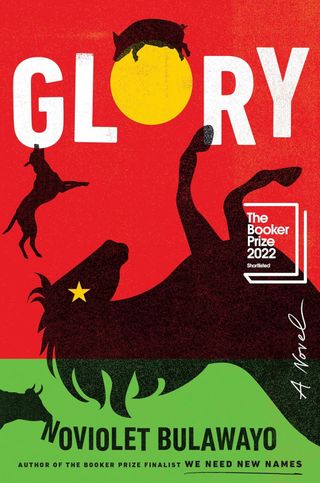
Cover of Glory

Glory

NoViolet Bulawayo

Original language: English · Hardcover · ISBN 978-0525561132

Glory is set in a fictional country ruled by an aging leader known as the Old Horse, who has held power for decades. When a coup unseats him, the nation enters a period of upheaval where old loyalties fracture and new ambitions surface. The story is told through a chorus of animal characters whose voices carry the daily life of a population in flux.

The novel draws directly from the November 2017 removal of Robert Mugabe, who had served as Zimbabwe's president for nearly four decades. Bulawayo channels that event through allegory, giving the narrative a fable-like quality while keeping the stakes concrete. The animal framework lets her show the ruthlessness needed to sustain an illusion of absolute power, alongside the wit and stubborn optimism of people trying to end it.

Bulawayo's earlier novel, We Need New Names, was a finalist for the Booker Prize. Glory again takes Zimbabwean political life as its source, this time through satire rather than realism, and it stays with a country in mid-collapse rather than a settled aftermath. The chorus form spreads the telling across many mouths, so no single narrator holds the authority the Old Horse once claimed.

Plot

NoViolet Bulawayo’s bold new novel follows the fall of the Old Horse, the long-serving leader of a fictional country, and the drama that follows for a rumbustious nation of animals on the path to true liberation. Inspired by the unexpected fall by coup in November 2017 of Robert G. Mugabe, Zimbabwe’s president of nearly four decades, Glory shows a country's imploding, narrated by a chorus of animal voices that unveil the ruthlessness required to uphold the illusion of absolute power and the imagination and bulletproof optimism to overthrow it completely. By immersing readers in the daily lives of a population in upheaval, Bulawayo reveals the dazzling life force and irresistible wit that lie barely concealed beneath the surface of seemingly bleak circumstances.
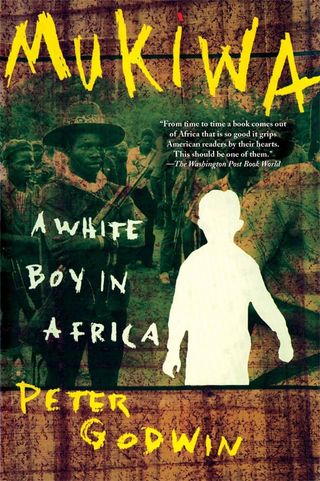
Cover of Mukiwa: A White Boy in Africa

Mukiwa: A White Boy in Africa

Peter Godwin

Original language: English · Paperback · ISBN 978-0802141927

Mukiwa is a memoir by Peter Godwin that begins in 1964 Rhodesia, when the author is six years old and witnesses the killing of a neighbor by guerrilla fighters. His parents are liberal whites: his mother works as a government doctor, his father as an engineer. Through a child's perspective, the book traces the final decades of white-ruled Rhodesia as political tensions harden into armed conflict.

As Godwin grows older, his account shifts in tone and scope. He serves as a soldier in the civil war, a conflict he opposes, and later works as a journalist in the newly formed state of Zimbabwe. Each stage carries a different voice, moving from childhood observation to adult reckoning with the violence and contradictions surrounding him. After spending time in England, Godwin returns to report on human rights abuses in the country he once knew under a different name.

The title, Mukiwa, is a Shona word used in Zimbabwe to refer to a white person. Godwin's position as both insider and outsider in a changing society gives the memoir its central tension. The book covers roughly three decades of political transformation in southern Africa, anchored in one person's shifting relationship with a single place.

Plot

Mukiwa opens with Peter Godwin, six years old, describing the murder of his neighbor by African guerillas, in 1964, pre-war Rhodesia. Godwin's parents are liberal whites, his mother a governement-employed doctor, his father an engineer. Through his innocent, young eyes, the story of the beginning of the end of white rule in Africa unfolds. The memoir follows Godwin's personal journey from the eve of war in Rhodesia to his experience fighting in the civil war that he detests to his adventures as a journalist in the new state of Zimbabwe, covering the bloody return to Black rule. With each transition Godwin's voice develops, from that of a boy to a young man to an adult returning to his homeland.

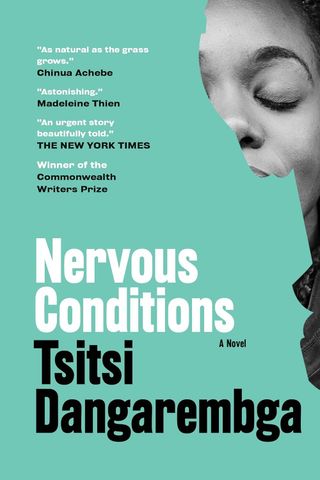
Cover of Nervous Conditions

Nervous Conditions

Tsitsi Dangarembga

Original language: English · Paperback · ISBN 978-1644450710

Two decades before Zimbabwe would achieve independence, thirteen-year-old Tambudzai Sigauke begins her education with the weight of her family's economic hopes on her shoulders. She yearns to break free from the confines of her rural village, where her options are scarce. When her prosperous uncle offers to sponsor her schooling at a mission school, she sees a way toward independence.

Yet the education she receives comes with hidden costs. Tambudzai soon learns that attending the mission school requires navigating the tensions between traditional Shona culture and the colonial system, between her family's expectations and her own desires. The novel, which won the Commonwealth Writers Prize, is the first in a trilogy that follows her journey. It explores themes of gender, class, and identity in late colonial Zimbabwe.

Through Tambudzai's experiences, the story reveals the subtle but profound costs of educational opportunity under colonial rule, including alienation from one's roots and pressures to assimilate. The book remains an important work that examines the personal consequences of political change.

Plot

Two decades before Zimbabwe would win independence and ended white minority rule, thirteen-year-old Tambudzai Sigauke embarks on her education. On her shoulders rest the economic hopes of her parents, siblings, and extended family, and within her burns the desire for independence. She yearns to be free of the constraints of her rural village and thinks she’s found her way out when her wealthy uncle offers to sponsor her schooling. But she soon learns that the education she receives at his mission school comes with a price.

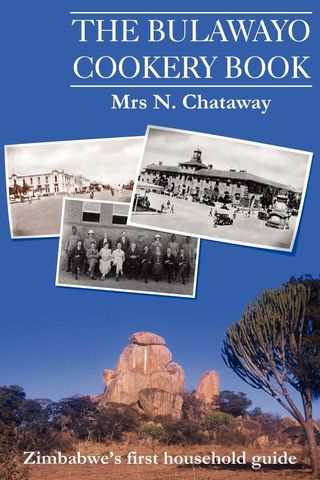
Cover of The Bulawayo Cookery Book

The Bulawayo Cookery Book

N. H. Chataway

Original language: English · Paperback · ISBN 978-0955393624

The Bulawayo Cookery Book was first published in 1909, making it one of the earliest known cookery books from what is now Zimbabwe. Compiled by N. H. Chataway, it contains over 230 recipes that reflect the cooking traditions of southern Africa in the early twentieth century. Dishes range from green fig preserve and lemon pudding to bobotie, a curried meat loaf with roots in the Malay-influenced cooking of the southern African region. The collection documents what settlers in Bulawayo were preparing and eating during the Edwardian period, when the city was still relatively young.

Beyond the recipes, the book includes more than fifty period advertisements from companies active in the region at the time, such as Puzey and Payne and Maskew Miller. These advertisements offer a secondary record of commercial life in early colonial Bulawayo, showing which goods and services were available and how they were marketed.

Bulawayo, Zimbabwe's second-largest city, was formally founded in 1894. A cookery book printed there just fifteen years later captures a particular moment in the city's development, when local foodways were being written down and organized for the first time.

Plot

First published in 1909, Zimbabwe's earliest cookery book will entrance you with over 230 recipes for African delicacies: aromatic green fig preserve; savoury bobotie (a curried meat-loaf that reflects southern Africa's Malay heritage); zesty lemon pudding, and warm, spicy gingerbread. Zimbabwean originals, every one. More than fifty delightful contemporary advertisements, for long-established Zimbabwean companies like Puzey and Payne and Maskew Miller, lend vintage Edwardian style to this enchanting work. A brilliant book for anyone interested in the development of southern African cookery, or in Zimbabwean colonial history.

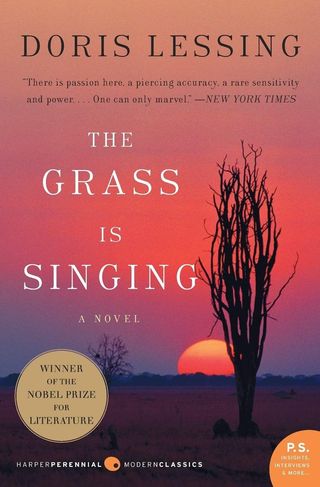
Cover of The Grass Is Singing

The Grass Is Singing

Doris Lessing

Original language: English · Paperback · ISBN 978-0061673740

The Grass Is Singing, published in 1950, is Doris Lessing's first novel. Set on a struggling farm in Southern Rhodesia (present-day Zimbabwe), it follows Mary Turner, a young woman who leaves a comfortable social life in town to marry Dick Turner, a farmer unable to make his land profitable. Over the years, isolation and poverty wear away at Mary's sense of self. The couple's failing crops and mounting debts mirror a marriage that offers neither companionship nor escape.

Mary's growing despair takes a new shape when Moses, a Black farmworker, is assigned to work in the house. The dynamic between them develops along lines of authority, dependence, attraction, and hostility, all set against the rigid racial hierarchy of colonial society. Lessing draws these tensions with restraint, showing how the social order both produces and punishes the feelings it tries to suppress.

The novel opens with a newspaper report of Mary's death, so the story unfolds as a reconstruction of how events reached that point. Lessing, who grew up on a farm in Southern Rhodesia, draws on the landscape and social structures she observed firsthand during her years there.

Plot

Mary Turner is a self-confident, independent young woman who becomes the depressed, frustrated wife of an ineffectual, unsuccessful farmer. Little by little the ennui of years on the farm works its slow poison. Mary's despair progresses until the fateful arrival of Moses, an enigmatic black servant. Locked in anguish, Mary and Moses—master and slave—are trapped in a web of mounting attraction and repulsion, until their psychic tension explodes with devastating consequences.

More from Zimbabwe

See the country page for Zimbabwe for its map, facts and largest cities, or browse books from other countries.

Links go to Amazon; Hookito doesn’t sell books. Know a book that belongs here, or spotted a mistake? Write to submissions@hookito.com.

Where to next?

Back to the globe
Hookito landscape illustration